Theopolis Logo

Writing

Explore our collection of theological essays, biblical studies, and reflections on faith and culture.

See all
medievalilluminatedmanuscript
Biblical Studies

The Art of Why

“We have a God who hides things because He loves to be sought out, chewed out and found out.” As Christians, we are rightly taught that we must not question God’s Word. The problem is that the Scriptures record many things which appear to have been given to us for…

by Mike BullMay 12, 2015

last-supper
Revelation

Eucharistic Harvest

The book of Revelation is a liturgy. John begins “in the Spirit” on the “Lord’s day” (1:10). Jesus appears, and Jesus tells him to record messages to seven churches, words of encouragement and rebuke, like the call to worship and confession at the beginning of a Christian liturgy. In chapter…

by Peter LeithartMay 7, 2015
sunrise-2
Creation

Maker of Heaven and Earth, (Part 5)

In my previous posts, I looked at the theme of creation as it is found in a sequence of psalms devoted to Yahweh’s Kingship (Psalms 93-100). Among other matters, these psalms declare that when the Kingdom of Israel’s God comes, it is the Kingdom of the world’s own Creator .…

by Stephen LongMay 7, 2015
13071-probablyvalentindeboulogne-saintpaulwritinghi-1
Deuteronomy

Paul the Levir

The church in Corinth was a pastoral nightmare. Factionalism, sexual immorality, incipient syncretism, using the church as a stage for self-promotion, and denial of the final resurrection were just some of the problems. In Paul’s first letter to the Corinthian church, he confronts each of these problems directly and in…

by Bill SmithMay 5, 2015
creation-eve
Covenant

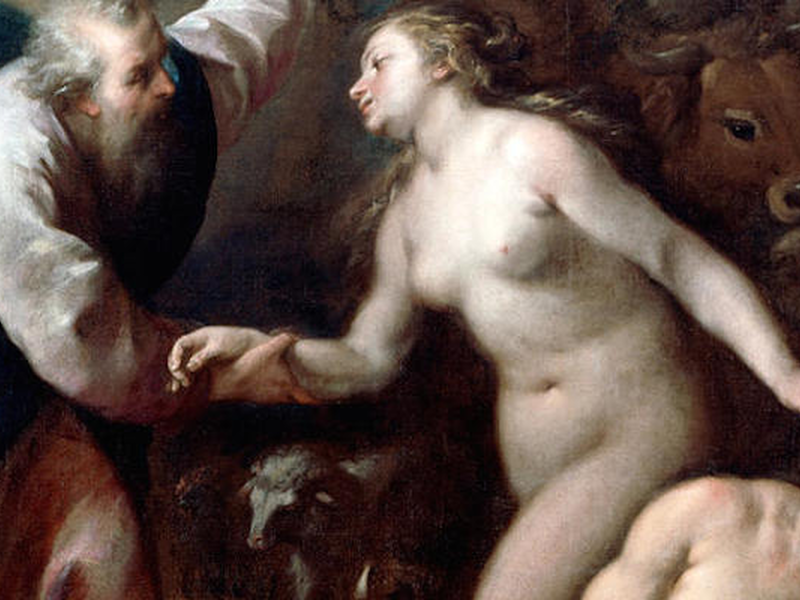
Covenant Structure in Genesis 2

The first chapters of the Word of God have a poetic rhythm. This is used to discredit their accuracy as historical narrative, but the truth is that these same rhythms continue far beyond the book of Genesis. In fact, the later texts shed light on the frustratingly succinct account of…

by Mike BullApril 30, 2015
light-bulb
Creation

Must A Light Bulb Be "Oriented Toward Illumination"?

Mr. Martian: What’s that there? Mr. Edison: (Edison holds up a standard, 60 watt lightbulb). It’s a lightbulb. Mr. Martian: A “lightbulb” you say? What exactly is a “lightbulb”? Mr. Edison: A lightbulb is an object used to illuminate a dark area, say a room. It’s made primarily of filament…

by Gerald HiestandApril 28, 2015

Showing page 154 of 309

See all

Showing page 6 of 43

See all

Circular Evolution

In his Natural History of Religion, David Hume proposes an evolutionary progress from natural polytheism to more developed monotheism. This, he thinks, is the natural and virtually inevitable progress: “As far as writing or history reaches, mankind, in ancient times, appears universally to have been polytheists” and idolaters. It makes…

March 11, 2014

Persistent Protest

Protestant problematics about sacraments still run in the background of early modern debates about religion. In response to evidence of similarities between Jewish and “savage” Indian religion, some early modern thinkers argued that the ritual similarities were marginal to Judaism. Some thought of Jewish ceremonies as a kind of prophylactic…

March 11, 2014

Jubilee: Real or Ideal?

Many scholars have concluded that the Jubilee legislation of Leviticus 25 is an idealized portrait of an institution that Israel never practiced. In a 2003 essay in Vetus Testamentum , Lee Casperson takes issue with this viewpoint: “There are extensive parallels in the ancient Near East, long predating the entry…

March 11, 2014

Reenacted Exodus

Leigh Trevaskis tries to suss out the rationale for sticking Leviticus 24 (menorah, showbread, blasphemy) between Leviticus 23 (Israel’s festival calendar) and Leviticus 25 (Jubilee). He proposes a symbolic solution to the puzzle. He observes that chapter 24 begins with a reverence to “light” (v. 2), alluding back to the…

March 11, 2014

Epistemological Dualism

Esther Lightcap Meek presents the most devastating little critiques of epistemological dualism I’ve ever read near the beginning of A Little Manual for Knowing . Epistemological dualism describes the way we “distinguish knowledge from beliefs, facts from values, reason from faith, theory from application, thought from emotion, mind from body,…

March 11, 2014

Righteous aggressors

Halbertal ( On Sacrifice , 72-3) offers this fine analysis of the self-justificating moves of aggressors: “The mind can play complicated games, and among them is the accusation that an aggressor directs toward his victim for causing him to become violent, which all too easily turns into a justification for…

March 10, 2014

Showing page 663 of 2212

Browse by Category

In Medias Res

Your weekly digest for all things Theopolis.

Donate

Theopolis is nearly 100% donor-supported. Consider joining us on our mission.