Theopolis Logo

Writing

Explore our collection of theological essays, biblical studies, and reflections on faith and culture.

See all
screen-shot-2023-04-04-at-5-01-54-pm
Biblical Chronology

A Summary of Old Testament Chronology

This newsletter summarizes everything that has been written and argued in Biblical Chronology to date. The Bible is filled with chronological information. Some would dismiss the idea that this chronological information can and should be systematized. We have to say, however, that if the scattered information about the tri-unity of…

by James B. JordanAugust 24, 1992

thomas-jarrand-k9gs65i36aq-unsplash
Leviticus

The Lamb of God, (Part 1)

At the Biblical Horizons Conference on Worship and Sacrifice , held 17-21 August, 1992, we explored the meaning of the five major sacrifices in considerable depth. 1 During the last, the centrality of the male lamb (the ram) in the sacrificial system was briefly discussed. I want in this essay…

by James B. JordanJuly 24, 1992
screen-shot-2022-05-12-at-12-07-23-pm
Biblical Chronology

Chronologies and Kings, Part 13: The End of the Kingdom of Judah

As we saw last time, Uzziah became king of Judah in the 27th year of Jeroboam II, the year A.M. 3204. He reigned for 52 years. He was basically a good and devout king, but toward the end of his life he recapitulated the fall of Adam by trying to…

by James B. JordanJuly 24, 1992
whichbooksbelongintheot
Biblical Chronology

Chronologies and Kings, Part 12: Wars and Rumors of Wars

We have now arrived at the reign of Jeroboam II. When Jeroboam II came to the throne of Northern Israel, Amaziah was reigning in Judah. After the death of Amaziah, there was an interregnum of eleven years, during which Judah was governed by Israel. During those years, the son of…

by James B. JordanJune 24, 1992
debby-hudson-qa74yh6-xlc-unsplash
Biblical Horizons

A Letter on Paedocommunion

Several years ago I wrote an essay, “Theses on Paedocommunion,” in which I argued that allowing all baptized and non-excommunicated persons to the table of the Lord was Biblical and desirable. (A copy of this essay is available for a donation from Biblical Horizons .) During the past several years…

by James B. JordanJune 24, 1992
david-weber-fwuo_zluhnw-unsplash
Culture

Liturgy and the Counter-Cultural Church

The question of whether the Church stands “against” culture, is “of” or “above” culture, or seeks to “transform” culture cannot be answered in abstraction from a particular cultural context. To be sure, in many ways the Church’s message and relation to the world cannot change; the Church must, in season…

by Peter LeithartJune 17, 1992

Showing page 289 of 309

See all

Showing page 6 of 43

See all
Pentecost

Pentecost and Public Life

What has Pentecost to do with public life? As Paul would say, much in every way. The Bible does not permit us to confine the work of the Spirit to the inner man or to private experience. Through Isaiah (44:3), the Lord promised to pour out water on the land…

May 15, 2018
Pentecost

Pentecostal Enlightenment

It’s the season of the Spirit, a time to muse on the politics of Pentecost. When Israel’s prophets predict the future coming of the Spirit, their next thought is almost always about the renewal of creation. According to Joel, the Spirit’s coming will turn Israel into Big Rock Candy Mountain”wine…

May 14, 2018

Anarchy and the Second Word

In Discourses on Livy , Machiavelli exposes the ruse of Roman law. Numa, the true founder of Rome, "mistrusted his own authority, lest it should prove insufficient to enable him to introduce new and unaccustomed ordinances in Rome." And so he claimed that the law came from the gods. All…

May 11, 2018
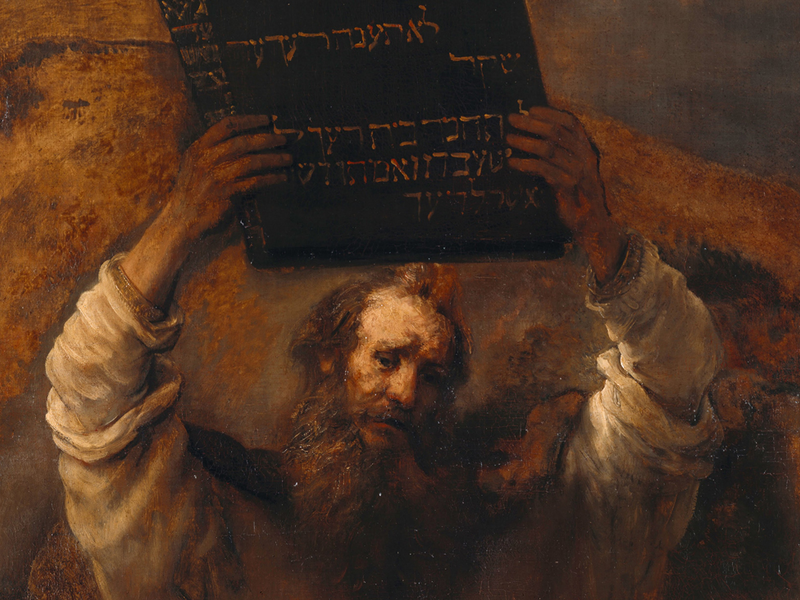
rembrandt-main

How To Pray

Pamela Tamarkin Reis ("Seeing Moses Plain," VT 55 [2005] 207-31) thinks that Moses' response to Yahweh in Numbers 11 is a model prayer. First, Moses refers to Israel as "this people," which is "a disdainful, arms-length usage employed frequently in the Bible to distance oneself from and to denigrate the…

May 11, 2018

Moses' Missing Repentance

Benjamin Sommer ("Reflecting on Moses," JBL 18 [1999] 601-624) thinks that Numbers 11 weaves together two sources, with very different descriptions of Moses. In narrative A, Moses is petulant, angry, despises his role as leader of Israel, wishes for death. According to B, he is an exemplary prophet, concerned for…

May 11, 2018

Image and Icon

Israel’s sanctuaries were dramatically different from those of other nations. There was no image of Yahweh. The priests maintained Yahweh’s house, but His presence was either invisible or so intense that it was unapproachable. The aniconic worship of Israel was a standing reminder that their God is a different sort…

May 10, 2018

Showing page 70 of 2212

Browse by Category

In Medias Res

Your weekly digest for all things Theopolis.

Donate

Theopolis is nearly 100% donor-supported. Consider joining us on our mission.