Theopolis Logo

Writing

Explore our collection of theological essays, biblical studies, and reflections on faith and culture.

See all
49980-nicolas_poussin_-_the_judgment_of_solomon_-_wga18330-800w-tn
Biblical Studies

Advice From a Sojourner, Part 2

In our first essay in this series ( part 1 ), we saw that Proverbs 30 opens with a puzzle, a cryptic sentence that challenges the reader to search out a matter in order to gain understanding. "It is the glory of God to conceal a matter, but the glory…

by James B. JordanOctober 26, 1989
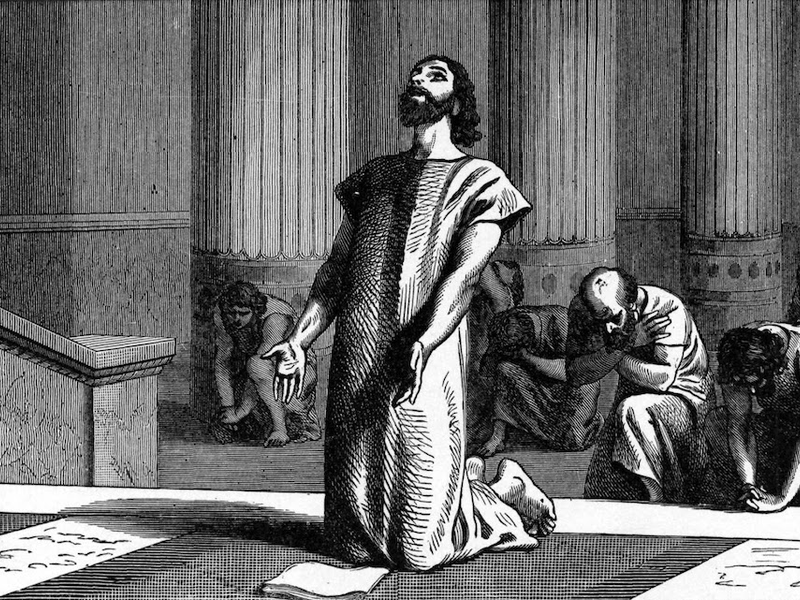
hezekiahs-prayer-2
Isaiah

Hezekiah’s Sign

The story of Hezekiah’s illness and recovery is familiar to every child who has attended Sunday School. Informed that he would die, faithful King Hezekiah pleaded in tears for a longer life. God heard his prayers and saw his tears, and promised fifteen more years. As a sign that He…

by Peter LeithartOctober 13, 1989
screen-shot-2021-08-12-at-2-57-54-pm
Proverbs

An Antidote for Yuppie Postmillennialism

1. The Blessed Hope "Looking for the blessed hope and the appearing of the glory of our great God and Savior, Christ Jesus." Titus 2:13 I was recently asked how I as a postmillennialist would preach on "The Blessed Hope." This is often a sticky question, because postmillennialists believe that…

by James B. JordanAugust 26, 1989
screen-shot-2022-01-10-at-5-52-39-pm
American Culture

Elijah’s War with Baal

1. Jeroboam and Ahab After Solomon died, the people came to his son, King Rehoboam, and asked for tax relief. Rehoboam refused to give it, and indeed told the people that he was going to tax them even more severely than his father had. At that point, with the blessing…

by James B. JordanJuly 26, 1989
screen-shot-2020-08-31-at-10-35-03-am
Biblical Horizons

The Love Feast

One aspect of truth is unity. It was Truth Incarnate who prayed for the unity of His people in John 17, which certainly makes unity a priority for them as well. In one sense, we know by faith that the Church is always invisibly unified in Christ, but there is…

by James B. JordanJune 16, 1989
screen-shot-2022-01-07-at-6-38-22-pm
Biblical Studies

The Son of Joseph, Revisited

Mr. Paul Miller of Vancouver writes that he is not persuaded by my remarks on Luke 4 on " The Son of Joseph ." He calls attention to Mark 6:1-6, where Jesus came "to His own part of the country," taught in the synagogue, and astonished many. The people said,…

by James B. JordanMay 16, 1989
See all

Showing page 6 of 43

See all

The Body Assumed

The Servant comes, and the arm of the Lord is revealed (Isaiah 53:1). The Servant’s face and form are marred, stricken, pierced, crushed, chastened, scourged. It looks like the body that’s already there, the body of Israel: “Where will you be stricken again, as you continue in rebellion? The whole…

March 21, 2013

No form, no face

According to the NASB, Isaiah 53 says that the Servant has “no stately form ( to’ad ) or majesty ( hadar ) that we should look upon Him, nor appearance ( mar’eh ) that we should desire ( chamad ) Him” (v. 2). Two of those three terms appeared at…

March 21, 2013

Desolated

Yahweh’s Servant prospers (or “deals prudently”), and so is raised, lifted, exalted greatly (Isaiah 52:13). But that exaltation is paradoxical, surprising, since the Servant that is lifted up is mangled and marred more than any of the sons of Adam (v. 14). The word translated as “astonished” ( shamem )…

March 21, 2013
Biblical Studies

Judgment according to works

The New Testament says several times that there is a day of accounting coming when all will be judged according to their deeds (Matthew 16:27; Romans 2:6; 2 Corinthians 5:10). In Romans 2 especially, this is an individual accounting: God “will render to every man according to his deeds” (Paul…

March 21, 2013

Egoism and evil

Self-obsessed egoism is not, Zizek argues ( Violence: Six Sideways Reflections ), the essence of evil, and the “true opposite of egotist self-love is not altruism, a concern for the common good, but envy, ressentiment , which makes me act against my own interest.” The true evil is (citing Freud)…

March 20, 2013
Politics

No Higher Cause

We are often told that we live in a “post-political” era or an era of “bio-politics.” Slavoj Zizek ( Violence: Six Sideways Reflections , 40-2) defines the post-political as “a politics which claims to leave behind old ideological struggles and instead focus on expert management and administration” and “bio-politics” as…

March 20, 2013

Showing page 770 of 2212

Browse by Category

In Medias Res

Your weekly digest for all things Theopolis.

Donate

Theopolis is nearly 100% donor-supported. Consider joining us on our mission.