
Theopolis Logo

Writing

Explore our collection of theological essays, biblical studies, and reflections on faith and culture.

See all
trnava-university-beeyeib-am8-unsplash
Biblical Chronology

Meredith G. Kline Strikes Back, Part 2

In our first essay we looked at Kline’s flawed exegesis of Genesis 2:5 as it relates to Day 3 of creation. Now we turn to Kline’s new argument against a chronological reading of Genesis 1, as found, again, in "Space and Time in the Genesis Cosmogony," Perspectives on Science and…

by James B. JordanMarch 29, 1997
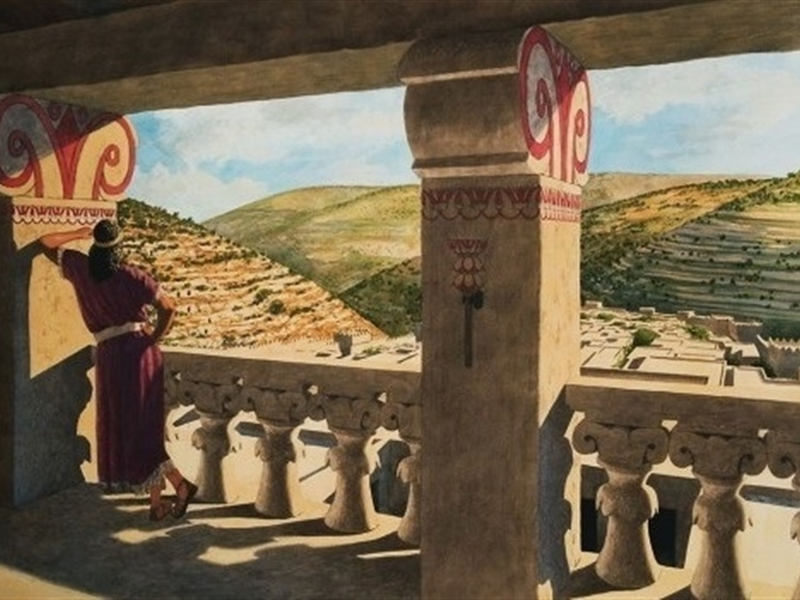
30211-bathsheba-800w-tn
Hermeneutics

Bathsheba: The Real Story

One of the advantages of paying very close attention to the details in the Bible, especially chronological and genealogical details, is that they can shed light on situations that don’t seem to make much sense apart from them. One such situation is that of Bathsheba. It appears that Bathsheba willingly…

by James B. JordanMarch 28, 1997
jonathan-cooper-ygxq7hfdjzq-unsplash
Church Calendar

Is the Church Year Biblical? | A Parking Lot Parable

Once upon a time, Jeff Meyers and Tony Rollins–old friends who had not seen each other for a few years–met in the parking lot of a neighborhood church. They were dropping off their pre-school children at the church for Mother’s Day Out. They were such conscientious and helpful fathers. As…

by Jeff MeyersMarch 20, 1997
annie-spratt-upxf6to3fea-unsplash
Daniel

The Allegory of Susanna

Years ago, when I was at the briefly-existing Geneva Divinity School, I taught a course in the Apocrypha. One thing that struck me at that time is that two of the stories are almost certainly religious allegories (as well as moral tales): Judith and Susanna. Since "Susanna" means "Lily," this…

by James B. JordanFebruary 28, 1997
serafima-lazarenko-_ivuwprfczi-unsplash
Biblical Horizons

A Blossom of Yahweh’s Field

Peter’s essay inspires me to write up some similar thoughts about the flower of the field. Rightly does Peter associate the almond with Yahweh’s garden, because the Garden of Eden is symbolically positioned as parallel to the Holy Place of the Tabernacle and Temple. To wit: Since Aaron’s rod blossomed…

by James B. JordanFebruary 28, 1997
trnava-university-beeyeib-am8-unsplash
Biblical Chronology

Meredith G. Kline Strikes Back, Part 1

We have had occasion to discuss the views of Meredith G. Kline previously in these newsletters, and now it is time to do so again. Kline teaches at Gordon-Conwell Theological Seminary and also at the Westminster Theological Seminaries (Philadelphia and San Diego). He is the author of some interesting insights…

by James B. JordanFebruary 28, 1997

Showing page 259 of 309

See all

Showing page 6 of 43

See all

Economics and Work

Modernity, especially as theorized in modern economics, treats work as "instrumental to the acquisition of goods" (Stephen Marglin, The Dismal Science , 44). Modernity "closes off thinking of hard work as something other than drudgery" (43). As a counterpoint, Marglin calls attention to work in Amish communities: "In physical terms,…

March 23, 2018

Greater Father?

"The Father is greater than I," says Jesus (John 14:28). Eunomius uses this to prove the ontological interiority of the Son. Basil of Caesarea rejects that reading, of course. But his way of rejecting it is worth attending to. He doesn't claim that Jesus is talking about His inferiority as…

March 23, 2018

Secularization Theory As Contestant

Ian Hunter argues that "secularization" as "transition from divine reverencing to rational autonomy" didn't happen during the centuries after Reformation. Confessional Christianity didn't disappear but was more deeply entrenched during that time. "Secular" referred not to the imposition or incursion of rational atheism but to the formation of purely political…

March 22, 2018

Simplicity’s Not So Simple

Is God simple? Christian theologians from the Cappadocians to Aquinas and beyond said Yes. But we need to probe this consensus: Did they mean the same thing by saying Yes? Andrew Radde-Gallwitz says No ( Basil of Caesarea, Gregory of Nyssa, and the Transformation of Divine Simplicity ). What is…

March 22, 2018

Confessionalization v. Secularization

In a debunking paper on "secularization" and the "secular," Ian Hunter argues that "nobody in early modernity spoke of secularization in terms of a transition from divine reverencing to rational autonomy, but also that there is no evidence of such a transition taking place there and, further, that there is…

March 21, 2018

Disdain for Lesser Talent

Richard Spady's eye-opening piece in First Things examines the consequences that follow when economics becomes an ideology, that is, when economics "will­fully projects its own first principles on its subject matter and actively seeks, perhaps unconsciously, material changes to bring social realities into conformity with these first principles." He offers…

March 20, 2018

Showing page 84 of 2212

Browse by Category

In Medias Res

Your weekly digest for all things Theopolis.

Donate

Theopolis is nearly 100% donor-supported. Consider joining us on our mission.