Theopolis Logo

Writing

Explore our collection of theological essays, biblical studies, and reflections on faith and culture.

See all
aaron-burden-h8s0pf2rcqs-unsplash
Galatians

The Restoration of the Galatians

While controversies over the writings of Paul continue in various corners of the intellectual globe, the word of God given through Paul and his scribe and all of the church’s interpreters and translators over the last two millennia is still readily available to the lofty and the lowly. Paul, as…

by Grace LangnessMarch 25, 2013

kiwihug-l4gw27xzn1i-unsplash
Deuteronomy

Law and History: How to Read the Law of Moses (Part 2)

The second in a series of studies in Deuteronomy. Deuteronomy 22:30: A man shall not take his father’s wife, and shall not uncover his father’s wing (Hebrew: kanaf ). There are a number of unusual features in this law that mark it out from the previous context, indicating that it…

by Ralph Allan SmithMarch 20, 2013
200403-moss-pilate-tease_pncfq5
History

Victimhood and the Gospel

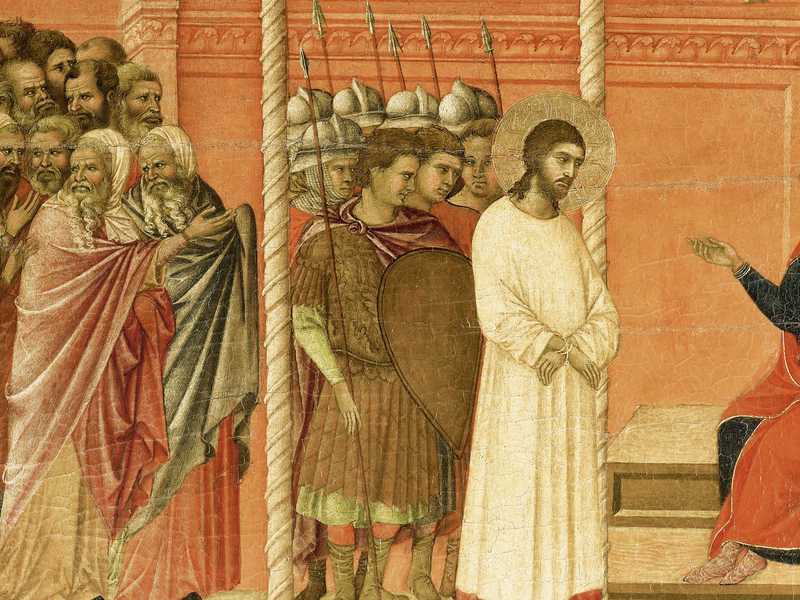
The texts of Christianity have been slowly at work, under the power of the Holy Spirit for 2000 years now. If we could be magically transported back into the world of two millennia ago, modern Americans would be shocked at the cruelty of that world. There was no concern for…

by Richard BledsoeMarch 18, 2013
aaron-burden-1ebsmyrau-s-unsplash
Luke

The Dysfunctional Family of the Gadarene Madman

The Story of the Gadarene Madman is told in all three synoptic Gospels (Matthew 8:28-34, Mark 5:1-20, Luke 8:26-37). Jesus ventures into a Gentile area when He passes over the Sea of Galilee. Upon disembarking from his boat, he is immediately met by a demon-possessed madman. Upon meeting Jesus, he…

by Richard BledsoeMarch 13, 2013
aaron-burden-1ebsmyrau-s-unsplash
Deuteronomy

Law and History: How to Read the Law of Moses

Part 1 of a multi-part series of studies on Deuteronomy 22:30-23:8. Eric Auerbach, in his classic work on Western literature, devotes his first chapter to contrasting Homer with the Bible. Of Homer, he writes of the “need of Homeric style to leave nothing which it mentions half in darkness and…

by Ralph Allan SmithMarch 12, 2013
markus-winkler-aid-xyrtlec-unsplash
Theopolis News

James Jordan in Korea, Japan

Trinity House Fellow James B. Jordan will be a speaker at an International Conference on Biblical Symbolism that will be held in Seoul on Monday, May 27 in 2013. He will address "The Importance of Biblical Symbolism and Symbolic Interpretation of the Bible." The conference will have three other speakers…

by Peter LeithartMarch 9, 2013

Showing page 197 of 309

See all

Showing page 6 of 43

See all

Monasticism

In a 2002 article, Lester Little notes the biblical inspiration for Carolingian Benedictine monasticism: “In inspiration, thought patterns, and rhetoric, this liturgical monasticism shared in a culture that was deeply indebted to the Old Testament. Models for the duties and prerogatives of the religious were found in the instructions given…

August 28, 2012
Uncategorized

Mammon

Charles Eisenstein offers this arresting description of the divine attributes of money in modern culture ( Sacred Economics: Money, Gift, and Society in the Age of Transition , xiii-xv): “The one thing on the planet most closely resembling the . . . conception of the divine is money. It is…

August 23, 2012

On Divine Tensions

In his Forsaken: The Trinity and the Cross, and Why It Matters , Thomas H. McCall cites some alarming statements about the logic of atonement from evangelical theologians, who claim that there is a “strife of attributes” in God: “Gregory Boyd and Paul Eddy describe this position as one that…

August 23, 2012
Uncategorized

Timeless violence

According to most ancient myths, the origin of the creation is violent violent. It must be so. Reality as we know it is in constant motion, a realm of constant change. But antique religions are quests for a place of stability. To get to that “rock of ages,” change has…

August 21, 2012
Theology

Normal gods

In his outline of theology proper in Christian Dogmatics, Volume 1 , Jenson describes the “usual god” of ancient religion: “The usual God, whose eternity is persistence of the beginning, has as his very honor among us that in him we are secure against the threats of the future. Ancient…

August 21, 2012

Meal and social order

In their classic study of The Cuisine of Sacrifice Among the Greeks (13), Detienne and Vernant describe how the distribution of meat from a sacrificed animal traces the boundaries and ranks of a social order: “The commensal meal begins with division. Two systems seem to compete, both in the carving…

August 21, 2012

Showing page 879 of 2212

Browse by Category

In Medias Res

Your weekly digest for all things Theopolis.

Donate

Theopolis is nearly 100% donor-supported. Consider joining us on our mission.