Theopolis Logo

Writing

Explore our collection of theological essays, biblical studies, and reflections on faith and culture.

See all
giammarco-zeh-ljawhtg-unsplash
Biblical Horizons

OPEN BOOK: Views and Reviews

Isaac E. Mozeson, The Word: The Dictionary that Reveals the Hebrew Sources of English (Northvale, NJ: Jacob Aaronson Inc., 1995), 310 pp. Reviewed by James B. Jordan. Once there was only one language in the world, the language God spoke to Adam. At the Tower of Babel, there came to…

by James B. JordanJune 28, 1996
tim-wildsmith-j6jv-mkdzqs-unsplash
Esther

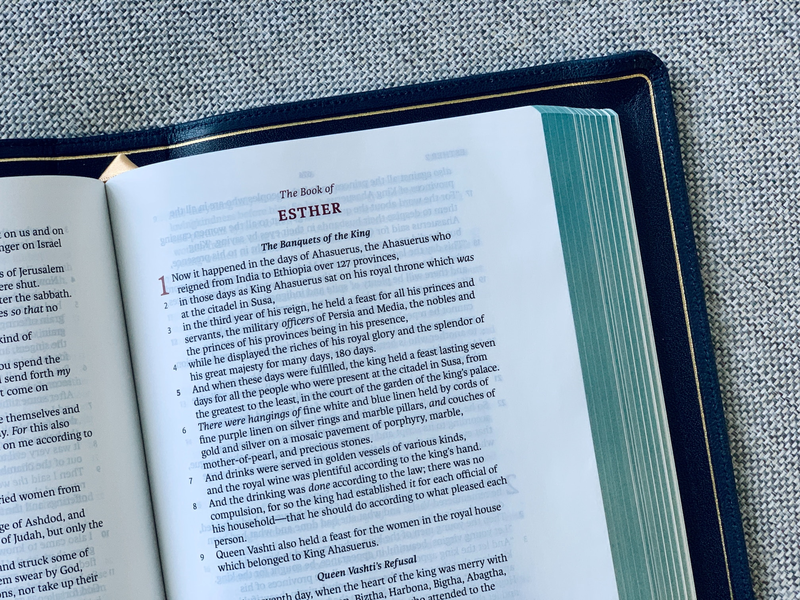
Esther: Historical & Chronological Comments (IV)

2. The Setting of the Book of Esther A. Xerxes (continued from previous issue) Ezra 6:14 says that the Jews finished building "according to the command of the God of Israel and the decree of Cyrus and Darius and Artaxerxes king of Persia." The problem with this verse is that…

by James B. JordanJune 28, 1996

ales-krivec-4mibe6zg5r0-unsplash
Acts

Jesus and Amalek

This essay goes with our previous study of the Amalek pattern back in Biblical Horizons No. 2. Since many do not have this essay, entitled "The Battle of Gog and Magog," let me cite the relevant paragraphs: Note in Genesis 12-15 that Abram moves into the land after escaping Pharaoh…

by James B. JordanJune 28, 1996

aaron-burden-1ebsmyrau-s-unsplash
Proverbs

The Strange Woman

Proverbs 7:6-23 is one of several passages early in the Proverbs in which Solomon warns his son about the wiles and dangers of the "strange woman." It is certainly quite proper to take these as straightforward warnings against sexual sins, and these are certainly warnings that need to be impressed…

by Peter LeithartJune 27, 1996
jan-kahanek-g3o5ztrk2e4-unsplash
Biblical Studies

Some Observations

1. In Luke 4:20 we read that after Jesus finished reading from Isaiah, "the eyes of all in the synagogue were fixed upon Him." This is usually taken in a psychological sense: They were amazed at Jesus somehow. I suggest that, as always, a merely psychological reading is a modern…

by James B. JordanMay 28, 1996
tim-wildsmith-j6jv-mkdzqs-unsplash
Esther

Esther: Historical & Chronological Comments (III)

2. The Setting of the Book of Esther Up to now we have assumed what we must prove, that the king in Esther is Darius the Great. While Biblical chronologists have usually taken this position, commentators on the book of Esther have often taken others as the king. One view,…

by James B. JordanMay 28, 1996

Showing page 265 of 309

See all

Showing page 6 of 43

See all

Apolitical Liberalism

Judd Owen’s Religion and the Demise of Liberal Rationalism calls on liberals to pay attention to the foundational issues raised by liberalism’s antifoundational critics. Owen recognizes that liberalism does not propose a “neutral” theory of politics. While political regimes do not take sides in religious disputes, and thus exercise a…

February 6, 2018

Symphonic Love

Robert Jenson writes: “our enjoyment of God is that we are taken into the triune singing. Perhaps we may say we are allowed to double the parts. And here too we must insist on concreteness. That the proclamation and prayer of the church regularly bursts into beauty, indeed seems to…

February 6, 2018

Mill at an Impasse

John Gray ( Liberalisms ) argues that the “argument from ignorance” is at the heart of certain liberal theorizing, that it cannot hold up to scrutiny. Human knowledge is limited, and that puts constraints on political certainty. Besides, it is argued that human knowledge advances best when freedom is maximized.…

February 5, 2018
Economics

Un-Tragic Commons?

In his Out of the Wreckage , George Monbiot cites the famous 1968 article of Garrett Hardin on the "Tragedy of the Commons." In Monbiot's summary, Hardin argued that "common property will always be destroyed, because the gain that individuals make by over-exploiting it will outweigh the loss they suffer…

February 2, 2018
Work

God the Laborer

Heiner Ruschaupt writes: “In Greek society labor was viewed as an inescapable fate imposed by the gods. To be like the gods meant to live free from labor. In the world of the ancient Orient, labor was viewed as a burden, as slave labor for the gods, who therefore were…

February 2, 2018

Love Song

Markus Rathey ( Bach's Major Vocal Works ) argues that Bach's Christmas Oratorio is a love song. Several threads of argument support this conclusion. In composing the Oratorio , Bach recycled music from earlier compositions, including the quasi-operatic Lasst uns sorgen , which renders a myth about Hercules in musical…

February 2, 2018

Showing page 98 of 2212

Browse by Category

In Medias Res

Your weekly digest for all things Theopolis.

Donate

Theopolis is nearly 100% donor-supported. Consider joining us on our mission.