Theopolis Logo

Writing

Explore our collection of theological essays, biblical studies, and reflections on faith and culture.

See all
tanner-mardis-xuxghzhibn4-unsplash-1-2
Biblical Studies

Tweets-turned-Notes on the Bible’s Chronology

Summary In what follows, I will consider the “year-stamps” employed in Scripture, i.e., statements of the form, “Such-and-such an event took place in the Xth year of Y.” In the process, I will suggest some ways in which the Biblical narrative might relate to events in the extra-Biblical world, though…

by James BejonJuly 16, 2019
durer-prodigal-son-2
Luke

Perspectives on the Prodigal, (Part 2)

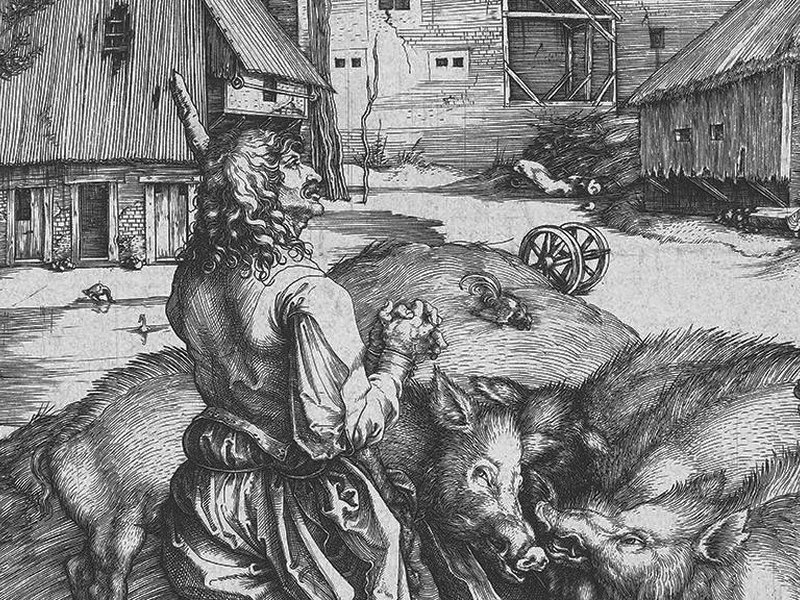
In the first essay on the parable of the Prodigal Son, I suggested that the problems commentators and others encounter in interpreting Jesus three-part parable are not accidental. These are not just problems in our ignorance of cultural background. They are intentional features of the stories —stories designed to poke…

by Ralph Allan SmithJuly 11, 2019
durer-prodigal-son-2
Luke

Perspectives on the Prodigal, (Part 1)

The story of the Prodigal Son is perhaps the most well-known story in the Bible. As others have observed, it may also be one of the most misunderstood. In two short essays, I will point out features of this story that are commonly neglected, aspects of Jesus’ parable that might…

by Ralph Allan SmithJuly 9, 2019
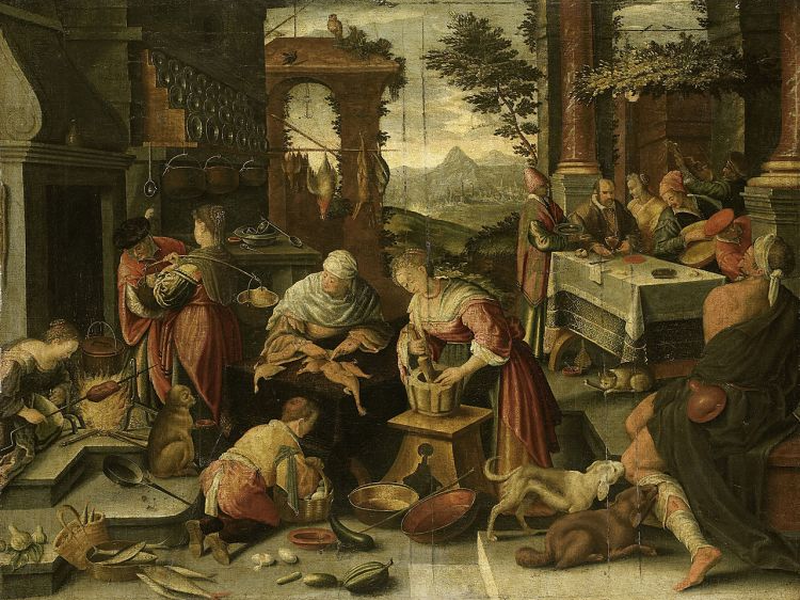
de-rijke-man-en-de-arme-lazarus-by-jacopo-da-ponte-16th-century
Luke

Lazarus and the Rich Man

The parable of Lazarus and the nameless rich man is not an independent story. It is part of a long context that begins in Luke 15:1, where Jesus is eating with tax collectors and sinners and the scribes and Pharisees grumble. In response to their hardheartedness, Jesus tells a three-part…

by Ralph Allan SmithJuly 4, 2019
aaron-burden-uynrnfdkjwg-unsplash
Luke

Everybody has Dropsy - Luke 14:1-24

The Bible is written so that even when a reader cannot pick up on what might be deeper or more detailed aspects of a text, there is virtually always a message to be heard. In the ancient world, where the “reader” of Scripture would likely be a church official facing…

by Ralph Allan SmithJuly 2, 2019
communion
Biblical Theology

Fruit Trees and Grain Plants

The distinction between garden (or vineyard) and field begins in Genesis 2. This relates to the ordering of the formless world. Plants of the field are contrasted with the garden planted by God in Genesis 2:5&8. Later on, under the Old Covenant the Israelites will be required to keep their…

by James B. JordanJune 27, 2019

Showing page 77 of 309

See all

Showing page 7 of 43

See all

Philosophy On Trial

Speech exists that we may "lovingly create names," writes Eugen Rosenstock-Huessy ( In the Cross of Reality , 149). "Speaking is always courting" (149). Courtrooms exist for those times when speech falters. In a courtroom, speech turns from courtship to dispute and this setting changes the character of speech: "In…

December 1, 2017

Coriolanus and Christ

Jay Zysk's Shadow and Substance is a recent contribution to a growing literature linking early modern theology with early modern drama. Zysk focuses on the ways Reformation disputes about the Eucharist play into plays, how Eucharistic semiotics shapes understandings of bodies and signs, flesh and spirit, letter and figure, words…

December 1, 2017

Faith, Love, Marriage

For Luther, faith isn't mere assent to truth, nor even confidence and trust in a distant savior. As David Fink puts it, "Faith . . . becomes the unitive force," or, in Luther's words, it "takes hold of Christ and has Him present, enclosing Him as the ring encloses a…

December 1, 2017

Jerome's Perspective on Paul

In his analysis of Luther's treatment of Galatians (in Reformation Readings of Paul ), David Fink gives a brief overview of pre-Reformation interpretations of the letter. Jerome said that the letter "is concerned especially with establishing the 'cessation of the old Law and the introduction of the new Law.'" Jerome…

December 1, 2017

The True and the Made

Vico's claim that verum et factum convertuntur , "the true and the made are convertible," has been taken as a sign of the foundational atheism of modernity. Benedict XVI sees Vico's claim as a secularization, a turn from the uncreated truth that is God to constructed human things. As Robert…

December 1, 2017

The Faith of Liberalism

"Liberals and communists," writes Eugen Rosenstock-Huessy ( In the Cross of Reality ), "have in common that they wish to make do without church and dogma, and indeed without faith. . . . reason is enough, for we can say what we think" (141). Both retain the term "believe," but…

December 1, 2017

Showing page 118 of 2212

Browse by Category

In Medias Res

Your weekly digest for all things Theopolis.

Donate

Theopolis is nearly 100% donor-supported. Consider joining us on our mission.