Theopolis Logo

Writing

Explore our collection of theological essays, biblical studies, and reflections on faith and culture.

See all
temp_bg
Biblical Studies

Biblical Allusion and the Meaning of Othello

Understanding Shakespeare’s Biblical references is vital for the interpretation of many, if not all, of Shakespeare’s plays. For Othello , it is especially important, not only because the interpretation of the play is contested among various approaches — feminist, homosexual, post-colonial, Marxist, Freudian, new historical, and others — but also…

by Ralph Allan SmithJune 16, 2017

e99a9492-2
Ecclesiology

Attaining Unity: A Reply to Mike Allen

Mike Allen of Reformed Theological Seminary, Orlando, scores some points in his review of The End of Protestantism . He lodges the fair complaint that my rhetoric sometimes outruns my evidence. He argues that more stress on the present reality of the church’s unity deepens the tragedy of division; divisions…

by Peter LeithartJune 13, 2017
trinity-1-2
Eschatology

Comic Trinity

I begin with two observations. First, on any millennial view, the Christian account of history is progressive, moving from the garden to the city. It is eschatological not only in that there is an end, but that the end is a glorified beginning, not merely a return to origins. To…

by Peter LeithartJune 8, 2017
e99a2225
Ecclesiology

Political Church

The church is a new form of polity that erupts into the world as much as the Son of God comes into the world. It’s a real-world political alternative to the polities of the ancient world. It resolves many of the political dilemmas of the ancient world, though not simply…

by Peter LeithartJune 6, 2017
img_1456
Baptism

Baptism Impasse: Baptists vs. Presbyterians, (Part 2)

In my last post , I explained how Baptists really have a “one-ordinance-one sacrament” ecclesiology. I said this: “what Baptists really believe, in modern parlance, is that there is one ordinance (baptism which is a sign or symbol only) and one sacrament (the Lord’s Supper in which feeding upon Jesus…

by Mani MarprelateMay 30, 2017
medieval-knights
Political Theology

Obedience of Rulers

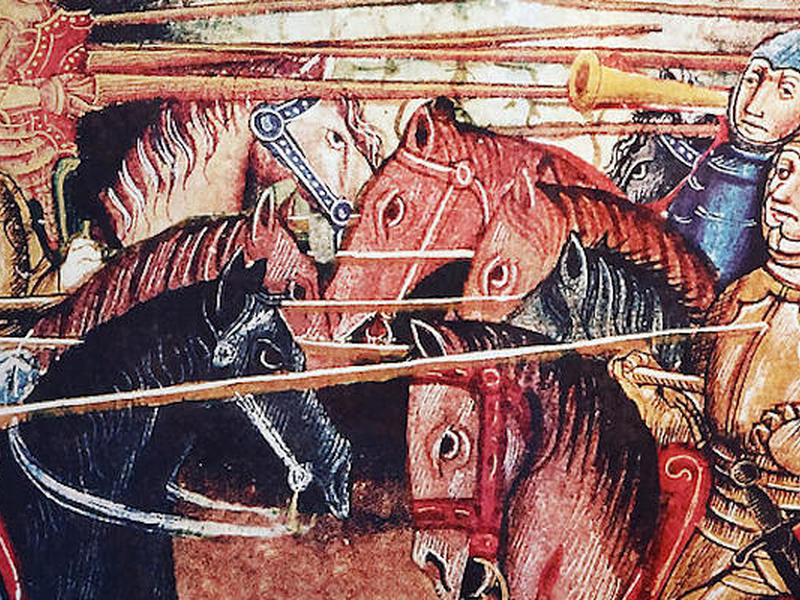
One of the most extensive and penetrating responses to the Yoder-Hauerwas attack on Constantiniansm is found in Oliver O’Donovan’s Desire of Nations , in a chapter entitled “The Obedience of Rulers.” O’Donovan defines the word “Christendom” as “a historical idea,” specifically “the idea of a professedly Christian secular political order,…

by Peter LeithartMay 30, 2017

Showing page 111 of 309

See all

Showing page 7 of 43

See all
History

Patristic modernists

Many writers of the English Enlightenment attempted to formulate an original monotheistic “natural religion” that could be contrasted with the “positive religion” of Christianity. Priests suppressed the true natural religion that was maintained in secret by philosophers until they could teach it openly. The form of this historical account is…

September 13, 2008
History

Lorenzo Valla, Reformer

In 1517, Ulrich von Hutton published a German translation of Lorenzo Valla’s demonstration that the Donation of Constantine was a forgery. Luther read it early and said in a 1520 letter, “Good heavens! what darkness and wickedness is at Rome. I am in such a fit that I scarcely doubt…

September 11, 2008
Uncategorized

Holy Spirit

What makes the Spirit Holy? Holy in Scripture means “claimed by indwelling glory.” The tabernacle is consecrated as holy space by the indwelling glory of Yahweh. Saints are those claimed by the indwelling of the Spirit. The Spirit is Holy because the Spirit is claimed, by Father and Son. He…

September 11, 2008
History

Constantine’s Personal Christology

The Donation of Constantine includes a reference to the legend that Constantine was cured of leprosy by Pope Sylvester sometime in the 310s, and then baptized. Constantine is recorded as saying “on the first day after receiving the mystery of the holy baptism, and after the cure of my body…

September 11, 2008

Transcendent Multitude

Emery says that for Aquinas the diversity of creation is founded in the personal plurality of the divine relations: “One cannot emphasize more forcefully the positive value of the multiplicity of creature; Saint Thomas does not conceive of plurality as a decline from unity, but to the contrary, as a…

September 11, 2008

Love and creation

Thomas’ Trinitarian account of creation has not only a Christological but a pneumatological dimension, Emery argues. Thomas’ Augustinian pneumatology is rooted in his recognition that within the “God who loves himself,” there is a God who is loved and a love that is God. Especially in his later work, he…

September 11, 2008

Showing page 1472 of 2212

Browse by Category

In Medias Res

Your weekly digest for all things Theopolis.

Donate

Theopolis is nearly 100% donor-supported. Consider joining us on our mission.