Theopolis Logo

Writing

Explore our collection of theological essays, biblical studies, and reflections on faith and culture.

See all
screen-shot-2023-05-02-at-1-14-25-pm
Poetry

Seed-bearing Fruit

Ten-thousand ‘yeses’ and a single ‘no.’ From bough it dangles, beauty to the eyes, For belly, food, a fruit to make one wise. Too soon, they eat; they know; the leaves they sew, But, oh! the Love who asks, “Where did you go?” Confessions flow from under leaf’s disguise; A…

by Marc HaysAugust 16, 2023
screenshot-2023-08-15-at-8-22-28-am
Augustine

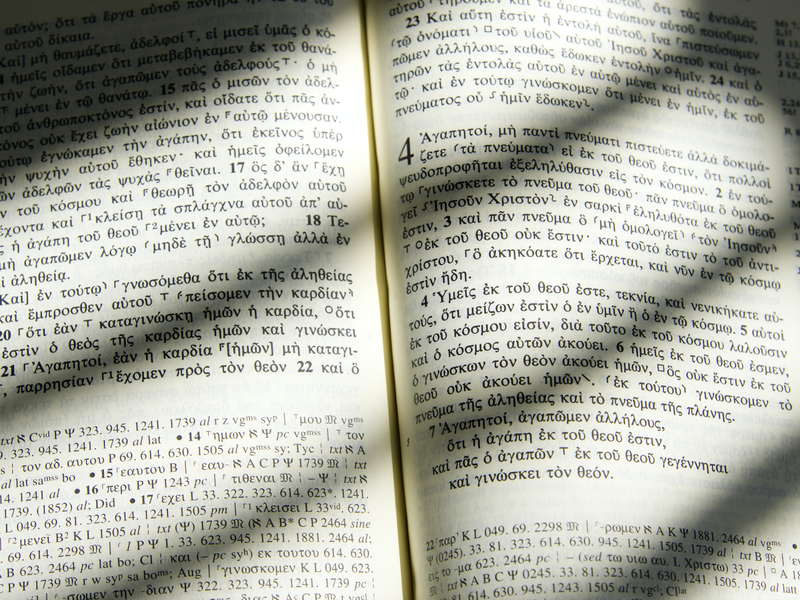
Eternal Life Chiasm in John's Gospel

In his masterful work, De Doctrina Christiana , Augustine of Hippo writes: I would have learned men to know that the authors of our Scriptures use all those forms of expression which grammarians call by the Greek name tropes, and use them more freely and in greater variety than people…

by Doug PonderAugust 15, 2023
screenshot-2023-08-08-at-11-13-28-am
Ruth

Lot, Ruth, and the Work of New Creation

“In accordance with the creation pattern, God sovereignly took hold of Adam and put him to sleep. Then God divided Adam by removing flesh and bone from his side, and restructured humanity into male and female. When Adam awoke, God distributed the woman to him. Adam gazed upon her and…

by Josh JensenAugust 8, 2023
rev-1-barbie-tp-0002-high-res-jpeg-647e152f50df6-2
Culture

The Barbie Movie

Greta Gerwig’s new film, Barbie, has been criticized, probably rightly, for having too many ideas and layers to properly bring in any for a landing. Gerwig herself thought the script was so “ wild and anarchic ” that she was surprised WB agreed to make it. Many see it as…

by Robin HarrisAugust 1, 2023
mariam-soliman-ht5xmeulydg-unsplash-2
Matthew

Why Does John the Baptizer Look Like a Camel?

“Now John wore a garment of camel’s hair and a leather belt around his waist, and his food was locusts and wild honey” (Matt. 3:4). Why is John the Baptizer clothed with camel’s hair? Why does he want to look like a camel? Or at least: what does he expect…

by Jeff MeyersJuly 26, 2023
darwin
Literature

Stinking, Rotten Ministers of the Gospel

In the second greatest story ever told, The Brothers Karamazov , Fyodor Dostoyevsky tells the story of a family plagued by the lasting legacy of sin’s destructive power and the all-surpassing truth that God is Light and in Him is no darkness. The young protagonist, Alyosha, is a monk committed…

by Garrett SoucyJuly 18, 2023

Showing page 29 of 309

See all

Showing page 7 of 43

See all

Art of God

Emery points out that Thomas’ Trinitarian account of creation makes the Word the art of God: “The Word is . . . the reason of creatures from a double point of view, that of exemplar causality (the expression, the conception of creatures) and that of efficient causality (the accomplishment of…

September 11, 2008

Creation and Trinity

According to Gilles Emery, Aquinas provides a Trinitarian account of creation. The processions within the being of God are the uncreated exemplars of the acts of creation. Emery (in a contribution to The Theology of Thomas Aquinas ): “In God, procession signified the essential communication of the fullness of divinity:…

September 11, 2008
History

Martyrion to Bios

Anna Wilson has a stimulating essay on the rise of biography after the conversion of Constantine, the Vita Constantini of Eusebius being the leading model. The rise of biography manifests the change in the fortunes of the church, as bios replaced martyrion as the leading subject of Christian biographical writing.…

September 10, 2008

Jesus’ Sabbath

An anonymous homily of the late 4th century: “Scripture has taken the Sabbath to mean rest . . . . So also the Lord having wrought the consummation, having suffered on Friday and finished his works for the restoration of fallen man, rests the seventh day and abides in the…

September 10, 2008
History

Church and State under Constantine

Barnes notes an incident recorded by Sozomen that represents the typical relationship between church and emperor under Constantine. Basil of Ancyra, along with a number of other bishops, was deposed by the Council of Constantinople in 360. It was alleged that Basil”gave orders to the civil authorities to sentence clergy…

September 10, 2008
History

Constantinian freedom

Gibbon wrote that “the distinction of the spiritual and temporal powers, which had never been imposed on the free spirit of Greece and Rome, was introduced and confirmed by the legal establishment of Christianity” with the result that “a secret conflict between the civil and ecclesiastical jurisdictions embarrassed the operations…

September 10, 2008

Showing page 1473 of 2212

Browse by Category

In Medias Res

Your weekly digest for all things Theopolis.

Donate

Theopolis is nearly 100% donor-supported. Consider joining us on our mission.