Theopolis Logo

Writing

Explore our collection of theological essays, biblical studies, and reflections on faith and culture.

See all
screen-shot-2018-10-25-at-1-08-06-pm
John

What did Jonah Know?

When a certain Samaritan village refused Jesus’ attempt to visit, James and John asked Jesus if they should call down fire from heaven upon it. The allusion to the story of Sodom and Gomorrah is evident, but, as the story shows, James’ and John’s thinking was entirely warped. Jesus rebuked…

by Ralph Allan SmithOctober 25, 2018
1zey30peztqultcxbanj1-q
Aristotle

The Relevance of Aristotle and the Role of Christ (Part 2)

In the first part of this essay, I considered paideia (formation)and mimesis (imitation) in the context of Aristotle’s virtue ethics and that of the New Testament. The overall concern is to realize how relevant is Aristotle’s ethics both to diagnosing our current malaise and to enculturing our children, though we…

by Bret SaundersOctober 23, 2018
screen-shot-2018-02-08-at-9-58-52-am
Epistemology

Seeking Integration in a Fragmented World: D.C. Schindler: The Integrative Ministrations of Delight

In these posts I am inviting you into my philosophical reflection about integration , the absence of which we feel palpably in our fragmented world. My hope is for us to understand it more deeply, and to be ourselves reintegrated in the process. At this point in this extended inquiry…

by Esther Lightcap MeekOctober 18, 2018
1zey30peztqultcxbanj1-q
Aristotle

The Relevance of Aristotle and the Role of Christ (Part 1)

It’s hard to imagine someone, centuries from now, mistaking our culture for a moral highpoint in the history of the West. Increasingly the news is dominated by school shootings, abusive policing, sexploitation of women, and increasing rates of suicide, addiction, and divorce. In response, the Left calls for regulations, surveillance,…

by Bret SaundersOctober 16, 2018
img_4660-2
Prayer

God’s Promise to Hear Us

“The righteous cry out, and the Lord hears, and delivers them out of all their troubles. The Lord is near to those who have a broken heart, and saves such as have a contrite spirit.” (Ps. 34:17-18) God is listening. He is listening when we ask Him for financial provision,…

by Lindsey TollefsonOctober 11, 2018
baptism-of-christ
Baptism

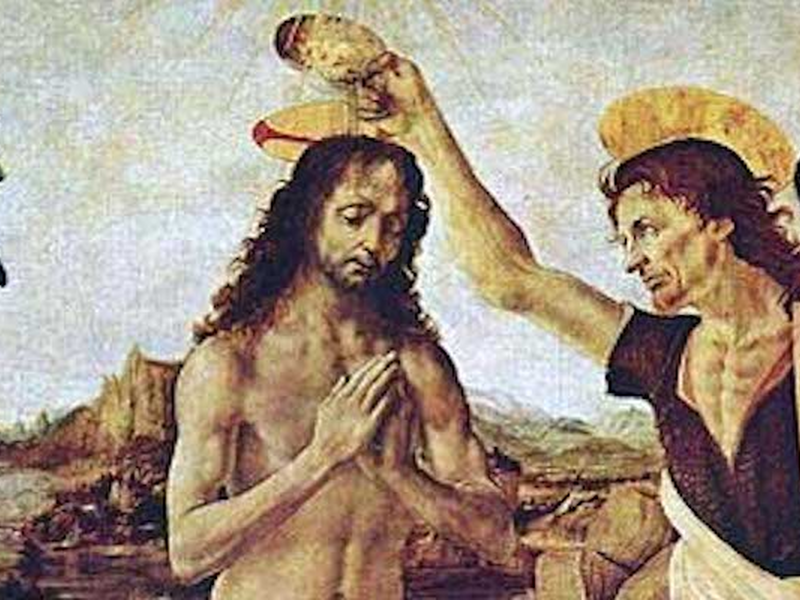
Transfiguration and Jesus’ Baptism

The allusions to Mt. Sinai in the transfiguration story point to Jesus as a new Moses and even more as Yahweh, the God who met Moses and Elijah on the mountain. The fact that Jesus, Moses, and Elijah spoke of Jesus’ “exodus” suggests that the mountain of transfiguration was intended…

by Ralph Allan SmithOctober 9, 2018

Showing page 86 of 309

See all

Showing page 7 of 43

See all
Theology

Barthes’s transcendental argument

That’s Barthes not Barth. As in Roland. Prickett suggests that Barthes’ proclamation of the death of the author, his manumission of interpretation from the obsession with the limited, final, “secret” meaning, and his hope for a liberated “anti-theological” and “revolutionary” reading that refuses “to fix meaning” in fact opens the…

August 5, 2008

Conservatism of Poststructuralism

Poststructuralism likes to think itself radical, but Stephen Prickett (Words and the Word) points out that it excludes the possibility of novelty. Barthes says that a text is “a tissue of quotations drawn from the unnumerable centres of culture.” And Kristeva’s notion of intertextuality, on Prickett’s reading, encloses a text…

August 5, 2008
Literature

Novelistic language

A few highlights from James Wood’s chapter on language in How Fiction Works . Early on, he mentions the “old modernist hope” that prose can be “as well written as poetry.” This will require readers and novelists to develop what Nietzsche called a “third ear”: “We have to read musically,…

August 4, 2008
Literature

Bad Books

Lewis remarks on the high difficulty of adverse criticism, noting that the difficulty lies partly in the fact that the defects of bad literature are found in good literature: “The novel before you is bad - a transparent compensatory fantasy projected by a poor, plain woman, erotically starving. Yes, but…

August 4, 2008

Terms of abuse

Lewis describes the process by which words that once expressed and aroused emotions by appealing to the imagination have been emptied of image-content and become purely emotional. “Damn you” used to be a real curse, because people believed in damnation. Now that fewer do, it’s a more or less purely…

August 4, 2008

Limits of language

In Lewis’s defense, he is trying to explain some of the limits of language, which are worth noting (this in the last chapter of Studies in Words ). One limitation has to do with language’s inability “to inform us about complex physical shapes and movements. Hence descriptions of such things…

August 4, 2008

Showing page 1485 of 2212

Browse by Category

In Medias Res

Your weekly digest for all things Theopolis.

Donate

Theopolis is nearly 100% donor-supported. Consider joining us on our mission.