
Theopolis Logo

Writing

Explore our collection of theological essays, biblical studies, and reflections on faith and culture.

See all
giammarco-zeh-ljawhtg-unsplash
Biblical Horizons

OPEN BOOK: Views and Reviews

Isaac E. Mozeson, The Word: The Dictionary that Reveals the Hebrew Sources of English (Northvale, NJ: Jacob Aaronson Inc., 1995), 310 pp. Reviewed by James B. Jordan. Once there was only one language in the world, the language God spoke to Adam. At the Tower of Babel, there came to…

by James B. JordanJune 28, 1996
tim-wildsmith-j6jv-mkdzqs-unsplash
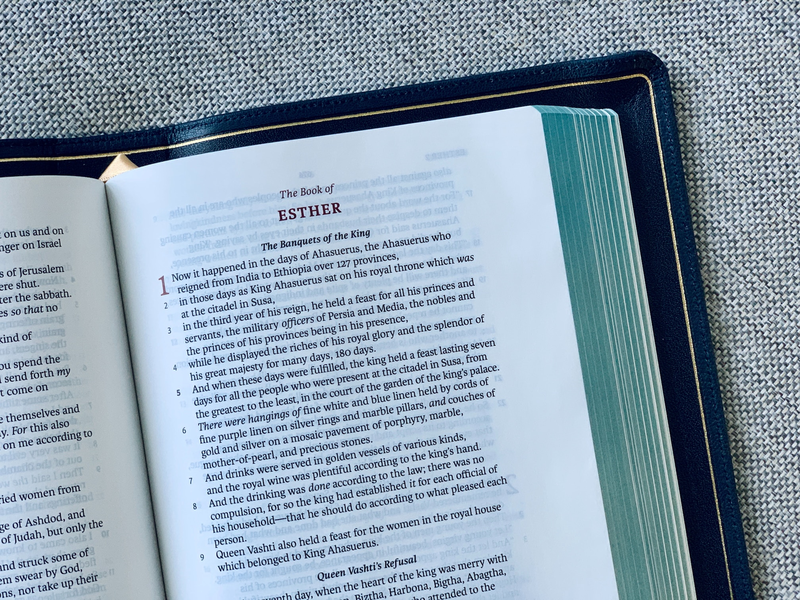
Esther

Esther: Historical & Chronological Comments (IV)

2. The Setting of the Book of Esther A. Xerxes (continued from previous issue) Ezra 6:14 says that the Jews finished building "according to the command of the God of Israel and the decree of Cyrus and Darius and Artaxerxes king of Persia." The problem with this verse is that…

by James B. JordanJune 28, 1996

ales-krivec-4mibe6zg5r0-unsplash
Acts

Jesus and Amalek

This essay goes with our previous study of the Amalek pattern back in Biblical Horizons No. 2. Since many do not have this essay, entitled "The Battle of Gog and Magog," let me cite the relevant paragraphs: Note in Genesis 12-15 that Abram moves into the land after escaping Pharaoh…

by James B. JordanJune 28, 1996

aaron-burden-1ebsmyrau-s-unsplash
Proverbs

The Strange Woman

Proverbs 7:6-23 is one of several passages early in the Proverbs in which Solomon warns his son about the wiles and dangers of the "strange woman." It is certainly quite proper to take these as straightforward warnings against sexual sins, and these are certainly warnings that need to be impressed…

by Peter LeithartJune 27, 1996
jan-kahanek-g3o5ztrk2e4-unsplash
Biblical Studies

Some Observations

1. In Luke 4:20 we read that after Jesus finished reading from Isaiah, "the eyes of all in the synagogue were fixed upon Him." This is usually taken in a psychological sense: They were amazed at Jesus somehow. I suggest that, as always, a merely psychological reading is a modern…

by James B. JordanMay 28, 1996
tim-wildsmith-j6jv-mkdzqs-unsplash
Esther

Esther: Historical & Chronological Comments (III)

2. The Setting of the Book of Esther Up to now we have assumed what we must prove, that the king in Esther is Darius the Great. While Biblical chronologists have usually taken this position, commentators on the book of Esther have often taken others as the king. One view,…

by James B. JordanMay 28, 1996

Showing page 265 of 309

See all

Showing page 7 of 43

See all

Early Higher Critics

In his recent commentary on Daniel, Jim Jordan suggests that the modern notion that Josiah and his priests wrote “the book of the law” they claimed to discover in the temple was likely shared by people of Josiah’s time: “The image-users of the high places had always resented the official,…

March 18, 2008
Literature

For and Against Cromwell

Harold Bloom (in The Visionary Company ) writes that just as “French culture has been divided between those who have accepted the French Revolution and its consequences and those who have sought to deny and resist them,” so English culture is “divided between those who have accepted the Puritan religious…

March 17, 2008

Trinitarian reading

In her book on Joachim of Fiore, Marjorie Reeves notes that Joachim insists on diligent study of both testaments as the means for reaching the Spiritual interpretation: “The relationship is clearly a Trinitarian one: in Joachim’s phrase, the Spiritualis intellectus proceeds from both the Testaments, just as the Spirit proceeds…

March 17, 2008

Nero Revived

In the first of his Dialogues , the fifth-century Christian writer Sulpicius Severus said that “there is no doubt that Antichrist, conceived by an evil spirit, has already been born.” He spelled out his expectations for the future: Nero and the Antichrist would come, Nero ruling in the west and…

March 17, 2008
History

Prophet and priest

According to Weber, personal charisma was the key distinguishing feature of prophetic office, and also the feature that most clearly separated prophets from priests: :”the prophet declares new revelations by charisma, whereas the priest serves to a sacred tradition. It is no accident that almost no prophet has come from…

March 17, 2008
Theology

Naming God

Feminist theology overtly objects to masculine names for God, but Christopher Seitz says that the debate goes much deeper: “what is at stake in modern debates is not whether God is father or can be addressed as ‘he.’ Rather, what is at stake is whether we are entitled to call…

March 17, 2008

Showing page 1551 of 2212

Browse by Category

In Medias Res

Your weekly digest for all things Theopolis.

Donate

Theopolis is nearly 100% donor-supported. Consider joining us on our mission.