Theopolis Logo

Writing

Explore our collection of theological essays, biblical studies, and reflections on faith and culture.

See all
alfons-morales-ylswjsy7stw-unsplash-1
Biblical Horizons

Fun Reading

The name of Harry Turtledove is well known to readers of fantasy and science fiction. Turtledove is an historian, and most of what he writes is in the "alternative history" genre. A fine collection of short stories, available in paperback, is his Agent of Byzantium . These stories are set…

by James B. JordanAugust 28, 1996

paul-bill-u2tjtlje4z0-unsplash
Biblical Horizons

Concerning Unicorns

In answer to a question, the following about the unicorn, a supposed "New Age" symbol: The unicorn, or monoceros (one-horn), was known around the ancient world. Some scholars believe it may have been the one-horned goat that is still bred today. Others think it may have originated in tales of…

by James B. JordanAugust 28, 1996

tim-wildsmith-j6jv-mkdzqs-unsplash
Esther

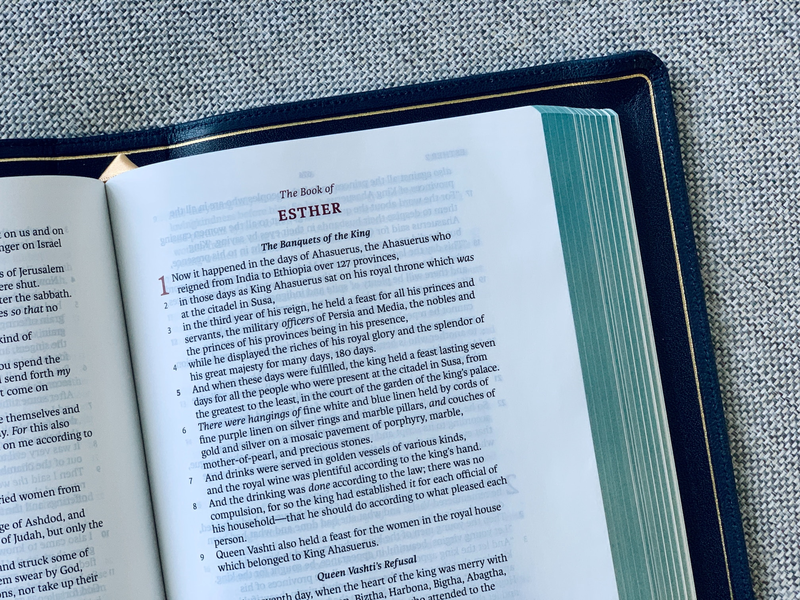
Esther: Historical & Chronological Comments (VI)

3. A Brief Survey of Esther (continued from the previous issue) Haman told the king that "a certain people" were rebellious against him, and that Haman wanted to rid the king of their noxious presence. The king agreed, and the two sat down to a feast. This is the third…

by James B. JordanAugust 28, 1996

sacre-bleu-r__kixb0i5m-unsplash
Biblical Horizons

Concerning Halloween

It has become routine in October for some Christian schools to send out letters warning parents about the evils of Halloween, and it has become equally routine for me to be asked questions about this matter. "Halloween" is simply a contraction for All Hallows’ Eve. The word "hallow" means "saint,"…

by James B. JordanAugust 28, 1996

tim-wildsmith-j6jv-mkdzqs-unsplash
Esther

Esther: Historical & Chronological Comments (V)

2. The Setting of the Book of Esther (continued from previous issue) Astyages E. W. Faulstich presents his arguments in his book History, Harmony, The Exile & Return . 1 To understand it, we have to have some background. The Assyrians ruled the near east. Median king Cyaxeres decided to…

by James B. JordanJuly 28, 1996
516976ldsdl
Revelation

Jephthah’s Daughter

In my commentary on Judges, I demonstrated that Jephthah in his Spirit-led vow intended to offer to Yahweh the first person who greeted him from the doors of his house after the battle. Since it was a custom for the young women to come out dancing to greet the returning…

by James B. JordanJune 28, 1996

Showing page 264 of 309

See all

Showing page 7 of 43

See all

Public and Private Piety

Thanks to Jayson Grieser for sending along notes and quotations from Ramie Targoff’s 2001 Common Prayer: The Language of Public Devotion in Early Modern England . Targoff points out that, contrary to what we might think, Protestants were more interested than Catholics in communal worship. “For sixteenth-century Catholics,” she writes,…

April 7, 2007

Calvin and allegory

Calvin is harsher on allegorical interpretation than almost anyone, yet he is all in favor of typology. David, Zedekiah, Joseph, Aaron, Samson, Joshua, Zerubbabel, Cyrus and others are types of Christ. It is no easy task to discover where he draws the line between allegory and typology, though. At times,…

April 5, 2007

Yahweh/Iehave

“Yahweh” is often thought to be a purely modern rendering of the Hebrew name, but Smalley finds a medieval glossator who writes the name as “Iahave.” She goes on: “The ‘monstrous form’ Jehoveh was already known to Christians in the late thirteenth century. Henry Crossy seems to compromise between Jehoveh…

April 5, 2007

Kids in Mother’s Milk

Aquinas rejected Augustine’s dismisal of literal interpretations of the law as “absurdities,” arguing that “the end of the ceremonial precepts was twofold, for they were ordained to divine worship, for that particular time, and to the foreshadowing of Christ.” Applying this principle, he sought for a plausible literal interpretation of…

April 5, 2007

Kids in Mother’s Milk

Aquinas rejected Augustine’s dismisal of literal interpretations of the law as “absurdities,” arguing that “the end of the ceremonial precepts was twofold, for they were ordained to divine worship, for that particular time, and to the foreshadowing of Christ.” Applying this principle, he sought for a plausible literal interpretation of…

April 5, 2007

Man of Sorrows

Following Jewish exegetes of his time, Andrew of St. Victor interpreted Isaiah 53 as a prophecy of Israel. Isaiah used the phrase “man of sorrows” to speak “of the people as though of one man.” “Bearing infirmities” refers to “the people who were to suffer in the Babylonian captivity” and…

April 5, 2007

Showing page 1696 of 2212

Browse by Category

In Medias Res

Your weekly digest for all things Theopolis.

Donate

Theopolis is nearly 100% donor-supported. Consider joining us on our mission.