Theopolis Logo

Writing

Explore our collection of theological essays, biblical studies, and reflections on faith and culture.

See all
last-supper
Eucharist

The Epiclesis in Reformed Eucharistic Prayer, (Part 1)

What happens at the Table of the Lord? If Christ is really present, then how is this so? The witness of the Church throughout history has been that Christ is present in the Eucharist through the operation of the Holy Spirit, and in the practice of the Church, prayers at…

by Christopher KouOctober 11, 2016

sixteen-miles-out-al48tflf4e8-unsplash
Spiritual Warfare

Enemies and Victims

In the power of the Spirit, the gospel forms a society in which there is neither Jew nor Greek, slave nor free, a society that is characterized by unity, long-suffering, patience; love. The gospel forms a culture whose participants do not steal but labor and give, who are not angry…

by Peter LeithartOctober 6, 2016
sixteen-miles-out-d40gdcd_-he-unsplash
Mark

Sovereignty and Self-Gift

At the 1997 Biblical Horizons Summer Conference, the Rev. Jeffrey Meyers presented a series of remarkable lectures on the gospel of Mark. Among his many insightful comments, he suggested that the second gospel continues where the first gospel ends; Matthew ends with Jesus saying "Go" (Matthew 28:19), and Mark’s shows…

by Peter LeithartOctober 4, 2016
e99a2338
Art

Birmingham Life and Culture Series: Joseph Bottum

On October 25 at Avondale Brewery , Theopolis will be co-sponsoring the 2nd Annual Birmingham Life and Culture Series. This year's event will feature author Joseph Bottum. Joseph is known for his writings on literary criticism, religion, and his short stories. Essayist and reviewer Mary Eberstadt has said that "his…

by Brian MoatsSeptember 29, 2016
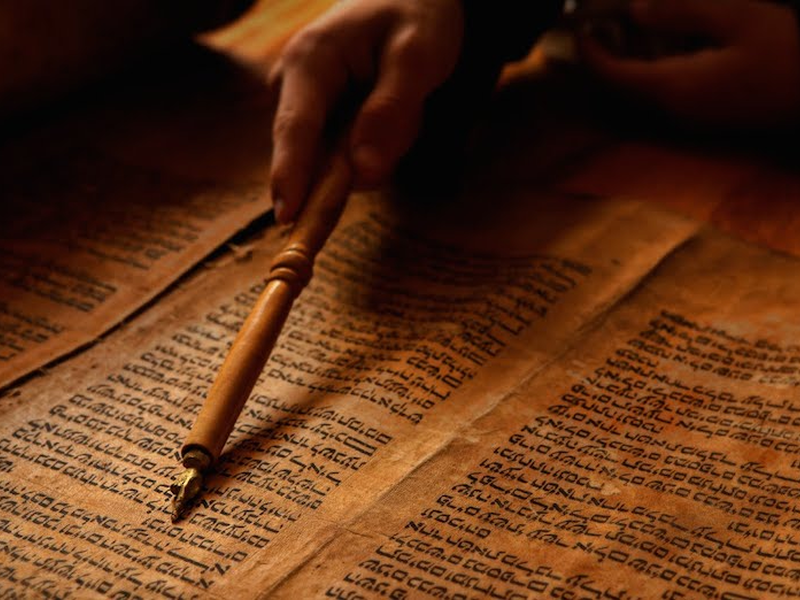
hebrew-manuscript
Biblical Studies

Are Not All These Galileans?

One of the curiosities of the New Testament revelation is its focus on Galilee. The region of Galilee was given to Asher, Zebulun, Naphtali, and Issachar, and the events of Judges 4-8 occurred there, so it had some importance in Israelite history. But when the tribe of Ephraim led the…

by James B. JordanSeptember 29, 2016
screen-shot-2016-03-31-at-9-32-11-am
Hermeneutics

Hero's Theme

In a recent post , Ian Paul discusses the practice of allegorical interpretation, reflecting in particular upon a conversation he had with someone concerning the reading of the story of Rahab. Paul’s interlocutor argued strongly for an allegorical reading of the Rahab story, writing: “Joshua is a type of Christ…

by Alastair RobertsSeptember 27, 2016

Showing page 124 of 309

See all

Showing page 7 of 43

See all

Exegetical progress

If the fathers have already explained the Scriptures, Andrew of St. Victor asked, why do I need to? He answered that truth dwells “deep” and “screens herself from mortal sight.” There is always more truth to dig up because truth “hides, yet so as never wholly to be hidden. Careful…

April 4, 2007
Literature

Jane Austen, Economist

England’s economy in Austen’s time was still dominated by land ownership. Land was the most settled and permanent form of wealth, and writers like Coleridge and Burke asserted that landownership formed a “natural” governing class that had a physical stake in the nation. In 1710, Parliament enacted property qualifications for…

April 4, 2007
History

Equality and fashion

In 1767, one N. Foster wrote, “In England the several ranks of men slide into each other almost imperceptibly, and a spirit of equality runs through every part of their constitution. Hence arises a strong emulation in all the several stations and conditions to vie with each other; and the…

April 3, 2007
History

Consumer revolution

In the 1982 symposium, The Birh of a Consumer Society , Neil McKendrick identifies some of the chief features of the demand-side of the social and economic of the 18th century. What did it mean for England to become a “consumer society”? 1. More people than ever could acquire material…

April 3, 2007
History

Mimetic adverts

Samuel Johnson recognized the character of avertising quite early. he noted in 1761 that “advertisements are now so numerous that they are very negligently perused, and it is therefore become necessary to gain attention by magnificence of promises and by eloquence sometimes sublime and sometimes pathetic.” And he saw that…

April 3, 2007
History

Early advertising

Seen in the advertising section of many 18th-century English newspapers: “a fine young breast of milk willing to enter a gentleman’s household.” Presumably attached to a wet nurse. And an advertisement for a bed that “at the head . . . in the full centre front, appears sparkling with electrical…

April 3, 2007

Showing page 1697 of 2212

Browse by Category

In Medias Res

Your weekly digest for all things Theopolis.

Donate

Theopolis is nearly 100% donor-supported. Consider joining us on our mission.