Theopolis Logo

Writing

Explore our collection of theological essays, biblical studies, and reflections on faith and culture.

See all
ross-sneddon-zstkmnvmwsq-unsplash-2
Acts

No One Dared Join Them

And through the hands of the apostles many signs and wonders were done among the people. And they were all with one accord in Solomon's Porch. Yet none of the rest dared join them, but the people esteemed them highly. Acts 5:12-13 When Grandma needed healing, her children knew the…

by Tim NicholsAugust 31, 2021

james-coleman-heksmrnfajk-unsplash
How to Worship

Why Sacraments?

Like certain kinds of music, the unchanging rhythm of Aquinas's Summa gets into your bones. Read a few sections and it begins to run through your head. You start drumming your fingers, humming, swaying gently to the rhythm of Videtur-Sed Contra-Responsio, Videtur-Sed Contra-Responsio, “It seems-On the contrary-I answer.” The only…

by Peter LeithartAugust 26, 2021
alex-guillaume-2k4du3r1giy-unsplash
Biblical Chronology

The Embarrassment of Biblical Chronology

And Arpachshad lived thirty-five years, and became the father of Shelah . . . And Shelah lived thirty years, and became the father of Eber . . . and Eber lived thirty-four years and became the father of Peleg . . . and Peleg lived thirty years, and became the…

by James B. JordanAugust 24, 2021
screen-shot-2021-08-19-at-1-03-26-pm
Hermeneutics

The Fall of Satan

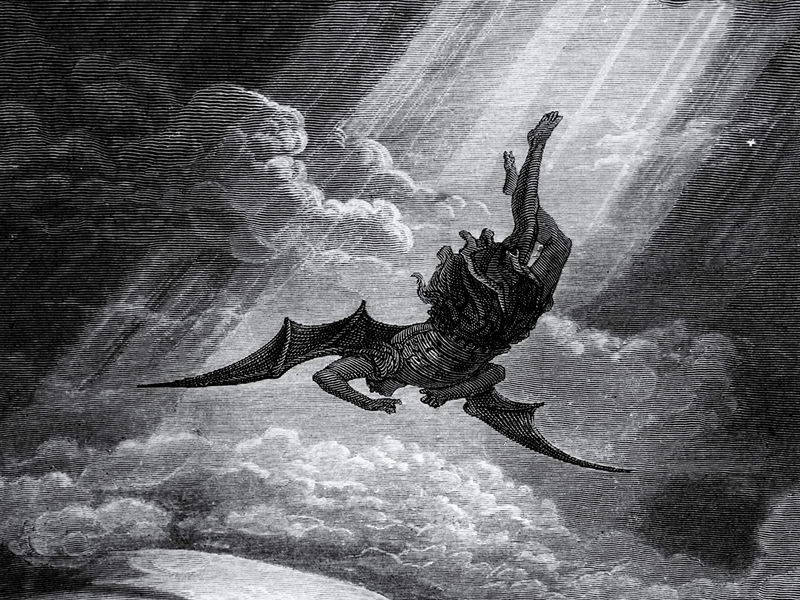
Of course, the title should be something like, “The Fall of the Angel Who Came to be Satan,” but that and other more accurate titles are too cumbersome. The question is: who is Satan, and when and how did he become “Satan” (Adversary, Accuser) and the “devil” (slanderer)? By my…

by Ralph Allan SmithAugust 19, 2021
harshit-sharma-wertrhhtz4s-unsplash
Baptism

Baptismal Rain and the Feast of Booths

In The Oddness of the Feast of Booths , we saw that the Feast of Booths is a commemoration of the first encampment of Israel at Sukkoth (Booths) in Exodus 12:37, almost certainly the first celebration of the week of Unleavened Bread after the first Passover. The Feast of Booths…

by James B. JordanAugust 17, 2021
screen-shot-2021-08-12-at-2-57-54-pm
Proverbs

An Antidote for Yuppie Postmillennialism

This piece was originally published in 1989. 1. The Blessed Hope "Looking for the blessed hope and the appearing of the glory of our great God and Savior, Christ Jesus." Titus 2:13 I was recently asked how I as a postmillennialist would preach on "The Blessed Hope." This is often…

by James B. JordanAugust 12, 2021

Showing page 52 of 309

See all

Showing page 7 of 43

See all
History

Converted Jerusalem

In his fascinating Rise of Christianity , Rodney Stark cites estimates that there were between 10,000 and 20,000 inhabitants of Jerusalem in the first century. Stark uses this to falsify Luke’s claims that there were 5000 Christians in Jerusalem (Acts 4:4) and “many thousands” of Jews (Acts 21:20): “Had there…

March 30, 2007

Hebraic hermeneutics

One Rhonda Wauhkonen discusses Nicholas of Lyra’s “Hebraic” semiotics and hermeneutics in a 1992 article on Chaucer. She begins by contrasting Augustine’s signum/res distinction to Lyra’s Hebraic viewpoint: “In the Hebrew system as evidenced in Scripture and as adapted by Nicholas, such stratification of signification did not exist, for the…

March 29, 2007

Last and first

Nicholas of Lyra is known for his notion of a “double literal” sense to Scripture. For him, interpretation ad litteram includes both the historical and the doctrinal/christological senses, and he suggests that the ancient Hebrews could well have seen the Messianic sense as the literal sense. He also suggests that…

March 29, 2007

Nicholas of Lyra’s afterlife

In Book 3 of Gargantua and Pantagruel, Rabelais attributes an odd opinion to the 14th-century exegete, Nicholas of Lyra: “Pantagruel, having wholly subdued the land of Dipsody, transported thereunto a colony of Utopians, to the number of 9,876,543,210 men, besides the women and little children, artificers of all trades, and…

March 29, 2007

Nicholas of Lyra’s afterlife

In Book 3 of Gargantua and Pantagruel, Rabelais attributes an odd opinion to the 14th-century exegete, Nicholas of Lyra: “Pantagruel, having wholly subdued the land of Dipsody, transported thereunto a colony of Utopians, to the number of 9,876,543,210 men, besides the women and little children, artificers of all trades, and…

March 29, 2007

Thomas on the Parable of the Workers

Steinmetz summarizes Thomas’s remarkably “NTWrightian” commentary on Matthew 20:1-16. While acknowledging an Origenist tradition that sees the hours as moments of an individual life, Thomas is more interested in the Irenaean tradition that interprets the parable in terms of redemptive history: “The hours mentioned in the parable are not stages…

March 29, 2007

Showing page 1699 of 2212

Browse by Category

In Medias Res

Your weekly digest for all things Theopolis.

Donate

Theopolis is nearly 100% donor-supported. Consider joining us on our mission.