Theopolis Logo

Writing

Explore our collection of theological essays, biblical studies, and reflections on faith and culture.

See all
hebrew-manuscript-2
Hermeneutics

The Complexity of Biblical Allusion

There is no question about the fact that the book of Deuteronomy is full of literary allusion. But there is a serious problem, even a paradox, of understanding how that allusion works. To begin with, if we assume that Deuteronomy was written by Moses — with some editorial emendations added…

by Ralph Allan SmithJanuary 23, 2018

bladerunner
Culture

The Artificial Resurrection

Genesis and Genetics in Blade Runner 2049 The power of science fiction, and what’s positive about it, is that you’re able to experience the worst-case scenario without actually having to live it. (Actor Ryan Gosling, who plays Officer “K”) (Warning: The following analysis contains spoilers for both Blade Runner films.)…

by Mike BullJanuary 18, 2018
sixteen-miles-out-d40gdcd_-he-unsplash
Biblical Studies

The Battle of Gog and Magog

The battle of Gog and Magog is found in Ezekiel 38-39. My purpose in this brief essay is to propound an explanation for this passage that I have not encountered in any of my commentaries, but that makes more sense to me than any other. I offer it here in…

by James B. JordanJanuary 16, 2018
resurrection

Deep Hope

I. Varlam Shalamov in Kolyma Tales describes his experience of the Gulag, where he spent more than a dozen of years. In a story titled The Life of Engineer Kipreev Shalamov reflects on the theme of hope in the life of a prisoner: “Hope always shackles the convict. Hope is…

by Bogumil JarmulakJanuary 11, 2018
abraham-defeats-kings-g-jollain-2
Biblical Theology

Abram’s 318 Men

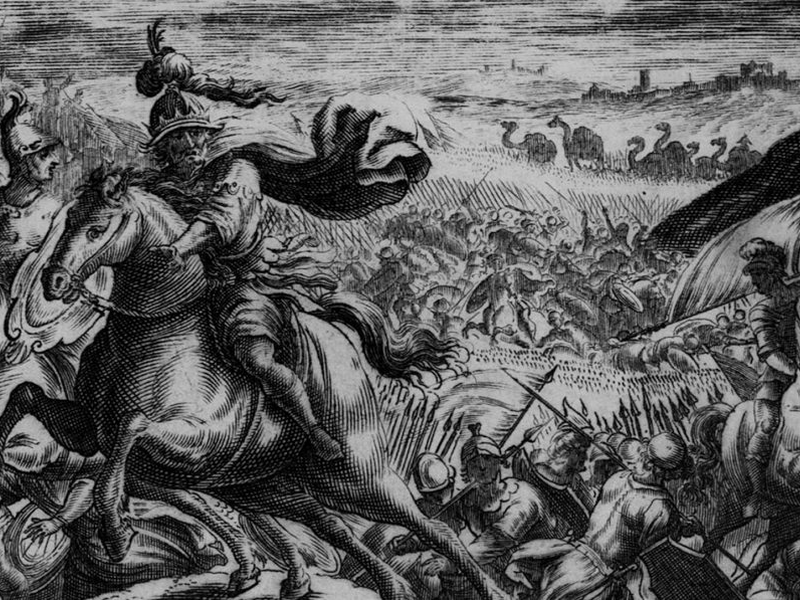
Genesis 14:14 says that Abram mustered his trained men, “born in his house,” to rescue Lot, and gives their number as 318. It is clear that the precise number is provided for some reason, but what is it? S. Gevirtz notes that 318 is the sum of all the prime…

by James B. JordanJanuary 9, 2018
tanner-mardis-xuxghzhibn4-unsplash-1
Biblical Studies

The Flying Scroll

And he said to me, "What do you see?" And I answered, "I see a flying scroll; its length is twenty cubits and its width ten cubits" (Zechariah 5:2). Immediately following his vision of the outpouring of the Spirit upon the restoration community (4:1-14), Zechariah saw a flying scroll. The…

by Peter LeithartJanuary 4, 2018

Showing page 100 of 309

See all

Showing page 7 of 43

See all
Philosophy

Rousseau and Voltaire

Rosenstock-Huessy’s discussion of Voltaire and Rousseau depends on his prior discussion of the role of inspired literature in the formation of a nation. They are adherents to the revolutionary creed of literary inspiration, the “cult o f an inspired literature.” He compares the two to Tolstoy and Dostoevsky, for like…

January 25, 2007
History

Paris and French Nationhood

Rosenstock-Huessy deals with a number of interrelated issues in a section of Out of Revolution dealing with Paris and the French notion of nationhood: He talks about the establishment of Paris as the intellectual center of France and of Europe; about the division between Paris and Versailles as background to…

January 25, 2007

Calvin on Baptism again

A couple of thoughts on the Calvin quotations I posted yesterday, inspired by a reader’s response. 1) Calvin appeals to his doctrine of “accommodation” to explain why the sign of baptism is necessary. God does speak in ways we can grasp; if that’s all accommodation is, fine. But it often…

January 25, 2007

Father and Son

Tom Smail’s Like Father, Like Son: The Trinity Imaged in Our Humanity (Eerdmans 2005) has a lot going for it. Written for a general Christian readership, it reflects a thorough familiarity with both tradition and contemporary work on the Trinity, and applies Trinitarian patterns to human life in interesting ways.…

January 25, 2007

Timely words

Stahmer offers this useful summary of Rosenstock-Huessy’s and Rosenzweig’s attack on “objectivity”: “For J. G. Hamann, and for all those who have accepted the sacramental qualities inherent in the frailty and tentativeness of human speech, the ambiguities and relativity of history could not possibly be denied. Both Rosenstock-Huessy and Rosenzweig…

January 24, 2007

Ahead of the Curve

In their capacity as Sprachdenkern - Speech-thinkers, Rosenstock-Huessy and Rosenzweig anticipated a number of developments in philosophy, theology, and hermeneutics. Stahmer writes, “Both Rosenzweig and Rosenstock-Huessy, but most especially the latter, can now be seen to have been hermeneutical pioneers who anticipated, by many years, the work of Martin Heidegger,…

January 24, 2007

Showing page 1729 of 2212

Browse by Category

In Medias Res

Your weekly digest for all things Theopolis.

Donate

Theopolis is nearly 100% donor-supported. Consider joining us on our mission.