Theopolis Logo

Writing

Explore our collection of theological essays, biblical studies, and reflections on faith and culture.

See all
trnava-university-beeyeib-am8-unsplash
Biblical Chronology

Meredith G. Kline Strikes Back, Part 2

In our first essay we looked at Kline’s flawed exegesis of Genesis 2:5 as it relates to Day 3 of creation. Now we turn to Kline’s new argument against a chronological reading of Genesis 1, as found, again, in "Space and Time in the Genesis Cosmogony," Perspectives on Science and…

by James B. JordanMarch 29, 1997
30211-bathsheba-800w-tn
Hermeneutics

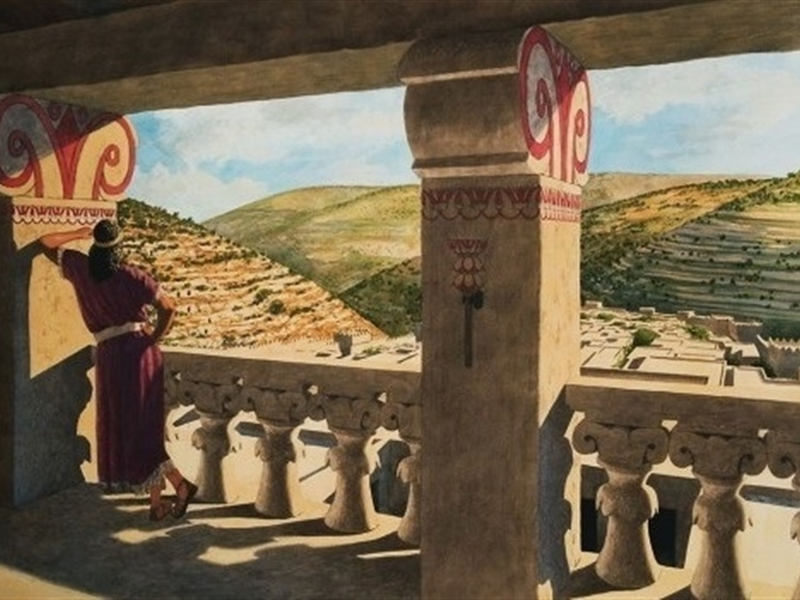
Bathsheba: The Real Story

One of the advantages of paying very close attention to the details in the Bible, especially chronological and genealogical details, is that they can shed light on situations that don’t seem to make much sense apart from them. One such situation is that of Bathsheba. It appears that Bathsheba willingly…

by James B. JordanMarch 28, 1997
jonathan-cooper-ygxq7hfdjzq-unsplash
Church Calendar

Is the Church Year Biblical? | A Parking Lot Parable

Once upon a time, Jeff Meyers and Tony Rollins–old friends who had not seen each other for a few years–met in the parking lot of a neighborhood church. They were dropping off their pre-school children at the church for Mother’s Day Out. They were such conscientious and helpful fathers. As…

by Jeff MeyersMarch 20, 1997
annie-spratt-upxf6to3fea-unsplash
Daniel

The Allegory of Susanna

Years ago, when I was at the briefly-existing Geneva Divinity School, I taught a course in the Apocrypha. One thing that struck me at that time is that two of the stories are almost certainly religious allegories (as well as moral tales): Judith and Susanna. Since "Susanna" means "Lily," this…

by James B. JordanFebruary 28, 1997
serafima-lazarenko-_ivuwprfczi-unsplash
Biblical Horizons

A Blossom of Yahweh’s Field

Peter’s essay inspires me to write up some similar thoughts about the flower of the field. Rightly does Peter associate the almond with Yahweh’s garden, because the Garden of Eden is symbolically positioned as parallel to the Holy Place of the Tabernacle and Temple. To wit: Since Aaron’s rod blossomed…

by James B. JordanFebruary 28, 1997
trnava-university-beeyeib-am8-unsplash
Biblical Chronology

Meredith G. Kline Strikes Back, Part 1

We have had occasion to discuss the views of Meredith G. Kline previously in these newsletters, and now it is time to do so again. Kline teaches at Gordon-Conwell Theological Seminary and also at the Westminster Theological Seminaries (Philadelphia and San Diego). He is the author of some interesting insights…

by James B. JordanFebruary 28, 1997

Showing page 259 of 309

See all

Showing page 7 of 43

See all

Jihad

Despite the evidence of the past half-decade (longer, actually), many Muslims still insist on portraying Islam as fundamentally peaceful, tolerant of non-Muslims, and claim the holy-war interpretation of jihad as an aberration of a few fanatics. Perhaps not surprisingly, these apologists are found not only in Arab and Iranian mosques…

December 30, 2006

History of texts

One way to characterize the modern innovation in biblical interpretation is that it changes the Bible from a history of salvation into a history of documents. The Bible does not give access to history or the acts of God; it only gives us access to itself - the Bible as…

December 30, 2006
Literature

Oxford Companion

The new edition of the Oxford Companion to English Literature , edited by novelist Margaret Drabble, is a superb, entirely updated reference work. The range is astonishing: As one would expect, it includes biographical entries for British poets and novelists from the earliest times to yesterday, but also reviews the…

December 30, 2006
History

Allegory and the West

Gadamer traces the development of the notion of symbol and the corresponding, and contemporaneous, devaluation of allegory. Allegory came to be identified with “non-art” as experiential-expressive notions of art and poetry developed in post-Kantian romanticism. Along the way, he notes the importance that allegory played in the formation of Western…

December 29, 2006

Advice to young scholars, and old

In the same 1962 interview, Rosenstock-Huessy has some shrewd advice about the corrupting power of grant money on youn scholars. “If I have to solicit great foundations for money for my research,” he says, “then I have to propose something which is already obsolete for me. I know no researcher…

December 29, 2006

Masculine education

Rosenstock-Huessay notes that the differences between European and American elementary education have much to do with the fact that “The teaching function in America, until recent years [this from a 1962 interview], had been women’s work. All teaching up to higher education, therefore, had a completely different appearance than in…

December 29, 2006

Showing page 1745 of 2212

Browse by Category

In Medias Res

Your weekly digest for all things Theopolis.

Donate

Theopolis is nearly 100% donor-supported. Consider joining us on our mission.