Theopolis Logo

Writing

Explore our collection of theological essays, biblical studies, and reflections on faith and culture.

See all
hebrew-manuscript-2
Hermeneutics

The Complexity of Biblical Allusion

There is no question about the fact that the book of Deuteronomy is full of literary allusion. But there is a serious problem, even a paradox, of understanding how that allusion works. To begin with, if we assume that Deuteronomy was written by Moses — with some editorial emendations added…

by Ralph Allan SmithJanuary 23, 2018

bladerunner
Culture

The Artificial Resurrection

Genesis and Genetics in Blade Runner 2049 The power of science fiction, and what’s positive about it, is that you’re able to experience the worst-case scenario without actually having to live it. (Actor Ryan Gosling, who plays Officer “K”) (Warning: The following analysis contains spoilers for both Blade Runner films.)…

by Mike BullJanuary 18, 2018
sixteen-miles-out-d40gdcd_-he-unsplash
Biblical Studies

The Battle of Gog and Magog

The battle of Gog and Magog is found in Ezekiel 38-39. My purpose in this brief essay is to propound an explanation for this passage that I have not encountered in any of my commentaries, but that makes more sense to me than any other. I offer it here in…

by James B. JordanJanuary 16, 2018
resurrection

Deep Hope

I. Varlam Shalamov in Kolyma Tales describes his experience of the Gulag, where he spent more than a dozen of years. In a story titled The Life of Engineer Kipreev Shalamov reflects on the theme of hope in the life of a prisoner: “Hope always shackles the convict. Hope is…

by Bogumil JarmulakJanuary 11, 2018
abraham-defeats-kings-g-jollain-2
Biblical Theology

Abram’s 318 Men

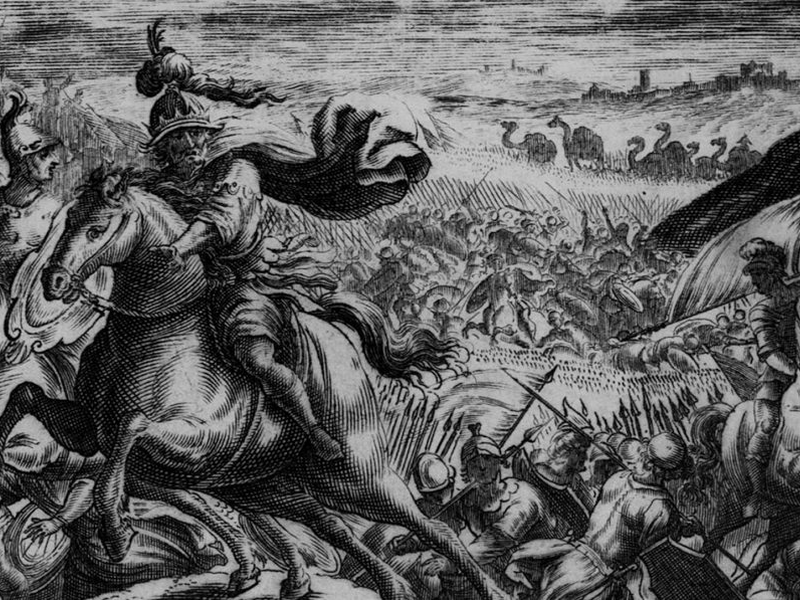
Genesis 14:14 says that Abram mustered his trained men, “born in his house,” to rescue Lot, and gives their number as 318. It is clear that the precise number is provided for some reason, but what is it? S. Gevirtz notes that 318 is the sum of all the prime…

by James B. JordanJanuary 9, 2018
tanner-mardis-xuxghzhibn4-unsplash-1
Biblical Studies

The Flying Scroll

And he said to me, "What do you see?" And I answered, "I see a flying scroll; its length is twenty cubits and its width ten cubits" (Zechariah 5:2). Immediately following his vision of the outpouring of the Spirit upon the restoration community (4:1-14), Zechariah saw a flying scroll. The…

by Peter LeithartJanuary 4, 2018

Showing page 100 of 309

See all

Showing page 7 of 43

See all
History

Hyperreal

Baudrillard sounds like a nut when he says that we are now living in a hyperreal world, a virtual world. But there is certainly something to it. We’re still physical creatures, of course, surrounded by physical objects, and that doesn’t change when we get strapped in for some virtual experience.…

November 2, 2006
History

Community of the fearful

Postmodernity unleashes fear, Bauman says: “Modernity was a continuous and uncompromising effort to fill or to cover up the void; the modern mentality held a stern belief that the job can be done - if not today then tomorrow. The sin of postmodernity is to abandon the effort and to…

November 2, 2006
History

Chronopolitics

Johannes Fabian argues in his Time and the Other that “geopolitics has its ideological foundations in chronopolitics.” Bauman summarizes the argument: “The modern perspective ‘denied coevality’ to any form of life different from its own; it construed the Other of itself as ‘living in another time.’ The allochronic distancing device…

November 2, 2006
History

Slavery in America

In his recent history of slavery in the New World, David Brion Davis records some surprising facts about American slavery. Prior to 1820, for instance, African slaves were more numerous than European settlers by a ratio of 5 to 1. About 5-6 percent of slaves in the Western hemisphere were…

November 1, 2006
Politics

Toleration and absolutism

In his history of the idea of toleration, the late A.J. Conyers summarizes the arguments of Robert P. Kraynak on the development of Locke’s thought on religious toleration. The puzzle is this: Locke’s early works are absolutist in a Hobbesian vein, invoking the supreme magistrate’s power to oversee religion for…

November 1, 2006
Literature

Herbert on Pop Music

Zbigniew Herbert writes in a poem entitled “Mr Cogito and Pop” of a visit to a concert. “Mr Cogito,” a recurring character in Herbert’s poems, reflects on the “aesthetics of noise” and offers some penetrating observations on the character of contemporary pop music: “to be a god means to hurl…

November 1, 2006

Showing page 1772 of 2212

Browse by Category

In Medias Res

Your weekly digest for all things Theopolis.

Donate

Theopolis is nearly 100% donor-supported. Consider joining us on our mission.