Theopolis Logo

Writing

Explore our collection of theological essays, biblical studies, and reflections on faith and culture.

See all
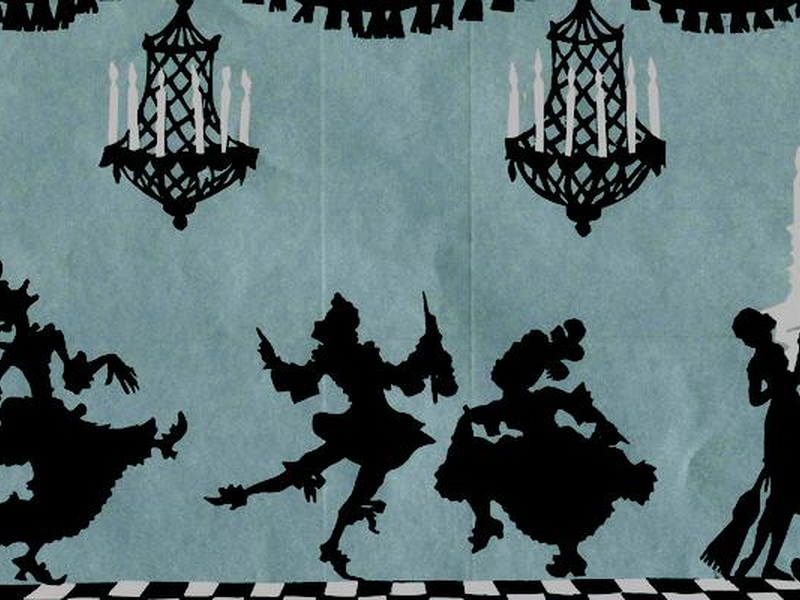
cinderella
C. S. Lewis

On Reading Fairy Tales

One of the main characters of That Hideous Strength by C. S. Lewis is Mark Studdock, who was a sociologist but his true passion was being a part of the so called “inner circle.” He wanted to belong to the elite that would bestow glory and power. On the other…

by Bogumil JarmulakMay 26, 2015

ceilingfromtheimmaculateconceptionchapel
Acts

By the Spirit

The first Pentecost meant many things, fulfilling many types, shadows, and prophecies from the Old Testament. Pentecost marked the beginning of a new creation, and a new humanity. Just as the Spirit hovered over the waters of the original formless and void creation to shape and fill it, so the…

by Peter LeithartMay 21, 2015
tim-marshall-k2u71wv2ei4-unsplash
Interview

Student Profile - Clint Hail

Clint Hail has had an exciting, varied life. A West Point graduate and a former infantry officer, he now serves as Community Transformation Director in Costa Rica for e3 Partners Ministries. Clint has also attended two Theopolis Institute courses. Clint recently told Theopolis about his experiences in the military, his…

by TheopolisMay 20, 2015
skyler-gerald-oygna91tfis-unsplash
Homosexuality

Music in Wartime

Before the summer is out, the US Supreme Court will hand down a decision in Obergefell v. Hodges , the same-sex marriage case. Every other week, ISIS releases a new video of masked fighters beheading Christians, and the rest of the Middle East is in chaos. Boko Haram terrorizes parts…

by Peter LeithartMay 19, 2015
banner
Theopolis News

New Theopolis Board Members

The Theopolis Institute Board added three new Board members at its semi-annual Board meeting on May 16: Dr. Roy Atwood, Pastor Uri Brito, and Rod Olps, Jr. Formerly President of New Saint Andrews College in Moscow, Idaho, Atwood was recently appointed Abraham Kuyper Distinguished Professor of Classics at Morthland College…

by TheopolisMay 18, 2015
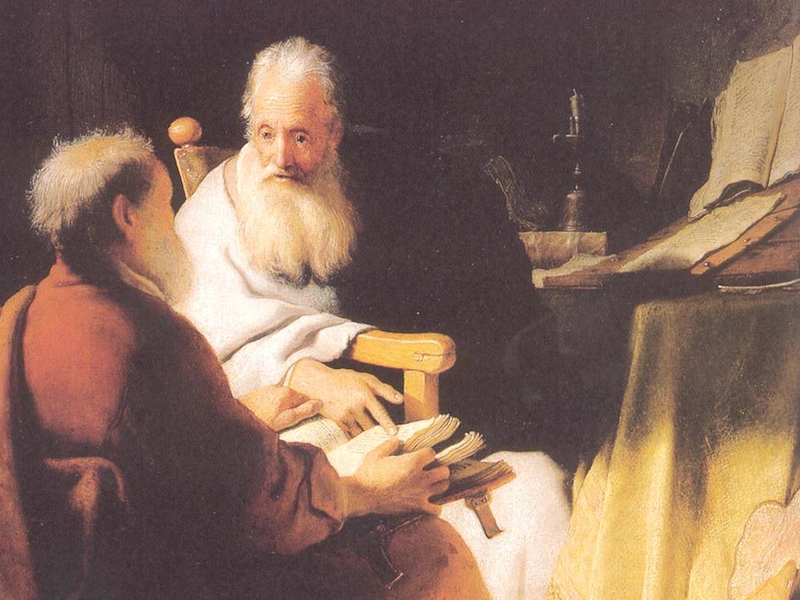
peter-and-paul
Galatians

Galatian Temptations

The kingdom of God has come upon us, Jesus said. The justice of God is revealed in the gospel, Paul said. Whoever is in Christ, there is new creation. Isaiah's visions of lions and lambs and a peaceable kingdom are visions about the effect of the Messiah's first advent. If…

by Peter LeithartMay 14, 2015

Showing page 153 of 309

See all

Showing page 7 of 43

See all
Philosophy

Continental v. analytic

Continuing through Simon Critchley’s book on Continental philosophy, the following analogy seems to capture some aspects of the contrast of Continental and analytic: Continental is Catholic: conscious of tradition, respectful of saints, aware of historical contextualization. Philosophy is the history of philosophy. Analytic is Protestant: deals with de-contextualized philosophical problems,…

September 14, 2006
History

Modernist postmoderns

Postmodern critics of modernity sometimes treat the latter not only as the pursuit and ambition for totality; they treat it as a totality, as an undifferentiated whole. But if postmoderns are right, even modernity was fragmented and frayed at the edges, and the appearance of totality is a modernist ruse.…

September 13, 2006
History

Modernity and dirt

A subsidiary thesis: Modernity is motivated by a desire for purity, by dirt-avoidance - dirt being, as Mary Douglas says, “matter out of place.” Counter-modernity is dirt’s revenge, celebration of dirt.

September 13, 2006
History

Modernity as court culture

Featherstone once again. He points out that sometime in the 18th century, upper class culture divided from lower class culture: “in 1500 the educated strata despised the common people although they shared their culture. Yet by 1800 their descendants had ceased to join spontaneously in popular culture and were rediscovering…

September 13, 2006
History

Romantic ethic and Consumption

In his 1987 book, The Romantic Ethic and the Spirit of Modern Consumerism , C. Campbell attempts to explain the origins of contemporary obsession with novelty, pleasure in the new, self-expression through consumption of goods. He traces it to romanticism’s focus on “imagination, fantasy, mysticism, creativity and emotional exploration” (Featherstone’s…

September 13, 2006
History

Consumption, Body, and the Sacred

A couple of further notes from Featherstone’s very stimulating book. First, citing Pierre Bourdieu, he notes the limits of seeing consumption as an isolated marker of status. The signs “that betray a person’s origins and trajectory through life are manifest in body shape, size, weight, stance, walk, demeanour, tone of…

September 13, 2006

Showing page 1794 of 2212

Browse by Category

In Medias Res

Your weekly digest for all things Theopolis.

Donate

Theopolis is nearly 100% donor-supported. Consider joining us on our mission.