Theopolis Logo

Writing

Explore our collection of theological essays, biblical studies, and reflections on faith and culture.

See all
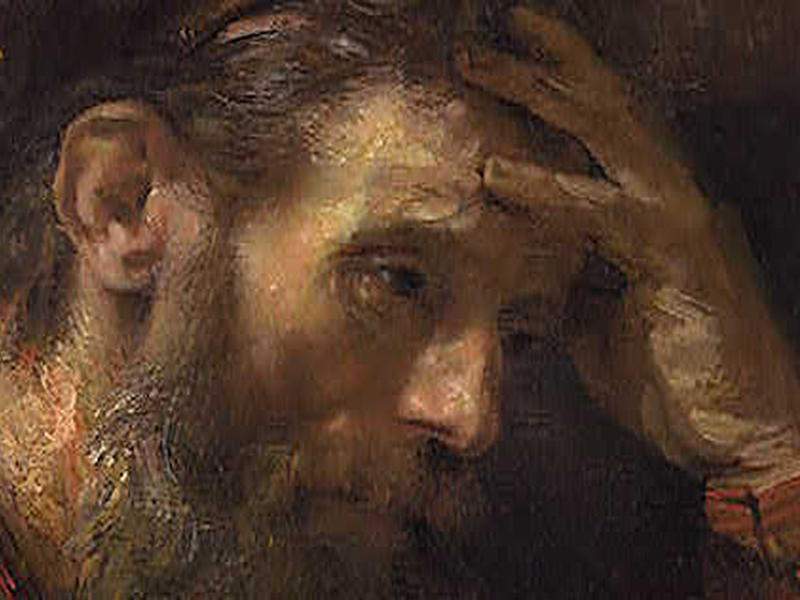
paul-rembrandt
Apostle Paul

Paul Among the People

We've all heard it, too often to count. The Apostle Paul was a misgynistic homophobic pro-slavery authoritarian, probably a repressed homosexual himself, the first Puritan - Puritan here defined as "someone who cannot sleep if someone in the world is having fun." To call this a caricature is too generous.…

by Peter LeithartAugust 28, 2018
img_1043
How to Worship

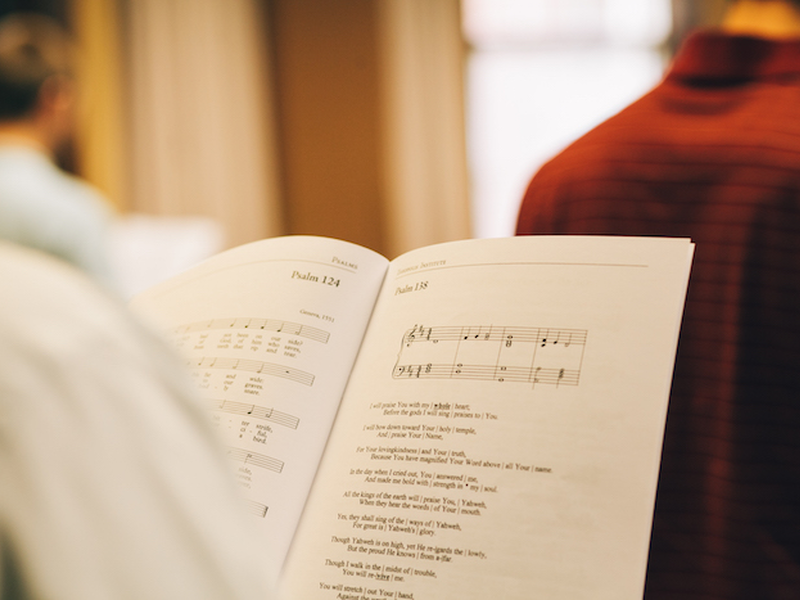
Psalms for Exile: The Narrative Progression in the Fifth Book of the Psalter

Some of our forefathers believed in reading/singing the psalms in order. Today, when the psalms are even used at all, they tend to be used randomly, though sometimes tied to a church calendar or to the pastor’s sermon. The Bible does not bind us to any particular practice, but there…

by James B. JordanAugust 23, 2018
screen-shot-2018-08-21-at-7-30-52-am
1 Corinthians

The Rock That Followed Them

". . . and all drank the same spiritual drink, for they were drinking from a spiritual rock that followed them; and the rock was Christ" (1 Corinthians 10:4). Paul’s passing comment about the rock that followed the Israelites in the wilderness has often been treated as a bit of…

by Peter LeithartAugust 21, 2018
sixteen-miles-out-al48tflf4e8-unsplash
Biblical Theology

Hezekiah’s Sign

The story of Hezekiah’s illness and recovery is familiar to every child who has attended Sunday School. Informed that he would die, faithful King Hezekiah pleaded in tears for a longer life. God heard his prayers and saw his tears, and promised fifteen more years. As a sign that He…

by Peter LeithartAugust 16, 2018
sunshine
Movies

The Last Man: Herod and Jesus in “Sunshine”

When viewed as an allegory of biblical history, the controversial third act of Danny Boyle’s gripping sci-fi adventure is transformed from an illogical divergence into a blinding revelation. The following analysis contains spoilers for the movie “Sunshine.” The Creation Week is the elementary type that orders everything God has said…

by Mike BullAugust 14, 2018
resveralife-night-blooming-cereus-1014x487
Epistemology

Seeking Integration in a Fragmented World: Integration…and Things

In my last post , I told you the story of my current desire to understand philosopher D.C. Schindler’s metaphysical work. With this post, I start in to the venture. I begin by reflecting on what it is to be a thing. This matter always makes me laugh, and makes…

by Esther Lightcap MeekAugust 9, 2018

Showing page 89 of 309

See all

Showing page 7 of 43

See all
History

Bacon’s Induction

Stanley Fish, in a renowned essay on Bacon’s Essays , concludes that the essays are “unfinished with a purposefulness that makes the bestowing of the adjective less a criticism than a compliment.” He insists on the provisionality of knowledge, and “communicates that provisionality [in the Essays ] by letting the…

September 5, 2006
Science

Lamarck Redux?

In a fascinating review of a recent book on evolution (TNR, Sept 4), Oren Harman suggests that reports of the death of Lamarck, proclaimed in every middle school science classroom for well over a century, may be somewhat exaggerated: Lamarckism “is and isn’t” dead. Insofar as Lamarckism meant “direct adaptive…

September 5, 2006

Trinity and Self-Gift

One of Barth’s main contentions that only a Triune God can give Himself. A monadic God might give, but would give something less than Himself. Only if God is both Himself and another, and only if that other is fully God, can God give Himself .

September 5, 2006

Complex reprobation

Bavinck writes: “It is wrong to conceive the decree as if it determined only a person’s end and coerced him or her in that direction regardless of what they did. The decree is as inconceivably rich as reality itself. It is, in fact, the fountainhead of all reality. It encompasses…

September 5, 2006
History

Epistemology of ingratitude

Blumenberg writes ( Legitimacy of the Modern Age ) that with Bacon, Kepler, and particularly Leibniz, the Augustinian suspicion of curiosity is overcome, and knowledge thereafter “justifies itself; it does not owe thanks for itself to God; it no longer has any tinge of illumination or graciously permitted participation but…

September 4, 2006
History

Physics and Metaphysics

Blumenberg says that Bacon drew a distinction between metaphysics and physics in terms of human control: “The former has as its object the unalterable law beyond man’s influence; the latter comprises all knowledge of the operative and material causes that man can transpose in order to influence given states of…

September 4, 2006

Showing page 1799 of 2212

Browse by Category

In Medias Res

Your weekly digest for all things Theopolis.

Donate

Theopolis is nearly 100% donor-supported. Consider joining us on our mission.