Theopolis Logo

Writing

Explore our collection of theological essays, biblical studies, and reflections on faith and culture.

See all
screen-shot-2022-08-04-at-9-36-57-am
Matthew

Paul Doesn't Care About Universal Individual Sinfulness or General Revelation

One reason readers assume Paul is trying to prove that all human beings are sinful is that they understand him to be arguing that no one can keep the law. That means, they think, his opponents must believe that human nature is potentially sinless. Taking Paul’s statement that, if you…

by Mark HorneJune 17, 2013

karsten-wurth-imegmbunara-unsplash
Mission

Dreams and Visions

[Note: This post was written prior to our name changing to Theopolis Institute.] What is Trinity House for? Three things: We aim to advance the reformation of the church and, through the church, to promote the renewal of culture; in furthering reformation, we aspire to be a site of fraternal,…

by Peter LeithartJune 12, 2013
sixteen-miles-out-al48tflf4e8-unsplash
Deuteronomy

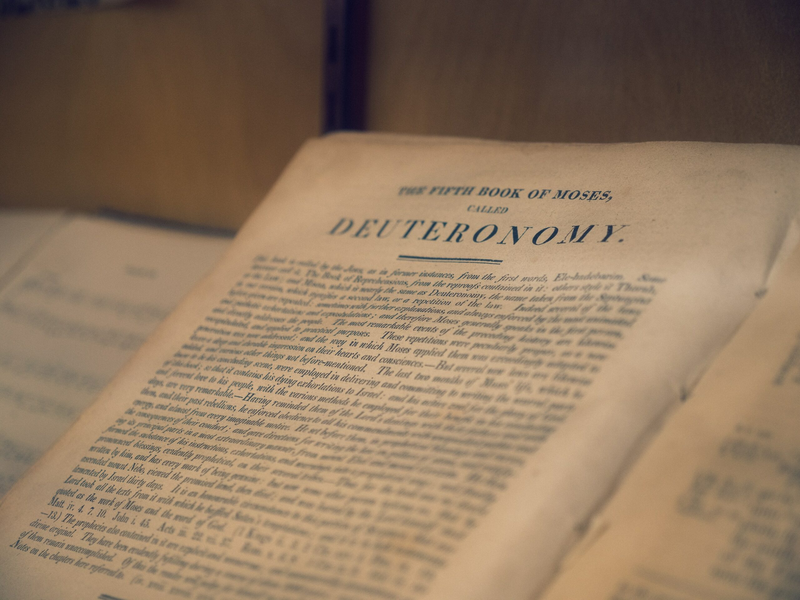
Sons to Yahweh your God!

This is the third in a series of studies of the Third Word, and especially of Deuteronomy 14. In 1979 Stephen Kaufman penned a groundbreaking essay on Deuteronomy, arguing that it was a meticulously structured and carefully composed book. In his view, chapters 12 to 26 in particular follow the…

by Ralph Allan SmithJune 10, 2013
kelly-sikkema-gpoh17dxqdm-unsplash
Romans

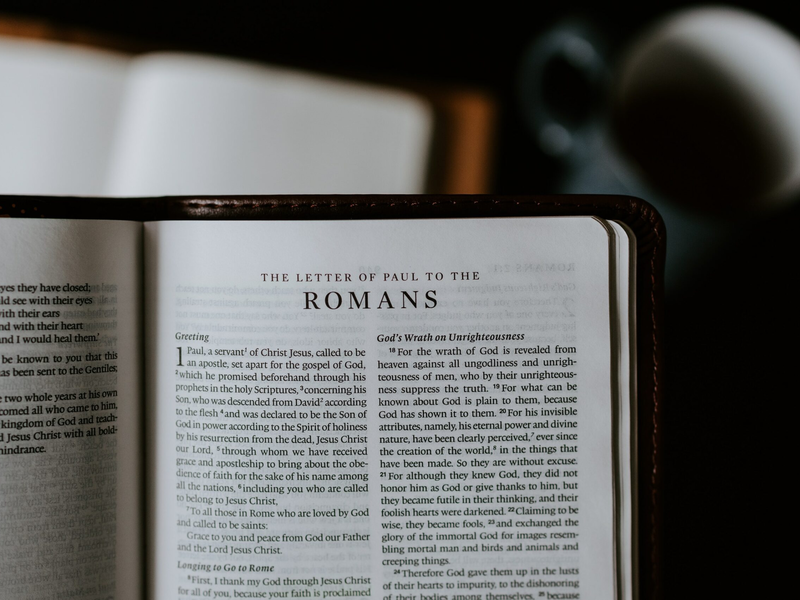
How is Wrath Revealed?

A large mistake is made in understanding Romans if one assumes that Paul is concerned with proving the fact that no one can ever live without sin—or that all attempts at obeying God’s commands are at least tainted with human sinfulness. The first problem with such an assumption is that…

by Mark HorneJune 5, 2013
chris-bair-ndczc5739ck-unsplash
Deuteronomy

The Third Word

This is the second in a series of studies on the Third Word, and especially on the food laws of Deuteronomy 14. In the second part of this series, I argue that Moses’ reworking of the Ten Words in Deuteronomy 5 includes adding nuance to the Third Word. This prepares…

by Ralph Allan SmithJune 3, 2013
yannis-papanastasopoulos-if_29sed7ta-unsplash
Culture

Turning Babel into a Beast

Recent months have brought a lively discussion of Christian participation in the culture war. On the one hand, the pro-life movement appears to be making some slow progress on the abortion issue. The trial of abortionist and serial murderer Kermit Gosnell has the potential to awaken those who are nominally…

by Joe RigneyMay 29, 2013

Showing page 193 of 309

See all

Showing page 7 of 43

See all

Moses and the ass

Allison notes the frequent ancient association of Moses with asses. According to Diodorus Siculus, “When Antiochus . . . made war against the Jews he entered the sacred shrine of the god, where only the priest is allowed to go. In it he found a stone image of a thick…

July 6, 2006

Imputation of Righteousness

Waters also says, “Leithart also forthrightly rejects the Reformed doctrine of the imputation of Christ’s righteousness to the believer.” I don’t do that either. What I have questioned, however, is whether we have exegetical grounds for distinguishing “imputation” as an act of reckoning from “justification” as a distinct declarative act.…

July 6, 2006

Imputation: A Narrative Perspective

In his new book on the Federal Vision, Guy Waters claims, “It appears, then, that Leithart has called into question the historic Reformed doctrine of the imputation of Adam’s sin to his posterity.” I don’t. But Waters is right to sense that I’m interested in ways of formulating the doctrine…

July 5, 2006

Creation and Exodus

Allison offers a series of interesting connections between the early chapters of Gen and the early chapters of Ex: 1) Israel is “multiplying” (Ex 2:2) in the way that God commanded the human race to multiply (Gen 1:26-28), concluding, with some help from Samaritan texts, that MOses is another Adam.…

July 5, 2006
Biblical Studies

Immanentized Eschaton

In his book on Mosaic typology in Matthew, commenting on Matt 5:1-2 in particular, Allison reviews some of the Jewish literature that suggests that Moses sat enthroned on Sinai. The idea was based on Deut 9:9, where Moses says “I remained (YASHAB) on the mountain forty days and forty nights,”…

July 5, 2006

Interpretation and the Unstated

Interpretation is, we’re often told, a matter of explaining what’s in the text. Only eisegetes talk about what’s not already there. Discussing Matthew 1:1, Dale Allison offers this, much more accurate, alternative: “The interpretation of this line can be nothing other than the unfolding of what it not stated.” More…

July 5, 2006

Showing page 1829 of 2212

Browse by Category

In Medias Res

Your weekly digest for all things Theopolis.

Donate

Theopolis is nearly 100% donor-supported. Consider joining us on our mission.