Theopolis Logo

Writing

Explore our collection of theological essays, biblical studies, and reflections on faith and culture.

See all
tanner-mardis-xuxghzhibn4-unsplash-1-2
Biblical Studies

Tweets-turned-Notes on the Bible’s Chronology

Summary In what follows, I will consider the “year-stamps” employed in Scripture, i.e., statements of the form, “Such-and-such an event took place in the Xth year of Y.” In the process, I will suggest some ways in which the Biblical narrative might relate to events in the extra-Biblical world, though…

by James BejonJuly 16, 2019
durer-prodigal-son-2
Luke

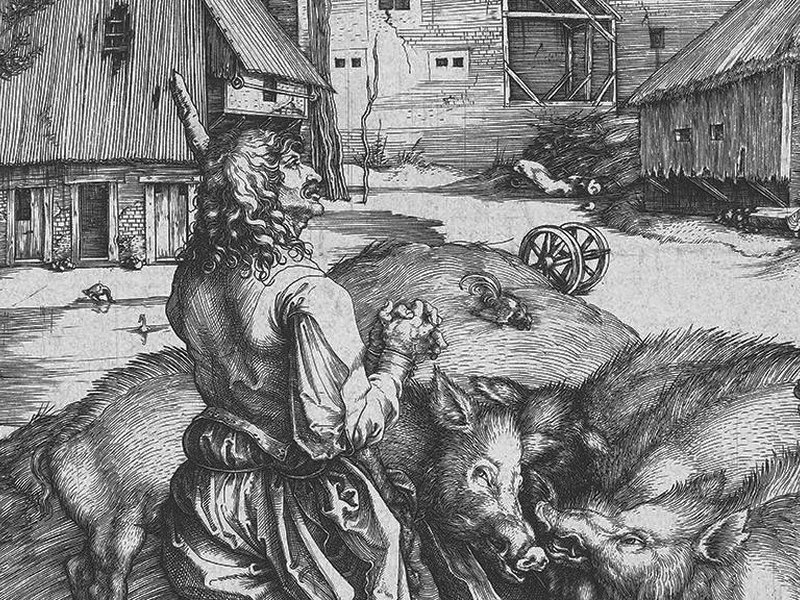
Perspectives on the Prodigal, (Part 2)

In the first essay on the parable of the Prodigal Son, I suggested that the problems commentators and others encounter in interpreting Jesus three-part parable are not accidental. These are not just problems in our ignorance of cultural background. They are intentional features of the stories —stories designed to poke…

by Ralph Allan SmithJuly 11, 2019
durer-prodigal-son-2
Luke

Perspectives on the Prodigal, (Part 1)

The story of the Prodigal Son is perhaps the most well-known story in the Bible. As others have observed, it may also be one of the most misunderstood. In two short essays, I will point out features of this story that are commonly neglected, aspects of Jesus’ parable that might…

by Ralph Allan SmithJuly 9, 2019
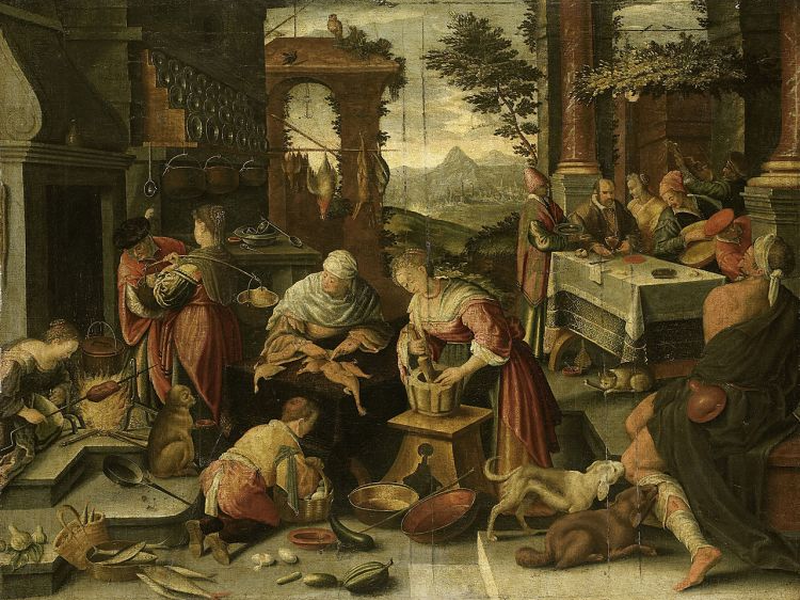
de-rijke-man-en-de-arme-lazarus-by-jacopo-da-ponte-16th-century
Luke

Lazarus and the Rich Man

The parable of Lazarus and the nameless rich man is not an independent story. It is part of a long context that begins in Luke 15:1, where Jesus is eating with tax collectors and sinners and the scribes and Pharisees grumble. In response to their hardheartedness, Jesus tells a three-part…

by Ralph Allan SmithJuly 4, 2019
aaron-burden-uynrnfdkjwg-unsplash
Luke

Everybody has Dropsy - Luke 14:1-24

The Bible is written so that even when a reader cannot pick up on what might be deeper or more detailed aspects of a text, there is virtually always a message to be heard. In the ancient world, where the “reader” of Scripture would likely be a church official facing…

by Ralph Allan SmithJuly 2, 2019
communion
Biblical Theology

Fruit Trees and Grain Plants

The distinction between garden (or vineyard) and field begins in Genesis 2. This relates to the ordering of the formless world. Plants of the field are contrasted with the garden planted by God in Genesis 2:5&8. Later on, under the Old Covenant the Israelites will be required to keep their…

by James B. JordanJune 27, 2019

Showing page 77 of 309

See all

Showing page 7 of 43

See all

Natural gifts of Adam

A few quotations on Adam’s “natural” capacities culled from Heppe: Polanus: “The original wisdom in man’s soul was that excellence and perfection of knowledge, by which unimpaired man rightly knew God and God’s work and himself and wisely understood all things unifold, singular, and universal, and rightly compounded or divided…

May 23, 2006

Pactum Salutis

Barth (CD, 4.1) offers this challenging evaluation of the Protestant Orthodox notion of a Trinitarian covenant: “For God to be gracious to sinful man, was there any need of a special decree to establish the unity of righteousness and mercy of God in relation to man, of a special intertrinitarian…

May 23, 2006

Turretin and Pure Nature

Thanks to Joel Garver for pointing me to a couple of passages in Turretin’s Institutes where he explicitly discusses and rejects the idea of “pure nature.” A brief summary follows of Turretin’s discussion from the Fifth Topic, Question 9 follows: 1) Turretin offers several definitions of “natural,” and the relevant…

May 22, 2006

Echoes and Christology

Modern-day Arians have answers to the standard NT texts on the deity of Christ. They aren’t good answers, but they have answers. What they don’t have are answers to the many texts that demonstrate the deity of Christ through intertextual echoes. Paul says in Philippians 2 that Christ existed in…

May 22, 2006

Sermon Outline, Seventh Sunday of Easter

INTRODUCTION Hezekiah is a new David, Manasseh an idolatrous Solomon. Josiah reverses the sins of Jeroboam by bringing an end to Jeroboam’s liturgical experiments. Great as he is, he cannot save Judah from destruction. Huldah prophesies that Jerusalem, Judah, and the temple are doomed (22:16-20), and the narrator confirms that…

May 22, 2006

Eucharistic meditation, Sixth Sunday of Easter

Luke 2219: Jesus said, This is My body, which is given for you; do this as My memorial. We saw in the sermon this morning that the name “Manasseh” means “Forgetful” or even “Causing to forget.” Judah went into exile because of her forgetfulness, because King Forgetful made her forget…

May 21, 2006

Showing page 1839 of 2212

Browse by Category

In Medias Res

Your weekly digest for all things Theopolis.

Donate

Theopolis is nearly 100% donor-supported. Consider joining us on our mission.