
Theopolis Logo

Writing

Explore our collection of theological essays, biblical studies, and reflections on faith and culture.

See all
giammarco-zeh-ljawhtg-unsplash
Biblical Horizons

OPEN BOOK: Views and Reviews

Isaac E. Mozeson, The Word: The Dictionary that Reveals the Hebrew Sources of English (Northvale, NJ: Jacob Aaronson Inc., 1995), 310 pp. Reviewed by James B. Jordan. Once there was only one language in the world, the language God spoke to Adam. At the Tower of Babel, there came to…

by James B. JordanJune 28, 1996
tim-wildsmith-j6jv-mkdzqs-unsplash
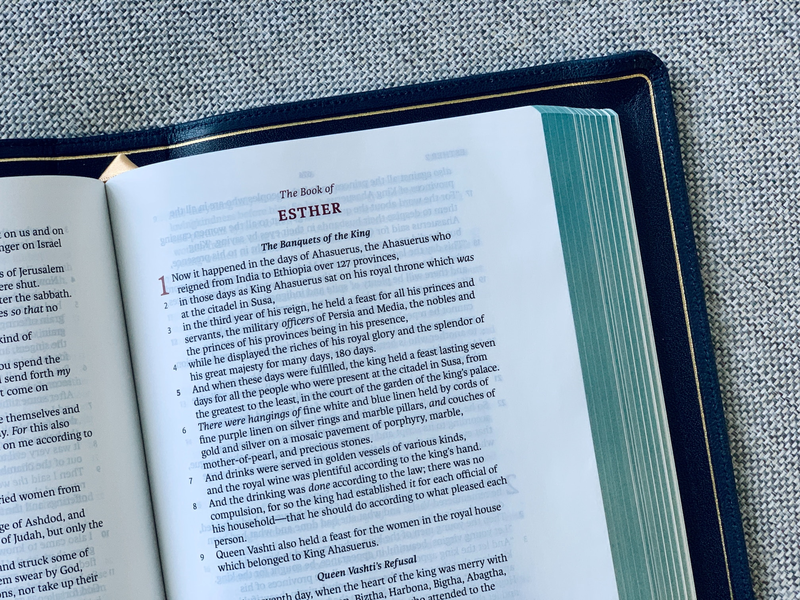
Esther

Esther: Historical & Chronological Comments (IV)

2. The Setting of the Book of Esther A. Xerxes (continued from previous issue) Ezra 6:14 says that the Jews finished building "according to the command of the God of Israel and the decree of Cyrus and Darius and Artaxerxes king of Persia." The problem with this verse is that…

by James B. JordanJune 28, 1996

ales-krivec-4mibe6zg5r0-unsplash
Acts

Jesus and Amalek

This essay goes with our previous study of the Amalek pattern back in Biblical Horizons No. 2. Since many do not have this essay, entitled "The Battle of Gog and Magog," let me cite the relevant paragraphs: Note in Genesis 12-15 that Abram moves into the land after escaping Pharaoh…

by James B. JordanJune 28, 1996

aaron-burden-1ebsmyrau-s-unsplash
Proverbs

The Strange Woman

Proverbs 7:6-23 is one of several passages early in the Proverbs in which Solomon warns his son about the wiles and dangers of the "strange woman." It is certainly quite proper to take these as straightforward warnings against sexual sins, and these are certainly warnings that need to be impressed…

by Peter LeithartJune 27, 1996
jan-kahanek-g3o5ztrk2e4-unsplash
Biblical Studies

Some Observations

1. In Luke 4:20 we read that after Jesus finished reading from Isaiah, "the eyes of all in the synagogue were fixed upon Him." This is usually taken in a psychological sense: They were amazed at Jesus somehow. I suggest that, as always, a merely psychological reading is a modern…

by James B. JordanMay 28, 1996
tim-wildsmith-j6jv-mkdzqs-unsplash
Esther

Esther: Historical & Chronological Comments (III)

2. The Setting of the Book of Esther Up to now we have assumed what we must prove, that the king in Esther is Darius the Great. While Biblical chronologists have usually taken this position, commentators on the book of Esther have often taken others as the king. One view,…

by James B. JordanMay 28, 1996

Showing page 265 of 309

See all

Showing page 7 of 43

See all

Spirit, Charity, Grace

Peter Lombard argued (Book 1, distinction 17 of the Sentences ) that the Spirit is both the love by which God loves us and the origin of the love by which we love Him: “the Holy Spirit is the Love [amor] of the Father and the Son, by which They…

May 18, 2006
History

Dissent and Disestablishment

In another chapter of the same book, Larsen argues that British secularization promoted by Dissenters within England, and on specifically theological grounds. According to the “Protestant Dissenters’ Catechism” (published 1772, by Samuel Palmer), a church is “a congregation, or voluntary soceity of Christians, who meet together to attend gospel ordinances…

May 18, 2006
History

Strauss in England

In his book Contested Christianity (Baylor, 2004), Wheaton historian Timothy Larsen examines the reception of DF Strauss’s Life of Jesus in England. He suggests that only Darwin’s Origin of Species rivals Strauss’s book as a challenge to orthodoxy in Victorian England. Yet, the book’s impact had less to do with…

May 18, 2006

Road to Wittenberg revisited

In response to my comments about the “road to Rome” charge, Eric Enlow of Handong International Law School writes: “I would connect sacramentalism with the road to Rome for an empirical reason. The individuals that I have known who have been most interested in sacramentalism have converted to Roman Catholicism.…

May 16, 2006

Sermon Outline, Sixth Sunday of Easter

INTRODUCTION Manasseh undergoes a demonic “repentance”: Verse 3 says “he turned, he built,” using the Hebrew verb that normally designates repentance (“turn”). He “repents” of Hezekiah’s reforms. Because of this, the Lord determines to repeat in Jerusalem what he did in Shiloh (v. 12; cf. 1 Samuel 3:11; Jeremiah 19:3).…

May 15, 2006

Eucharistic Meditation, Fifth Sunday of Easter

2 Kings 20:8-11: Now Hezekiah said to Isaiah, What will be the sign that the Lord will heal me, and that I shall go up to the house of the Lord the third day? And Isaiah said, This shall be the sign to you from the Lord, that the Lord…

May 14, 2006

Showing page 1841 of 2212

Browse by Category

In Medias Res

Your weekly digest for all things Theopolis.

Donate

Theopolis is nearly 100% donor-supported. Consider joining us on our mission.