Theopolis Logo

Writing

Explore our collection of theological essays, biblical studies, and reflections on faith and culture.

See all
25f3baab-e5a9-42ec-aab6-649e53879085-3
John

Israel Redux: The Image of Christ in the Gospel According to John (Part IV)

John 18, 19: Latter Prophets and the Writings John 18 and 19 record the arrest, trial, torture, and death of Jesus as laid out in detail in Isaiah 53. After the Roman soldier pierces Jesus’ side, John quotes Zechariah: “They shall look at him whom they pierced” (Zech 12:10). In…

by Geert HeetebrijDecember 6, 2018

25f3baab-e5a9-42ec-aab6-649e53879085-3
John

Israel Redux: The Image of Christ in the Gospel According to John (Part III)

John 12.12 – John 17: Latter Prophets In the Hebrew Scriptures, Kings is followed by the Latter Prophets. John 12:15 quotes Zechariah 9:9 as having prophesied Jesus’ triumphal entry: “Do not be afraid, O Daughter of Zion; see, your king is coming, seated on a donkey’s colt.” [1] N.T. Wright…

by Geert HeetebrijDecember 5, 2018
25f3baab-e5a9-42ec-aab6-649e53879085-3
John

Israel Redux: The Image of Christ in the Gospel According to John (Part II)

John 6.16-70: Joshua The book of Joshua documents the nation of Israel entering the Promised Land. Consider the order of events: (1) Israel is still receiving the daily miracle of manna; (2) Israel miraculously crosses the Jordan on dry foot; (3) The day after Passover , Israel eats produce of…

by Geert HeetebrijNovember 29, 2018
25f3baab-e5a9-42ec-aab6-649e53879085-3
John

Israel Redux: The Image of Christ in the Gospel According to John (Part I)

Since my educational and professional training have revolved around story and narrative structure, I approach John’s Gospel from a literary and narrative perspective. In doing so, I have noticed structural story patterns and followed them where they seem to lead: the Gospel of John parallels the ordering of the books…

by Geert HeetebrijNovember 27, 2018
white-hall-hospital
Art

The Clouds of Mt. Sinai

The Mt. Sinai Hospital was neolithic on the black hill of Hollow, New Hampshire. Winter dampened the trees and the wind bit at the sparse branches, the sidewalks and stairs were perilous with soggy leaves, and the dim yellow light cast a pallor upon the milky stone building. Ambling inside…

by Remy WilkinsNovember 22, 2018
sodom-and-gomorrah-58ecfa883df78c5162cb92b5
Revelation

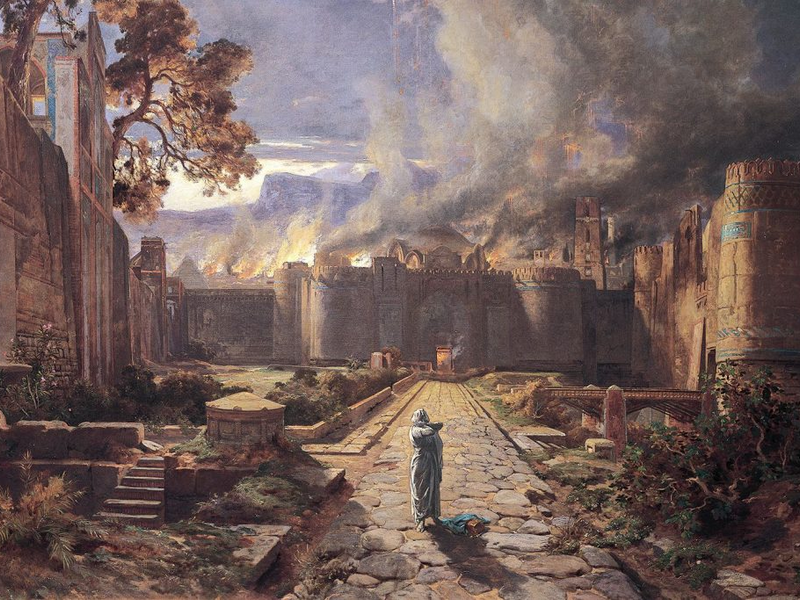
Egypt and Sodom, Where the Lord was Crucified

The Revelation can only be understood in the light of Old Testament symbols and sequences. The same is true of the epistle of Jude, which serves as a blistering hors d’oeuvre to John’s fiery feast. Possibly written by the apostle Judas Thaddaeus (Luke 6:16; Acts 1:13; John 14:22), the epistle…

by Mike BullNovember 20, 2018

Showing page 84 of 309

See all

Showing page 7 of 43

See all

Objective/Subjective

McGrath notes that Augustine interpreted the genitive in the phrase “righteousness of God” in Rom 1 objectively, so that it was understood as the righteousness that God gives in saving sinners (in “making” them righteous). Ambrosiaster, as I pointed out in an earliet post, interpreted the genitive subjectively - the…

April 20, 2006

Old Perspective on Paul

Ambrosiaster writes, “Iustitia est Dei, quia quod promisit dedit, ideo credens hoc esse se consecutum quod promiserat Deus per prophetas suos, iustum Deum probat et testis est iustitiae eius” (PL, 17.56b). McGrath explains: “God, having promised to give salvation, subsequently gives it, and as a result is deemed to be…

April 20, 2006
History

Unfinished Reformation

Nevin wrote: “There is more a great deal in Christianity, I firmly believe, more in the idea of hte Holy Catholic Church, than has yet been attained, either in the way of knowledge or in the way of life, by the Protestant Reformation.”

April 20, 2006

Factitive Justification

There was a consensus among the theologians of Trent, McGrath argues, that justification was “factitive,” a view that excluded that “a sinner may be justified solely as a matter of reputation or imputation, while remaining a sinner in fact.” But of course that raises the question, What exactly is a…

April 20, 2006

True Lutherans

McGrath traces the odd development in Lutheran Orthodoxy of the notion that regeneration and faith precede justification in such a way that “where Luther had understood justification to concern the unbelieving sinner, orthodoxy revised this view, referring justification to the believing sinner.” This takes Lutheran Orthodoxy back in the direction…

April 20, 2006

Ontological change

McGrath notes, “While justification was universally understood to involve the regeneration of humanity, the opinion that an ontological change is thereby effected within humans is particularly associated with the period of High Scholasticism and the development of the concept of created grace. The earlier medieval theologians expressed the change effected…

April 20, 2006

Showing page 1854 of 2212

Browse by Category

In Medias Res

Your weekly digest for all things Theopolis.

Donate

Theopolis is nearly 100% donor-supported. Consider joining us on our mission.