Theopolis Logo

Writing

Explore our collection of theological essays, biblical studies, and reflections on faith and culture.

See all
screen-shot-2018-11-15-at-10-04-44-am
Sex

Sex

Christians get sex wrong when we start from the wrong end. We start from human desires, passions, biological drives and “needs.” These are treated as givens, as the base-line natural reality of human sexuality. Then we come to the Bible and find, to our surprise, that God places all kinds…

by Peter LeithartNovember 15, 2018

img_4660-2
Proverbs

Wisdom, Gender, and Strength in Proverbs

Why isn't Proverbs better known as the Bible's book on "manliness"? I use quotation marks because the term almost seems archaic in our present culture, along with "manhood." Perhaps the Church is too embarrassed to admit the Bible addresses that much attention to the topic. But another reason can be…

by Mark HorneNovember 13, 2018
tpc-worship
Gnosticism

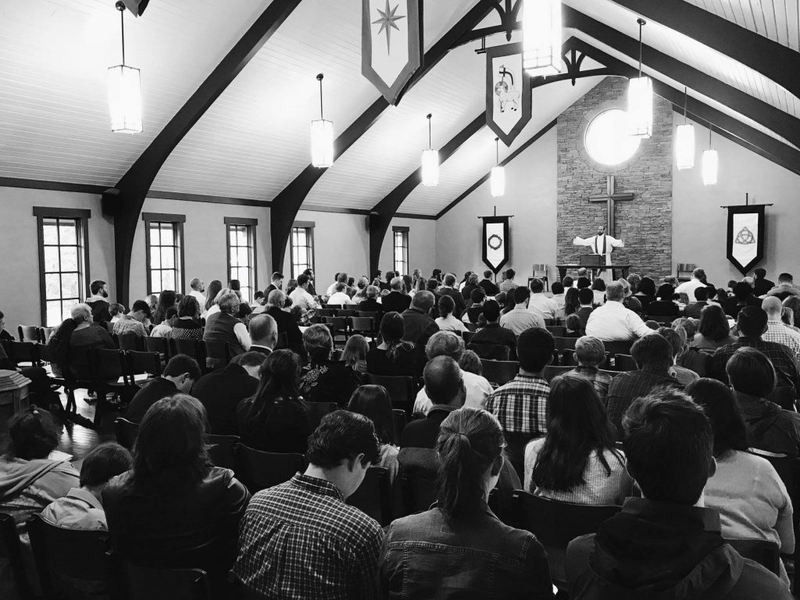
The Sacrament of Preaching

In certain evangelical Christian churches it is the tradition to exalt preaching above the sacraments of Baptism and the Lord’s Supper. Ever since the rise of Revivalist preachers pushing for conversions, the practice has cast doubt upon the possibility of Baptism or the Lord’s Supper being a “means of grace”…

by Mani MarprelateNovember 8, 2018
isaac-blessing-jacobgioachino-assereto-1640
Book Review

Yoram Hazony and the Deception of Isaac

Perhaps one of the most stimulating sections of Yoram Hazony’s The Philosophy of Hebrew Scripture addresses the question of how we are to discern the meaning of biblical narratives, especially how biblical narratives might present arguments of a more general nature. Hazony quotes John Barton’s remarks about the difficulty of…

by Alastair RobertsNovember 6, 2018
prayer-3
Book Review

Enduring Divine Absence: The Challenge of Modern Atheism – A Review

In this slender volume, Joseph Minich (Ph.D. student at the University of Dallas) attempts to answer some of the deepest questions of human existence. With his honesty, his probing questioning, his wide reading, and his ability to plunge beneath superficial answers, he provides a helpful source of reflection for fellow…

by Gregory SoderbergNovember 1, 2018
1_ejh7oql1sntvw3iw_avfma
Biblical Theology

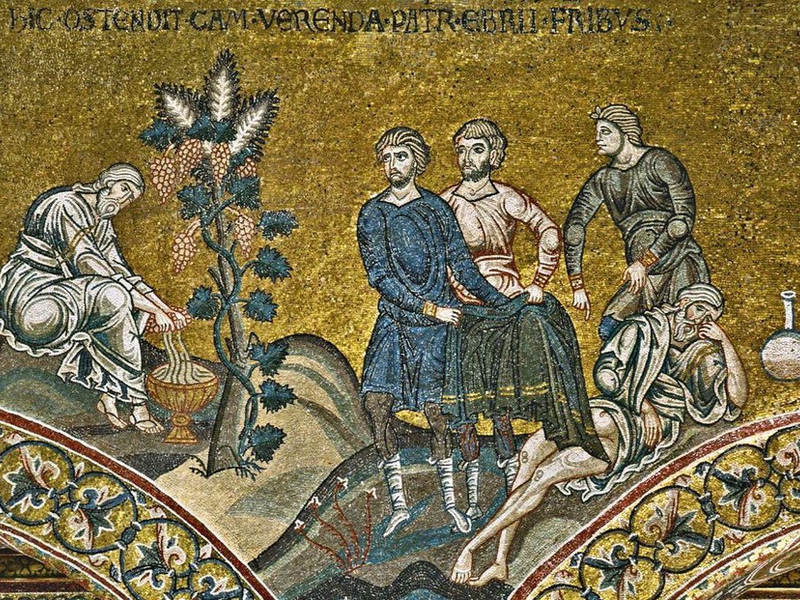
Drunk, Naked, and Accomplishing God’s Will

A Closer Look at Noah’s Post-Flood Humiliation In Genesis 9:20-27 My wife is currently leading a Bible study through Genesis for a group of insatiable Bible students. Because she is a deep thinker and has a high view of inspiration, there is no passage she is unwilling to face head…

by Eric RobinsonOctober 30, 2018

Showing page 85 of 309

See all

Showing page 7 of 43

See all
Theology

Time and the end of actions

Why should there be a final judgment when God judges in time? Aquinas answers: “Judgment on something changeable cannot be rendered fully before its consummation. Thus judgment cannot be rendered fully regarding the quality of any action before its completion, both in itself and its results, because many actions appear…

April 6, 2006

Observations on 2 Corinthians 1

1) Verse 4 moves from the affliction of the apostles (“our”) to the comfort of “those who are in any affliction.” This movement does not depend on any similarity or identity between the affliction of the apostles and the affliction of other sufferers (though cf. v. 6b). Members of the…

April 6, 2006
Philosophy

Descartes, Meditations

A few notes on Descartes, Meditations 1-2, with lots of help from Jean-Luc Marion. Descartes’s ego cogito, ergo sum is not, Marion points out, original, at least in its form. It has origins in Augustine, who offered this response to the skeptics: “I have no fear of the arguments of…

April 6, 2006

Copernican Revolution

Some scattered thoughts inspired by comments from Chris Schlect and Doug Wilson at a faculty discussion of de Lubac today: How is it that theologians (like Norman Shepherd, Steve Wilkins, Rich Lusk, and others) who want to expunge the notion of merit from theology get accused of being “neo-nomians” and…

April 5, 2006
Theology

Surnaturel and Protestantism

Milbank asks the intriguing question of whether de Lubac’s surnaturel thesis “rather deconstructs the terms of the Schleiermacher/Barth divide.” He appears to mean that the polarization of Schleiermacher’s “intrinicism” and Barth’s “extrinicisim” is dissolved by de Lubac’s Thomist understand of nature and grace. To adopt, for the moment, an idiom…

April 5, 2006

Against Yale

Milbank contrasts de Lubac’s advocacy of patristic and medieval hermeneutics, which insists that the allegorical fulfills and completes the literal, with the Yale school, which he sees as living in “the no-man’s land of ‘history-like narrative’ which at once abolishes real history and ignores the essential allegorical underpinning of Christian…

April 5, 2006

Showing page 1862 of 2212

Browse by Category

In Medias Res

Your weekly digest for all things Theopolis.

Donate

Theopolis is nearly 100% donor-supported. Consider joining us on our mission.