Theopolis Logo

Writing

Explore our collection of theological essays, biblical studies, and reflections on faith and culture.

See all
img_1456
Epistemology

Seeking Integration in a Fragmented World: Covenant Epistemology: The Integrative Regard of the Other

Fragmentation characterizes our era. Bits, bytes, chips, data points. Ourselves as reducible to the meaningless. We can feel dehumanized and lost. We seek wholeness, integration. We rightly believe that integration brings meaningfulness, somehow doing better credit to ourselves as humans and to the world. More than that, integration somehow aligns…

by Esther Lightcap MeekJune 5, 2018

hebrew-manuscript-2
Proverbs

The Dramatic Structure of Proverbs

The book of Proverbs appears as a largely random collection of aphorisms drawn from experience saturated in law. Despite its random arrangement, however, the book does have an over-arching structure that reinforces its main themes. One way to gather clues regarding the structure of a biblical book (or any book)…

by Peter LeithartMay 31, 2018
infant-baptism
Baptism

Infant Baptism in the History of the Church

Ancient practice in the Church sets an important precedent for present day practice. This certainly doesn’t mean that Christians are bound to only do things as they have always been done, but the principles of catholicity and unity move us not to break from historic church practice on a particular…

by Timothy LeCroyMay 29, 2018
tower-of-babel
Biblical Studies

Babel Academy, Part 2

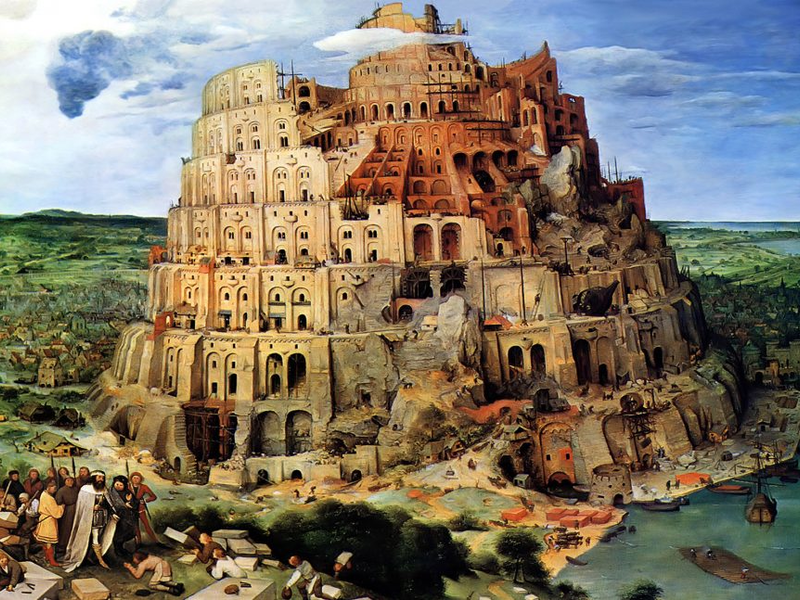
For Part 1, click HERE . Genesis 1 describes the creation of the physical order. Genesis 2 recapitulates the pattern of Genesis 1 as it describes the creation of the social order. Genesis 3 describes the intended founding of an ethical order. It was here that sin entered into the…

by Mike BullMay 24, 2018
babelhead
Biblical Studies

Babel Academy, Part 1

The Business of Keeping the Saints in the Dark Let there be light! The first recorded “spoken” words of God. Curiously, even this creative decree was a deed whose fruit required an appraisal. God judged the light and separated it from the darkness. As the cardinal act within a newborn…

by Mike BullMay 22, 2018
markus-winkler-aid-xyrtlec-unsplash
Course Announcement

A Week with Esther Meek - An Introduction to Covenant Epistemology

We are very pleased to announce that Esther Lightcap Meek will be the instructor for our 2018 Trinity Course in August. The course is titled "Loving to Know: Introducing Covenant Epistemology" and will be held August 13-17 at Beeson Divinity School. Esther Meek, Ph.D., is Professor of Philosophy at Geneva…

by TheopolisMay 21, 2018

Showing page 93 of 309

See all

Showing page 7 of 43

See all
History

Modernity and antiquity

Kumar suggests that “some of the principal hall-marks of modernity” are already evident in the Christian notions of time and history. Both Christianity and modernity separate time from nature, and humanize time; time is seen by both as “linear and irreversible”; both see history as an Aristotelian drama with beginning,…

February 24, 2006
History

First Modernity

The Latin modernus was coined in the late fifth century, as an antonym to antiquus , and variations of modernus became particularly common after the 10th century. Thus, Krishan Kumar writes, “Modernity is . . . an invention of the Christian Middle Ages,” and was used to emphasize the radical…

February 24, 2006
Philosophy

Computer Communications and the Self

Poster lists four effects that computer communications (email, chat groups, etc) have on the self: “1 they introduce new possibilities for playing with identities; 2 they degender communications by removing gender cues; 3 they destabilize existing hierarchies in relationships and re-hierarchize communications according to criterio that were previously irrelevant; and…

February 24, 2006
Philosophy

Computers, subjects and objects

Descartes famously contrasted the mind (res cogitans) with the external world (res extensa), but Mark Poster suggests that computer writing fudges that distinction: “the computer dematerializes the written trace. As inputs are made to the computer through the keyboard, pixels of phosphor are illuminated on the screen, pixels that are…

February 24, 2006
Media

Community and New Communications

Mark Poster points to a tension between the modern institutions of production and the postmodern technologies of communication, particularly as they impact the formation of the self: “If modernity or the mode of production signifies patterned practices that elicit identities as autonomous and (instrumentally) rational, postmodernity or the mode of…

February 24, 2006
Media

Telephone

Prior to World War I, Telefon Hirmondo, the telephone system of Budapest, was used as a broadcast system, with a published schedule of programs that were restricted to certain classes of people in Hungary. Only later did it develop into a communications system in which everyone could pass information to…

February 24, 2006

Showing page 1878 of 2212

Browse by Category

In Medias Res

Your weekly digest for all things Theopolis.

Donate

Theopolis is nearly 100% donor-supported. Consider joining us on our mission.