Theopolis Logo

Writing

Explore our collection of theological essays, biblical studies, and reflections on faith and culture.

See all
screen-shot-2023-02-24-at-1-48-41-pm
Biblical Chronology

Chronologies and Kings: Part 3

The chronology of the Kings of Judah and Israel can be divided into three periods with clearly defined boundaries. The first period begins with the death of Solomon and the accessions of Rehoboam in the south (Judah) and Jeroboam in the north (Israel). It ends with the deaths of Ahaziah…

by James B. JordanSeptember 22, 1991

johann-walter-bantz-clv9dfjlwac-unsplash-1-5
Art

Arts & Play, Part 1

Most modern people regard the arts as essentially decorative. They are hardly very important, as compared to business, politics, or religion. Yet, from a Biblical point of view, the arts lie close to the heart of human life. The universe that God created is itself an artistic masterpiece by the…

by James B. JordanSeptember 22, 1991
6273e95e0f5ac766258d8cf3_joshuasconquestoftheland-2
Exodus

Chronologies and Kings, Part 2

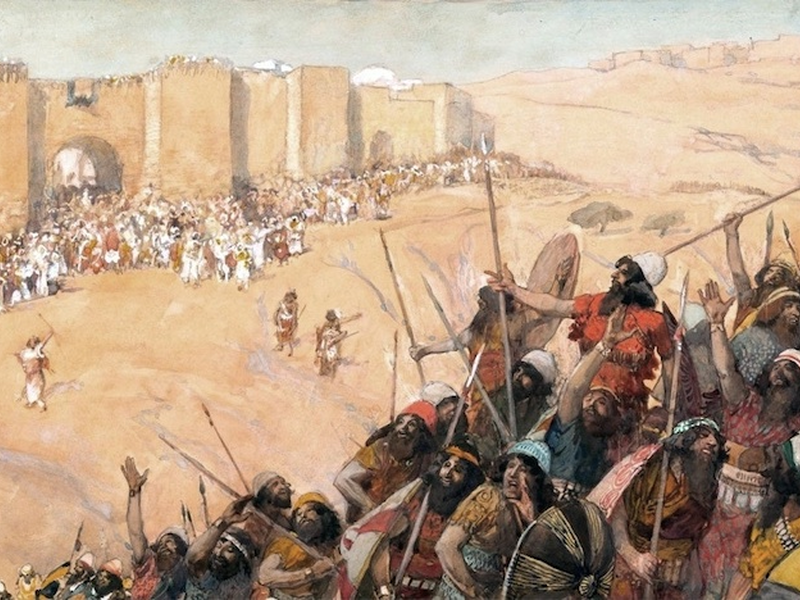
Before we move into a detailed survey of the history and chronology of the kings of Israel and Judah, let us review the chronological information that leads from creation to the kingdom. This will be helpful both to new readers of these essays, and a reminder for those who have…

by James B. JordanAugust 22, 1991
screen-shot-2023-02-24-at-1-48-41-pm
Biblical Chronology

Chronologies and Kings, Part 1

We have completed our overall survey of Biblical chronology, and now turn to a detailed examination of the Biblical information regarding the chronology of Israel’s kings. The first piece of chronological information we have regarding Israel’s kings is very cryptic, and it serves as an guide to the interpretation of…

by James B. JordanJuly 22, 1991
screenshot-2023-08-09-at-2-13-32-pm
Biblical Horizons

Book Review - To Take Place: Toward Theory in Ritual

Jonathan Z. Smith, To Take Place: Toward Theory in Ritual (Chicago: University of Chicago Press, 1987). Reviewed by Peter J. Leithart. The philosophes of the 18th century often attacked Christendom using the tools of anthropology and comparative religion. Rousseau contrasted the idyllic equality of primitive, natural peoples with the bondage…

by Peter LeithartJuly 6, 1991
screenshot-2023-08-09-at-1-47-41-pm
Biblical Horizons

Book Review: The Rise of Magic in Early Medieval Europe

Valerie I. J. Flint, The Rise of Magic in Early Medieval Europe (Princeton University Press, 1991). Reviewed by Peter J. Leithart. Valerie I. J. Flint, Professor of History at the University of Auckland, New Zealand, is refreshingly candid about her reasons for undertaking a study of The Rise of Magic…

by Peter LeithartJuly 6, 1991

Showing page 295 of 309

See all

Showing page 7 of 43

See all

Sermon Outline

INTRODUCTION Joash’s story is an ironic tragedy of Shakespearean dimensions. His reign begins well, with a dramatic and surprising renewal of the Davidic line, and he pays his dues by repairing the temple. Before the end of his life, he loots the very temple he has repaired. THE TEXT “In…

February 13, 2006

Eucharistic meditation, Sixth Epiphany

2 Kings 11:1: When Athaliah the mother of Ahaziah saw that her son was dead, she rose and destroyed all the royal seed. At the beginning, the story of Athaliah appears to be the story of the destruction of the house of David. Athaliah kills all the royal seed, and…

February 12, 2006

Baptism Meditation, Sixth After Epiphany

2 Kings 11:3: So Joash was hidden with her in the house of Yahweh six years, while Athaliah was reigning over the land. The story in the sermon today is the story of two kingdoms, two rulers, two reigns. One is open, public, evident to everyone who reads the newspapers.…

February 12, 2006

Exhortation, Sixth After Epiphany

Athaliah, daughter of Ahab and Jezebel, knew she had to protect herself. She was related to the Davidic line only by marriage, and knew that many in Judah would be suspicious of her. A live Davidic prince could become the focal point for a revolt that would topple her from…

February 12, 2006
Literature

Shakespeare and Puritans

Jeffrey Knapp suggests that, though Shakespeare was probably raised a Catholic, he chose to conform to the established religion but without taking a high profile at church. In a comment that rings true, Knapp suggests that above all Shakespeare “deplored sectarianism. Shakespeare’s puritanical characters are typically divisive figures, longing for…

February 11, 2006

Eye for Eye

Athaliah the murderous mother is undone by Jehosheba the protective mother. To be specific: Athaliah renounces her blood ties with her grandchildren and slaughters the royal seed (2 Kings 11). Jehosheba renounces her blood ties with her own mother, Athaliah, and saves the royal seed. Wicked family disloyalty is undone…

February 11, 2006

Showing page 1886 of 2212

Browse by Category

In Medias Res

Your weekly digest for all things Theopolis.

Donate

Theopolis is nearly 100% donor-supported. Consider joining us on our mission.