Theopolis Logo

Writing

Explore our collection of theological essays, biblical studies, and reflections on faith and culture.

See all
tanner-mardis-xuxghzhibn4-unsplash-1-2
Biblical Studies

Tweets-turned-Notes on the Bible’s Chronology

Summary In what follows, I will consider the “year-stamps” employed in Scripture, i.e., statements of the form, “Such-and-such an event took place in the Xth year of Y.” In the process, I will suggest some ways in which the Biblical narrative might relate to events in the extra-Biblical world, though…

by James BejonJuly 16, 2019
durer-prodigal-son-2
Luke

Perspectives on the Prodigal, (Part 2)

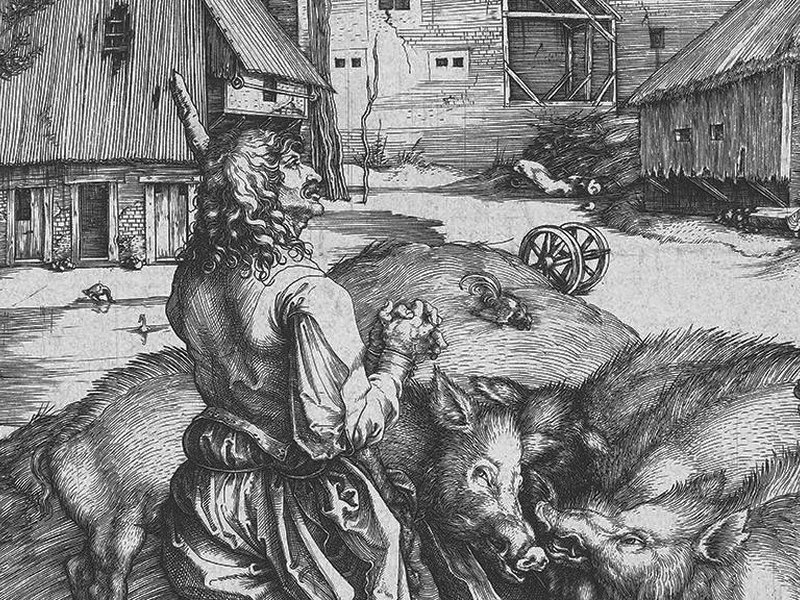
In the first essay on the parable of the Prodigal Son, I suggested that the problems commentators and others encounter in interpreting Jesus three-part parable are not accidental. These are not just problems in our ignorance of cultural background. They are intentional features of the stories —stories designed to poke…

by Ralph Allan SmithJuly 11, 2019
durer-prodigal-son-2
Luke

Perspectives on the Prodigal, (Part 1)

The story of the Prodigal Son is perhaps the most well-known story in the Bible. As others have observed, it may also be one of the most misunderstood. In two short essays, I will point out features of this story that are commonly neglected, aspects of Jesus’ parable that might…

by Ralph Allan SmithJuly 9, 2019
de-rijke-man-en-de-arme-lazarus-by-jacopo-da-ponte-16th-century
Luke

Lazarus and the Rich Man

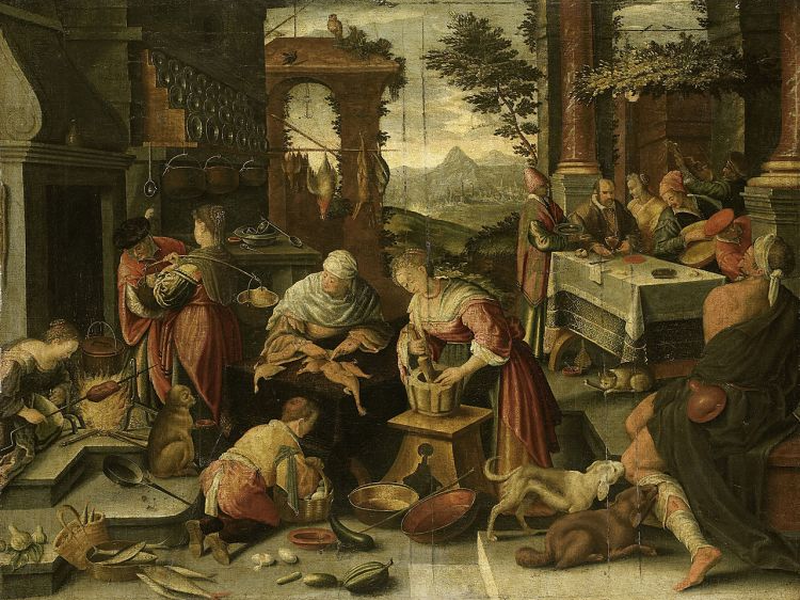
The parable of Lazarus and the nameless rich man is not an independent story. It is part of a long context that begins in Luke 15:1, where Jesus is eating with tax collectors and sinners and the scribes and Pharisees grumble. In response to their hardheartedness, Jesus tells a three-part…

by Ralph Allan SmithJuly 4, 2019
aaron-burden-uynrnfdkjwg-unsplash
Luke

Everybody has Dropsy - Luke 14:1-24

The Bible is written so that even when a reader cannot pick up on what might be deeper or more detailed aspects of a text, there is virtually always a message to be heard. In the ancient world, where the “reader” of Scripture would likely be a church official facing…

by Ralph Allan SmithJuly 2, 2019
communion
Biblical Theology

Fruit Trees and Grain Plants

The distinction between garden (or vineyard) and field begins in Genesis 2. This relates to the ordering of the formless world. Plants of the field are contrasted with the garden planted by God in Genesis 2:5&8. Later on, under the Old Covenant the Israelites will be required to keep their…

by James B. JordanJune 27, 2019

Showing page 77 of 309

See all

Showing page 7 of 43

See all

Solomon’s imagination

Iain Provan doubts that Solomon wrote Ecclesiastes . One of the “striking” bits of evidence is “that many of the later passages in Ecclesiastes appear to be written from a non-Solomonic point of view (i.e., from the perspective of the subject rather than the ruler, e.g., 5:8-9; 8:1-9).” It’s a…

December 31, 2005

Vapor and Wind

More thoughts on Ecclesiastes, stealing, as always, from James Jordan . The image of “shepherding wind” has a particular application to the king, who is the shepherd of flock of Israel. Solomon recognizes that ruling a kingdom is like trying to shepherd wind, which is of course impossible for human…

December 31, 2005

Remnant and reunion

Some additional thoughts about the role of the “remnant” in Israel’s history, which supercede earlier posts on the subject. 1) The word “remnant” in the OT normally refers to the whole of Israel that survives a judgment, rather than to some sub-division of Israel that remains faithful during a period…

December 30, 2005
History

Christopher Dawson and the New Age

Christopher Dawson, who died in 1970, was one of the leading historians of the twentieth century. A devout Roman Catholic, hededicated his career, and some 25 books, to understanding andexplaining history, particularly Western history, from aChristian perspective. One little book, Christianity and the New Age, provides a glimpse of thewisdom…

December 30, 2005
Philosophy

What I Think of Postmodernism

As if anyone cares, here are some unfinished and amateurish comments on “what I think of postmodernism.” 1) First, it is helpful to distinguish, as many writers do, between postmodernism and postmodernity. The latter is a cultural/political mood or condition, referring to movements in architecture, film, and other arts that…

December 30, 2005
Theology

Foundationalism and Inerrancy

Somewhere in his blog discussion of Brian McLaren’s Generous Orthodoxy , Doug Wilson indicated that McLaren considers inerrancy a sell-out to modernist foundationalism. To support this, Doug pointed me to this quotation from John Franke’s foreword to McLaren’s book: “In the nineteenth and twentieth centuries, the foundationalist impulse produced a…

December 30, 2005

Showing page 1906 of 2212

Browse by Category

In Medias Res

Your weekly digest for all things Theopolis.

Donate

Theopolis is nearly 100% donor-supported. Consider joining us on our mission.