Theopolis Logo

Writing

Explore our collection of theological essays, biblical studies, and reflections on faith and culture.

See all
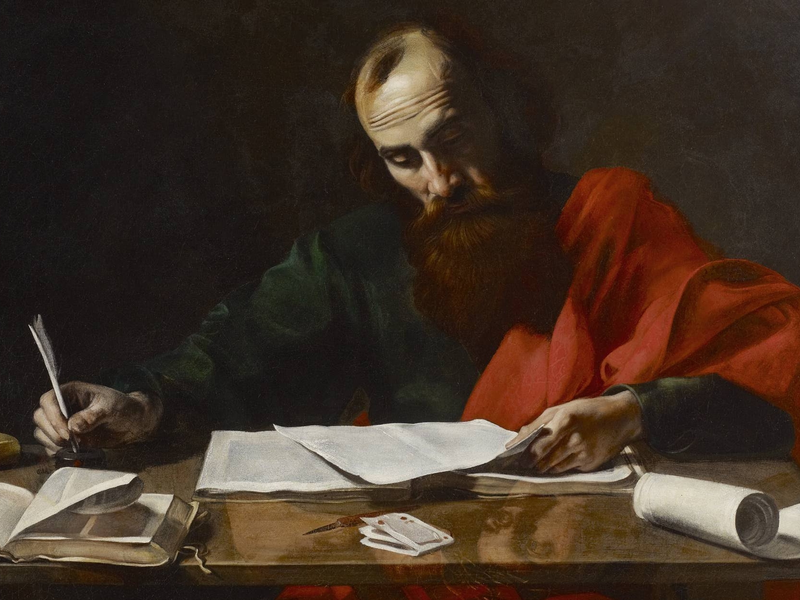
13071-probablyvalentindeboulogne-saintpaulwritinghi-1
1 Corinthians

The Great Exchange: Understanding Second Corinthians 5.21

He made Him who knew no sin to be sin on our behalf, that we might become the righteousness of God in Him. My argument is simple: What Paul means in writing the quotation above in context is the same as what he was telling the Ephesians when he wrote,…

by Mark HorneJune 7, 2004

ben-white-w8qqn1pmqh0-unsplash
Biblical Theology

What is Biblical Theology (Part 3) : The Art of Biblical Theology

THE ART OF BIBLICAL THEOLOGY IN PRACTICE: INTERTEXTUALITY AND TWO PAULINE CASE STUDIES The Art of Biblical Theology: Intertextuality Biblical Theology is really an art. Like other skills of this sort, it is not a matter of following rules (though there are certainly guidelines and techniques). Rather, it’s matter of…

by Rich LuskJune 6, 2004
malcolm-lightbody-tc2f02iq8le-unsplash
Biblical Theology

What is Biblical Theology: (Part 2) The Christotelic Spiral

Click HERE for Part 1 Reading Christotelically Jesus Christ is the heart of God’s plan for creation and history. There is no “hidden plan” or “hidden God” lurking behind Christ; rather, in and through Christ God has revealed himself and his intentions towards the world. In Christ, the Father has…

by Rich LuskJune 6, 2004
aaron-burden-qjdzyt_k8xg-unsplash
Biblical Studies

What is Biblical Theology? (Part 1)

STORY THEOLOGY AND A THEOLOGY OF STORY Defining Biblical Theology What is Biblical Theology? How does it compare to other ways of doing theology, such as Systematic Theology? Geerhardus Vos suggested that whereas Biblical Theology draws a line, Systematic Theology draws a circle. That is to say, Biblical Theology is…

by Rich LuskJune 6, 2004
screenshot-2023-09-21-at-3-59-23-pm
Hebrews

Living by His Faith: Some Rough Thoughts on the Faithfulness of Christ

The gospels strongly imply Jesus lived by faith in the promise of his heavenly Father. How else can his prayer life understood? How else could he have wrestled through the Gethsemane experience? How else could he have committed himself into his Father’s care at death? How could Jesus have presented…

by Rich LuskJune 6, 2004
sixteen-miles-out-al48tflf4e8-unsplash
John

John 3:16

John 3:16 is probably best-known, or at least, best-liked Bible passage in North America: “For God so loved the world, that he gave his only Son, that whoever believes in him should not perish but have eternal life.” This declaration of God’s love of the whole world is greatly comforting…

by Mark HorneJune 6, 2004

Showing page 223 of 309

See all

Showing page 7 of 43

See all
Theology

Rehabilitating patriarchy

Russell Moore gave a vigorous presentation at ETS on why egalitarians are winning the evangelical gender debate. He summarized some of the recent sociological work on evangelical family life, which presents a mixed picture. On the one hand, Bradford Wilcox’s Soft Patriarchs, New Men shows that evangelical fathers are not…

November 18, 2005
Literature

Herod’s fears

In For the Time Being , W. H. Auden described Herod’s reaction to the news that “God has been born.” If this is true, and if the news gets out, Herod thinks, all is lost; confusion will reign. The passage is one of the most effective descriptions of the nature…

November 17, 2005
Literature

Herod’s fears

In For the Time Being , W. H. Auden described Herod’s reaction to the news that “God has been born.” If this is true, and if the news gets out, Herod thinks, all is lost; confusion will reign. The passage is one of the most effective descriptions of the nature…

November 17, 2005

Emerson as Sacramental Theologian

Lundin spends considerable time describing Emerson’s rejection of Christian orthodoxy in favor of an American version of Romanticism, and shows that Emerson’s departure from orthodoxy centered on his rejection of the Eucharist. Emerson resigned his post at the Second Church of Boston because he could no longer administer the Supper…

November 17, 2005
Literature

Lewis as critic

Toward the close of Lundin’s book, he offers a number of intriguing criticisms of CS Lewis as a literary critic. He claims that while Lewis recognized the corrosive effects of the Enlightenment and Romantic conception of the self in his theological writings, he adopted a form of romanticism in his…

November 17, 2005
Philosophy

Denken ist Danken

One of the important themes that emerges from Lundin’s book (mentioned in the previous post) is the centrality of gratitude in thought. Heidegger, he says, “was fond of the seventeenth-century Pietist phrase Denken ist Danken , ‘to think is to thank.’” Lundin expounds the point a few pages later: “Through…

November 17, 2005

Showing page 1924 of 2212

Browse by Category

In Medias Res

Your weekly digest for all things Theopolis.

Donate

Theopolis is nearly 100% donor-supported. Consider joining us on our mission.