Theopolis Logo

Writing

Explore our collection of theological essays, biblical studies, and reflections on faith and culture.

See all
evangelists
Matthew

Dating Matthew, (Part 1)

When might the Gospel according to Matthew have been written? Of course, any answer can only be speculation, but that does not mean we are reduced to groundless opinion. In this series of articles I point the way to an approach different from the general consensus among scholars today which…

by Ralph Allan SmithNovember 22, 2016
hebrew-manuscript-3
Hermeneutics

Synopticity, (Part 2)

In my first essay on “synopticity” I offered a rather rough definition of the phenomenon and important, though not exhaustive examples. In this essay, I want to introduce broader aspects of the phenomenon of “synopticity.” The first example that I have in mind is conventional stories, stories of different historical…

by Ralph Allan SmithNovember 17, 2016
screen-shot-2016-03-31-at-9-32-11-am
Ascension

Brexit and the Binding of Satan, Part 4

Since the judgment of Babel was followed by the initiation of the circumcision, the impending end of the circumcision in AD70 explains the significance of the first century miracle of foreign tongues. Except for a few Aramaic “teasers” in the book of Daniel, the Word of God was monolingual and…

by Mike BullNovember 15, 2016
four-evangelists
Hermeneutics

Synopticity, (Part 1)

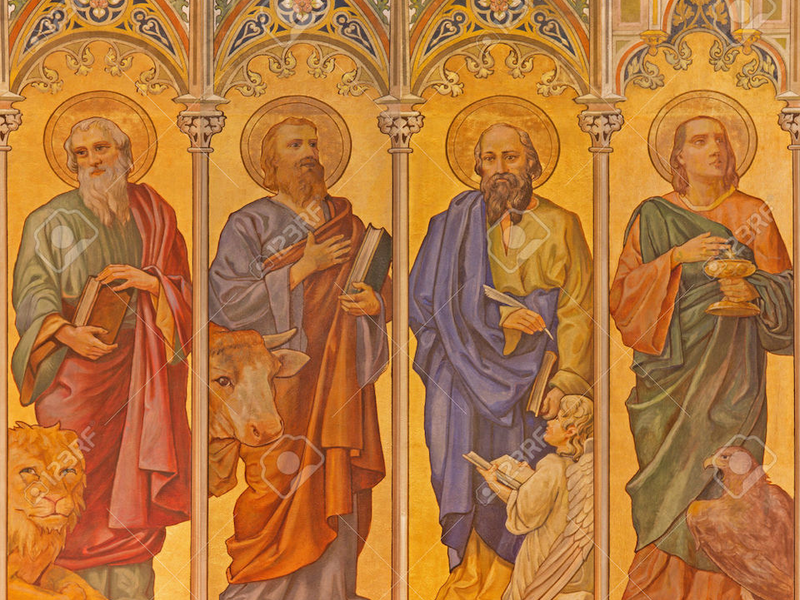
To the best of my knowledge “synopticity” is not a word used in theology or Biblical studies, but it seems an appropriate word to describe the kind of phenomena associated with the Synoptic Gospels, Matthew, Mark, and Luke. These three Gospels tell essentially the same story with significant — sometimes…

by Ralph Allan SmithNovember 10, 2016
laughing_statue_by_xxbobbiie-d5f0meh-2
Humor

Learning to Laugh

Humor is a funny thing. It is altogether familiar yet also mysterious. What makes us laugh? Why do we find things funny? There are academic fields of study dedicated to discovering what makes things humorous. These academicians even have a journal entitled International Journal of Humor Research . No joke.…

by Bill SmithNovember 8, 2016
chaucer
Literature

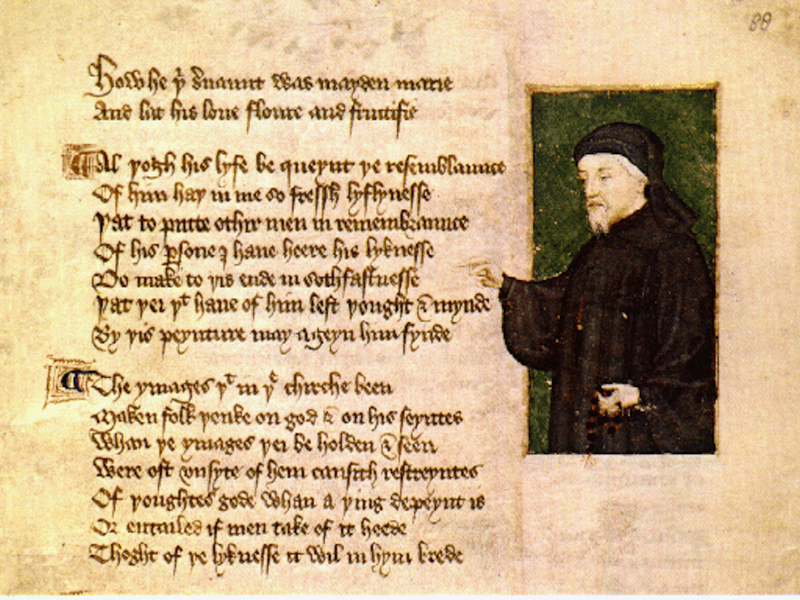
Flawed Means of Grace: Liturgy in The Pardoner's Tale

Out of all the characters in Geoffrey Chaucer’s The Canterbury Tales , the Pardoner has been called the “one lost soul.” The pious Parson, who closes out the collection of tales with a sermon on the seven deadly sins and how a sinner can absolve himself of them, connects the…

by Christian LeithartNovember 3, 2016

Showing page 122 of 309

See all

Showing page 7 of 43

See all

Liturgical jumping

A priest of Auxerre writing in the early middle ages recorded some details of the Easter celebration: “Having receive the pilota [a leather ball] from the newest canon, the dean, or someone in his place, in former times wearing an amice on his head and the other clergy likewise, began…

August 2, 2005

The non-revolution

In a statistically rich discussion of global trends in family life, Castells notes that in the US “The number of sex partners in the last 12 months shows a limited range of sexual partnerships for the overwhelming majority of the population: 66.7 percent of men and 74.7 percent of women…

August 2, 2005
Theology

Fundamentalism revealed!

Fundamentalism in its “actual content, experiences, opinions, history, and theories” is “so diverse as to defy synthesis.” So writes Berkeley sociologist Manuel Castells in The Power of Identity (Blackwell, 2004). Yet, thanks to an exhaustive study commissioned by the American Academy of Arts and Sciences published under the title Fundamentalisms…

August 1, 2005
Politics

Death Penalty and High Justice

Do secular democracies have the right to engage in “high justice,” that is, “the attempt to balance the cosmic books, to stabilize a shaken universe” to answer the blood that cries from the ground by shedding blood? That is the question Jody Bottum raises in a fascinating article in the…

July 31, 2005

Eucharistic meditation, July 31

1 Peter 2:24-25: He Himself bore our sins in His own body on the tree, that we, having died to sins, might live for righteousness—by whose stripes you were healed. For you were like sheep going astray, but have now returned to the Shepherd and Overseer of your souls. As…

July 31, 2005
Theology

Exhortation, July 31

On stage and in movies, revenge stories often end in bloodshed. To avenge herself on her ex-husband Jason for taking another wife, Medea kills her own children. Orestes kills his mother because she murdered his father and her husband, and Hamlet’s attack on his uncle-father Claudius engulfs the entire royal…

July 31, 2005

Showing page 1958 of 2212

Browse by Category

In Medias Res

Your weekly digest for all things Theopolis.

Donate

Theopolis is nearly 100% donor-supported. Consider joining us on our mission.