Theopolis Logo

Writing

Explore our collection of theological essays, biblical studies, and reflections on faith and culture.

See all
tanner-mardis-xuxghzhibn4-unsplash-1-2
Biblical Studies

Tweets-turned-Notes on the Bible’s Chronology

Summary In what follows, I will consider the “year-stamps” employed in Scripture, i.e., statements of the form, “Such-and-such an event took place in the Xth year of Y.” In the process, I will suggest some ways in which the Biblical narrative might relate to events in the extra-Biblical world, though…

by James BejonJuly 16, 2019
durer-prodigal-son-2
Luke

Perspectives on the Prodigal, (Part 2)

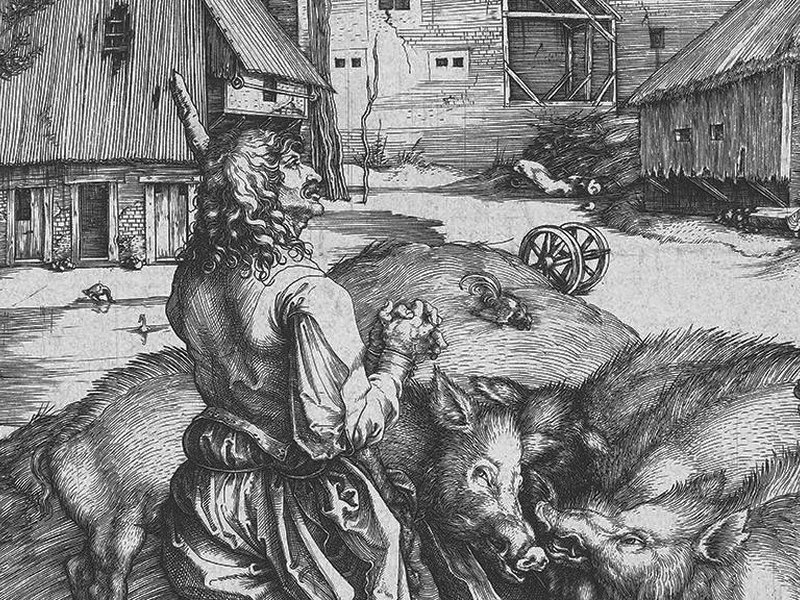
In the first essay on the parable of the Prodigal Son, I suggested that the problems commentators and others encounter in interpreting Jesus three-part parable are not accidental. These are not just problems in our ignorance of cultural background. They are intentional features of the stories —stories designed to poke…

by Ralph Allan SmithJuly 11, 2019
durer-prodigal-son-2
Luke

Perspectives on the Prodigal, (Part 1)

The story of the Prodigal Son is perhaps the most well-known story in the Bible. As others have observed, it may also be one of the most misunderstood. In two short essays, I will point out features of this story that are commonly neglected, aspects of Jesus’ parable that might…

by Ralph Allan SmithJuly 9, 2019
de-rijke-man-en-de-arme-lazarus-by-jacopo-da-ponte-16th-century
Luke

Lazarus and the Rich Man

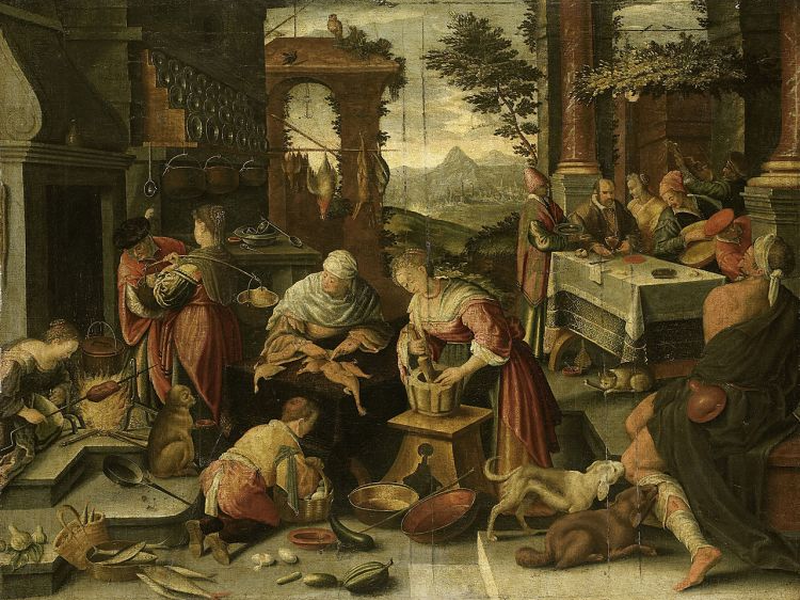
The parable of Lazarus and the nameless rich man is not an independent story. It is part of a long context that begins in Luke 15:1, where Jesus is eating with tax collectors and sinners and the scribes and Pharisees grumble. In response to their hardheartedness, Jesus tells a three-part…

by Ralph Allan SmithJuly 4, 2019
aaron-burden-uynrnfdkjwg-unsplash
Luke

Everybody has Dropsy - Luke 14:1-24

The Bible is written so that even when a reader cannot pick up on what might be deeper or more detailed aspects of a text, there is virtually always a message to be heard. In the ancient world, where the “reader” of Scripture would likely be a church official facing…

by Ralph Allan SmithJuly 2, 2019
communion
Biblical Theology

Fruit Trees and Grain Plants

The distinction between garden (or vineyard) and field begins in Genesis 2. This relates to the ordering of the formless world. Plants of the field are contrasted with the garden planted by God in Genesis 2:5&8. Later on, under the Old Covenant the Israelites will be required to keep their…

by James B. JordanJune 27, 2019

Showing page 77 of 309

See all

Showing page 7 of 43

See all
Literature

Austen and Enlightenment

Michael Caines reviews Peter Knox-Shaw’s Jane Austen and the Enlightenment in the March 4 issue of the TLS . Caines provides a nice overview of the debates concerning Austen’s political views and alleged social conservatism before turning to Knox-Shaw’s particular contribution, who argues that Austen was a child of the…

March 20, 2005
History

Victor Davis Hanson

This post is currently missing due to a server crash. Perhaps in the future, Dr. Leithart will re-write it. — Admin.

March 19, 2005
Philosophy

Bulls***

I caught a few minutes of an interview with Harry Frankfurt on some late night TV show recently. In a venue dominated by stars, the appearance of an Ivy League philosopher was, shall we say, surprising. Less surprising, though, when it became clear that he was speaking on the topic…

March 19, 2005
Theology

Response to Mississippi Valley Report

My work is cited several times in the recent Mississippi Valley Presbytery Report on the New Perspective and the Federal Vision. Since that Report has been widely cited and discussed, I suppose some response is in order. I am not responding to all of the points where I am cited,…

March 18, 2005
Theology

More on Hart, The Beauty of the Infinite

Hart has previously discussed various postmodernism options for aesthetics, showing how postmodernism reduces to an ontology of violence or a discourse of the sublime. Now he turns to Nietzsche to ask whether he provides a possible future for thought. III. The Will to Power. Hart suggests that in Nietzsche, the…

March 17, 2005

Alter on Douglas

Robert Alter reviews Mary Douglas’s latest book, Jacob’s Tears: The Priestly Work of Reconciliation , in the March 3 issue of the London Review of Books . Douglas’s book deals with two main areas, the first historical and the second anthropological. Alter finds the first section unpersuasive; from his description,…

March 9, 2005

Showing page 1999 of 2212

Browse by Category

In Medias Res

Your weekly digest for all things Theopolis.

Donate

Theopolis is nearly 100% donor-supported. Consider joining us on our mission.