Theopolis Logo

Writing

Explore our collection of theological essays, biblical studies, and reflections on faith and culture.

See all
tanner-mardis-xuxghzhibn4-unsplash-1-2
Biblical Studies

Tweets-turned-Notes on the Bible’s Chronology

Summary In what follows, I will consider the “year-stamps” employed in Scripture, i.e., statements of the form, “Such-and-such an event took place in the Xth year of Y.” In the process, I will suggest some ways in which the Biblical narrative might relate to events in the extra-Biblical world, though…

by James BejonJuly 16, 2019
durer-prodigal-son-2
Luke

Perspectives on the Prodigal, (Part 2)

In the first essay on the parable of the Prodigal Son, I suggested that the problems commentators and others encounter in interpreting Jesus three-part parable are not accidental. These are not just problems in our ignorance of cultural background. They are intentional features of the stories —stories designed to poke…

by Ralph Allan SmithJuly 11, 2019
durer-prodigal-son-2
Luke

Perspectives on the Prodigal, (Part 1)

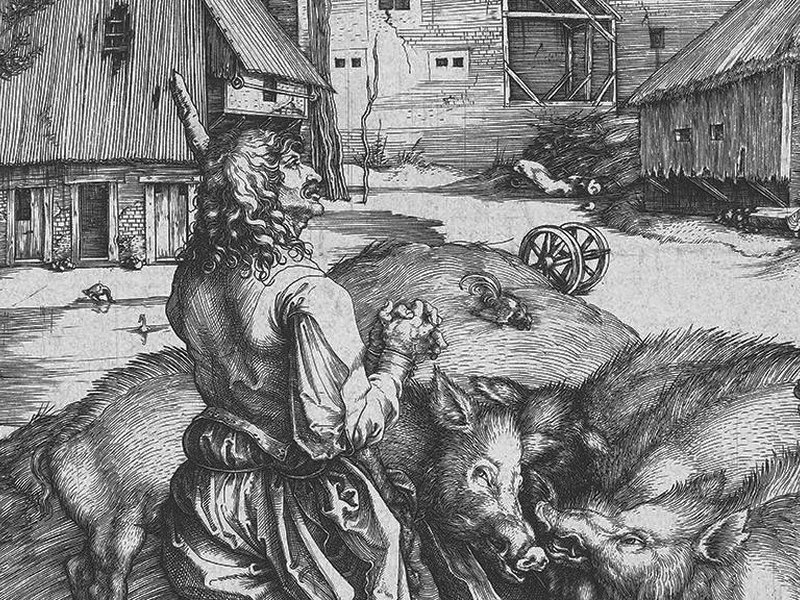
The story of the Prodigal Son is perhaps the most well-known story in the Bible. As others have observed, it may also be one of the most misunderstood. In two short essays, I will point out features of this story that are commonly neglected, aspects of Jesus’ parable that might…

by Ralph Allan SmithJuly 9, 2019
de-rijke-man-en-de-arme-lazarus-by-jacopo-da-ponte-16th-century
Luke

Lazarus and the Rich Man

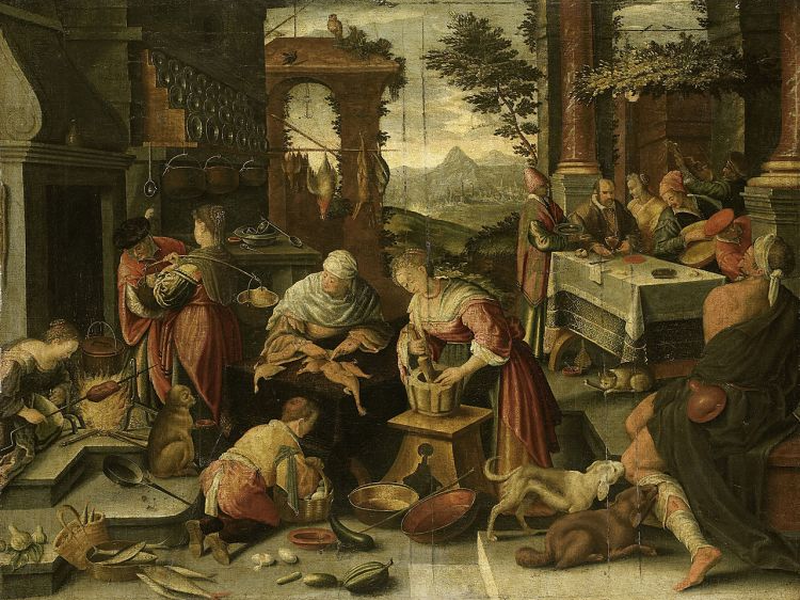
The parable of Lazarus and the nameless rich man is not an independent story. It is part of a long context that begins in Luke 15:1, where Jesus is eating with tax collectors and sinners and the scribes and Pharisees grumble. In response to their hardheartedness, Jesus tells a three-part…

by Ralph Allan SmithJuly 4, 2019
aaron-burden-uynrnfdkjwg-unsplash
Luke

Everybody has Dropsy - Luke 14:1-24

The Bible is written so that even when a reader cannot pick up on what might be deeper or more detailed aspects of a text, there is virtually always a message to be heard. In the ancient world, where the “reader” of Scripture would likely be a church official facing…

by Ralph Allan SmithJuly 2, 2019
communion
Biblical Theology

Fruit Trees and Grain Plants

The distinction between garden (or vineyard) and field begins in Genesis 2. This relates to the ordering of the formless world. Plants of the field are contrasted with the garden planted by God in Genesis 2:5&8. Later on, under the Old Covenant the Israelites will be required to keep their…

by James B. JordanJune 27, 2019

Showing page 77 of 309

See all

Showing page 7 of 43

See all

Exhortation, October 3

We have some difficulty understanding the biblical picture of prayer because we live in a country that sharply separates politics and prayer. Ancient Israel did not do that. The dedication ceremony for the temple began with the transport of the ark of the covenant from its location in the ?city…

October 3, 2004

Rebirth from Temple

As I’ve discussed in a previous post (and, more fully, in a forthcoming article in the Tyndale Bulletin ), Kings is organized by three parallel narratives: the story of the united kingdom (Solomon to Zedekiah and Jehoiachin); the northern kingdom (Jeroboam to the fall of Samaria and the destruction of…

October 3, 2004
Theology

Wedding Sermon

I read from Genesis 2:21-23 So the Lord God caused a deep sleep to fall upon the man, and he slept; then he took one of his ribs, and closed up the flesh at that place. And the Lord God fashioned into a woman the rib which He had taken…

October 2, 2004

Locative Manifestation of God

Throughout the OT, there are repeated references to Yahweh’s “name” dwelling in the place of Yahweh’s choosing (Deut 12; 2 Sam 7; 1 Kings 6-8). Frequently (as in 1 Kings 8:16), there is a pun on the word “name” (SHEM) and the word “there” (SHAM). If we can extrapolate from…

September 30, 2004

Enthronement and Sabbath

1 Kings 8:12-13 begins Solomon’s lengthy speech at the temple dedication. It is a poetic and formal utterance, and contins a number of intriguing features. First, it appears to be structured chiastically: Yahweh said A. to dwell (SHAKAN) B. in the gloom C. Building I have built B’. a house…

September 30, 2004
Biblical Studies

Scattered Thoughts

My son Christian noted a couple of cool things in the Bible this morning: 1) The law of the firstborn requires that the firstborn male of unclean animals like donkeys either be redeemed or killed: “every first opening of a donkey you shall redeem with a lamb, but if you…

September 30, 2004

Showing page 2050 of 2212

Browse by Category

In Medias Res

Your weekly digest for all things Theopolis.

Donate

Theopolis is nearly 100% donor-supported. Consider joining us on our mission.