Theopolis Logo

Writing

Explore our collection of theological essays, biblical studies, and reflections on faith and culture.

See all
tanner-mardis-xuxghzhibn4-unsplash-1-2
Biblical Studies

Tweets-turned-Notes on the Bible’s Chronology

Summary In what follows, I will consider the “year-stamps” employed in Scripture, i.e., statements of the form, “Such-and-such an event took place in the Xth year of Y.” In the process, I will suggest some ways in which the Biblical narrative might relate to events in the extra-Biblical world, though…

by James BejonJuly 16, 2019
durer-prodigal-son-2
Luke

Perspectives on the Prodigal, (Part 2)

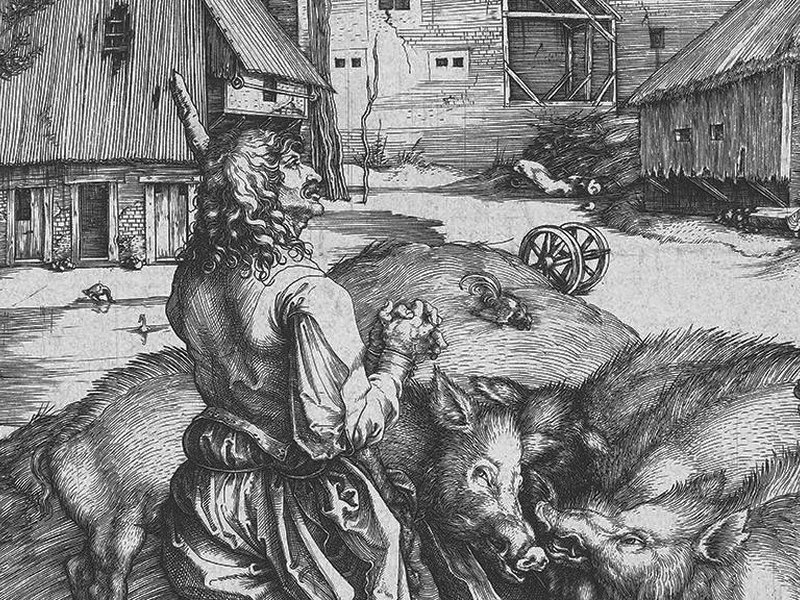
In the first essay on the parable of the Prodigal Son, I suggested that the problems commentators and others encounter in interpreting Jesus three-part parable are not accidental. These are not just problems in our ignorance of cultural background. They are intentional features of the stories —stories designed to poke…

by Ralph Allan SmithJuly 11, 2019
durer-prodigal-son-2
Luke

Perspectives on the Prodigal, (Part 1)

The story of the Prodigal Son is perhaps the most well-known story in the Bible. As others have observed, it may also be one of the most misunderstood. In two short essays, I will point out features of this story that are commonly neglected, aspects of Jesus’ parable that might…

by Ralph Allan SmithJuly 9, 2019
de-rijke-man-en-de-arme-lazarus-by-jacopo-da-ponte-16th-century
Luke

Lazarus and the Rich Man

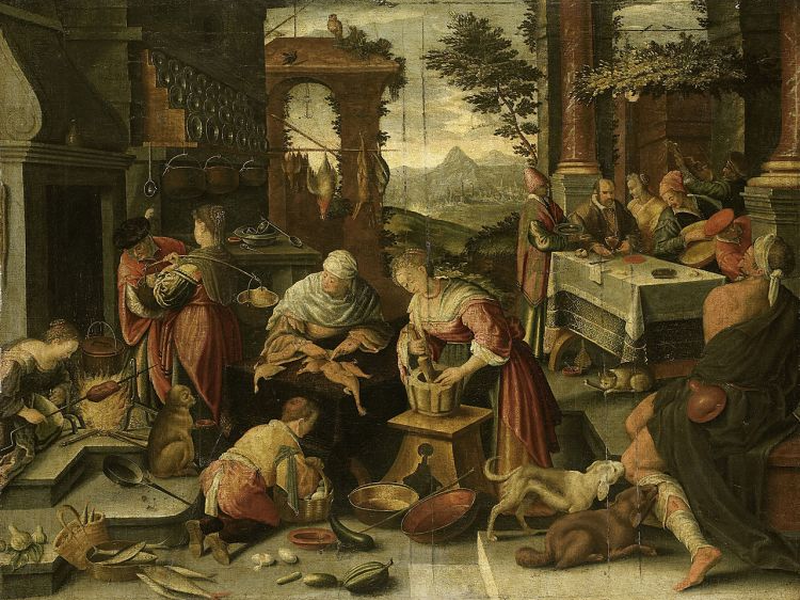
The parable of Lazarus and the nameless rich man is not an independent story. It is part of a long context that begins in Luke 15:1, where Jesus is eating with tax collectors and sinners and the scribes and Pharisees grumble. In response to their hardheartedness, Jesus tells a three-part…

by Ralph Allan SmithJuly 4, 2019
aaron-burden-uynrnfdkjwg-unsplash
Luke

Everybody has Dropsy - Luke 14:1-24

The Bible is written so that even when a reader cannot pick up on what might be deeper or more detailed aspects of a text, there is virtually always a message to be heard. In the ancient world, where the “reader” of Scripture would likely be a church official facing…

by Ralph Allan SmithJuly 2, 2019
communion
Biblical Theology

Fruit Trees and Grain Plants

The distinction between garden (or vineyard) and field begins in Genesis 2. This relates to the ordering of the formless world. Plants of the field are contrasted with the garden planted by God in Genesis 2:5&8. Later on, under the Old Covenant the Israelites will be required to keep their…

by James B. JordanJune 27, 2019

Showing page 77 of 309

See all

Showing page 7 of 43

See all

Eucharistic Meditation, April 18

When Jesus instituted the Supper, He told His disciples to continue to ?do this?Eas a memorial of Him. The ?this?Eis not only the eating and drinking, but the whole ritual, which includes the moment when the bread is broken. In making this part of the rite, Jesus was linking the…

April 19, 2004
Biblical Studies

Exhortation, April 18

Our confession that we believe in God the Father Almighty, Maker of heaven and earth, is foundational to everything in Christian faith, but it is a serious error to limit God?s creativity to the original act of creation. Such a view is implicitly Deist: Deists think that God created the…

April 19, 2004

Schaff on Protestantism

Obsession with sacraments and liturgy seems ?catholic?Eto many in our day, but it will not be news to anyone who has read and absorbed Schaff ?s Principle of Protestantism that these concerns were near the heart of the Reformation. Over a century ago, Schaff had grasped that the Reformation was…

April 18, 2004

Freedman on the Hebrew Bible

David Noel Freedman ‘s book, The Unity of the Hebrew Bible contains a number of fascinating and compelling suggestions about the structure of the OT. 1) He suggests that the Hebrew Bible can be neatly divided into 4 sections of almost equal length: Torah, 5 books, 80,000 words Former prophets,…

April 18, 2004

Exodus in Romans 5-8

NT Wright gives a characteristically stimulating overview of Rom 5-8 as a retelling of the exodus narrative. Here are some of the key elements of his interpretation: 1) He begins with the observation that Rom 8 describes the church’s future inheritance of the cosmos. The cosmos will be transformed at…

April 18, 2004

Romans 5-8

As many commentators have suggested (Douglas Moo most clearly), there is an inclusio around Romans 5-8 that shows it is a distinct unit. Below are some of the key words shared between 5:1-11 and 8:14-39, with some comments: 1) DIKAIOO: “justify”: 5:1, 9; 6:7; 8:30, 33: This verb, prominent in…

April 17, 2004

Showing page 2099 of 2212

Browse by Category

In Medias Res

Your weekly digest for all things Theopolis.

Donate

Theopolis is nearly 100% donor-supported. Consider joining us on our mission.