Theopolis Logo

Writing

Explore our collection of theological essays, biblical studies, and reflections on faith and culture.

See all
kelly-sikkema-gpoh17dxqdm-unsplash
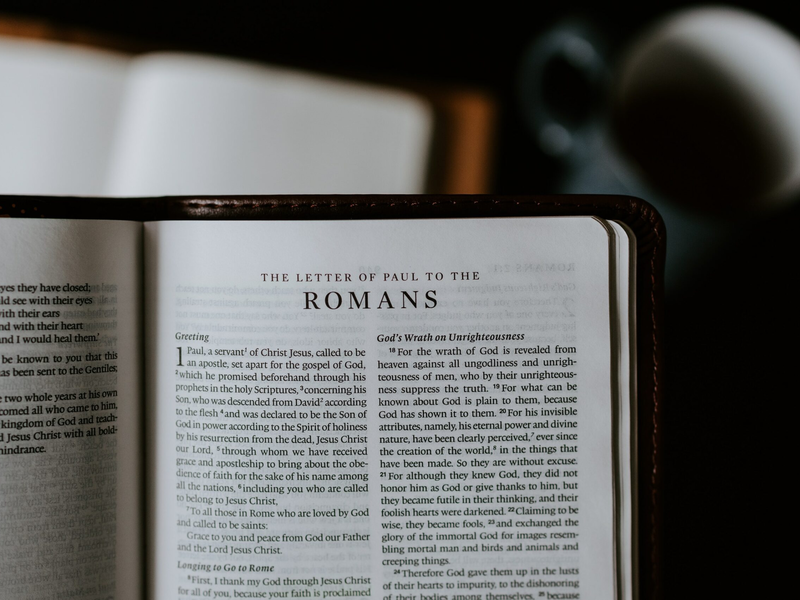
Romans

Paul’s Gospel & the Theme of Romans

Paul, a bond-servant of Christ Jesus, called as an apostle, set apart for the gospel of God, which He promised beforehand through His prophets in the holy Scriptures, concerning His Son, who was born of a descendant of David according to the flesh, who was declared the Son of God…

by Mark HorneJune 6, 2003

screenshot-2023-07-27-at-10-25-35-am
History

The Nelda Boswell Scroll: The Apostle Paul’s Town Hall Meeting in Iconium

With the surprising discovery of the Nelda Boswell scroll historians have deciphered its contents and concluded that the apostle Paul returned to the region of Galatia shortly after he wrote the letter that we call Galatians. The evidence suggests that a number of local pastors, elders, and deacons, along with…

by Jeff MeyersJune 6, 2003
aaron-burden-qjdzyt_k8xg-unsplash
Jonah

Jonah, the Judaizers, and the Gospel

Second Temple Judaism was a form of covenantal nomism, according to E. P. Sanders’ terminology. This means that Torah-observance was a way of expressing loyalty to the Lord of the covenant who had graciously elected Israel. I think Sanders’ view (taken up in bits and pieces and with some modifications…

by Rich LuskJune 6, 2003
Theologia

Gratitude or Faith?

We often hear that the key to Christian obedience is thankfulness for what God has done. But the Bible stresses faith and hope much more than gratitude. The Baptist pastor and author John Piper has written, “Nowhere in the Bible is gratitude connected explicitly with obedience as a motivation. We…

by Mark HorneJune 6, 2003
aaron-burden-qjdzyt_k8xg-unsplash
Federal Vision

God’s Righteousness & Our Justification

One of the questions that is commonly asked about Tom Wright regards his teaching about how Paul uses the term “the righteousness of God.” Since Wright’s interpretation of the term in Paul’s epistles is commonly mentioned in passing but rarely analyzed, it seems like a good idea to explicitly spell…

by Mark HorneJune 6, 2003
jordan-wozniak-xp_agmeea6s-unsplash
Genesis

Forever Means Forever: God’s Promises to the Jews

If God promised a certain land to the seed of Abraham, saying that it would be theirs “forever” (Gen. 13:15), why do Reformed churches teach that the Jews permanently lost their right to the land? What about all these Old Testament “forever” promises and prophesies made to the Jews? How…

by Jeff MeyersJune 6, 2003

Showing page 230 of 309

See all

Showing page 7 of 43

See all
Eucharist

A Eucharistic Theory of Culture

The Lord’s Supper models a proper meal, but for that very reason it models a properly ordered community, the right order of human society. How we eat together, with whom we eat tells us what kind of community we are. It also presents a model of work, creativity, culture, the…

April 13, 2016

Les Stars

In a 1972 essay on Les stars , Edgar Morin explains the difference between actors and stars by referring to ancient heroic myths. Stars are heroes of adventure, action, tragedy, and love like the heroes of myths. They are “divinisee et mythique” (39). The star's mythical, quasi-divine status applies both…

April 13, 2016

Thomas, Dionysus, Scripture

In a paper on Academia.edu, Alan Darley of the University of Nottingham examines Thomas's revision of the Pseudo-Dionysian notion of hierarchy, stressing the importance of Scripture in Thomas's revisionary efforts. Along the way, following a number of recent scholars, he highlights the central role of Scripture in the Summa .…

April 12, 2016
Shakespeare

Shakespeare's Distributed Personality

Stephen Greenblatt uses the anthropological theory of Alfred Gell to explain Shakespeare's universal appeal, particularly Gell's notion of the “distributed personality”: This refers to “the ability of an artist to fashion something - Gell called it an ‘index' - that carries agency, his own and that of others, into the…

April 12, 2016

Paul's Chiastic Mission

In an essay in the 1978 collection, Perspectives on Luke-Acts , Donald Miesner explains the chiastic structure of Paul's missionary journey: A. Jerusalem to Antioch, Cyprus, Asia Minor, 12:25-13:14a B. Paul's initial address to Jews at Antioch, 13:14b-52 C. Paul is persecuted at Iconium, gives speech at Lystra, 14:1-28 D.…

April 12, 2016

Liturgical Discipleship

The liturgy provides a rich and holistic model of evangelism and discipleship, holding together dimensions of Christian living that often fly apart. The liturgy begins with a call to enter the presence of God; just so, our entry into Christ is not a product of our diligent efforts but the…

April 11, 2016

Showing page 300 of 2212

Browse by Category

In Medias Res

Your weekly digest for all things Theopolis.

Donate

Theopolis is nearly 100% donor-supported. Consider joining us on our mission.