Theopolis Logo

Writing

Explore our collection of theological essays, biblical studies, and reflections on faith and culture.

See all
screen-shot-2022-08-04-at-9-36-57-am
Matthew

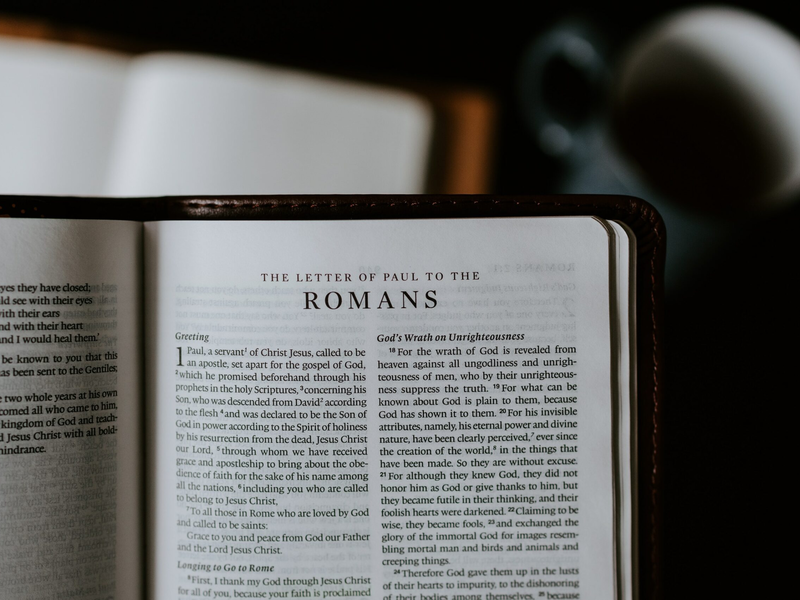
Paul Doesn't Care About Universal Individual Sinfulness or General Revelation

One reason readers assume Paul is trying to prove that all human beings are sinful is that they understand him to be arguing that no one can keep the law. That means, they think, his opponents must believe that human nature is potentially sinless. Taking Paul’s statement that, if you…

by Mark HorneJune 17, 2013

karsten-wurth-imegmbunara-unsplash
Mission

Dreams and Visions

[Note: This post was written prior to our name changing to Theopolis Institute.] What is Trinity House for? Three things: We aim to advance the reformation of the church and, through the church, to promote the renewal of culture; in furthering reformation, we aspire to be a site of fraternal,…

by Peter LeithartJune 12, 2013
sixteen-miles-out-al48tflf4e8-unsplash
Deuteronomy

Sons to Yahweh your God!

This is the third in a series of studies of the Third Word, and especially of Deuteronomy 14. In 1979 Stephen Kaufman penned a groundbreaking essay on Deuteronomy, arguing that it was a meticulously structured and carefully composed book. In his view, chapters 12 to 26 in particular follow the…

by Ralph Allan SmithJune 10, 2013
kelly-sikkema-gpoh17dxqdm-unsplash
Romans

How is Wrath Revealed?

A large mistake is made in understanding Romans if one assumes that Paul is concerned with proving the fact that no one can ever live without sin—or that all attempts at obeying God’s commands are at least tainted with human sinfulness. The first problem with such an assumption is that…

by Mark HorneJune 5, 2013
chris-bair-ndczc5739ck-unsplash
Deuteronomy

The Third Word

This is the second in a series of studies on the Third Word, and especially on the food laws of Deuteronomy 14. In the second part of this series, I argue that Moses’ reworking of the Ten Words in Deuteronomy 5 includes adding nuance to the Third Word. This prepares…

by Ralph Allan SmithJune 3, 2013
yannis-papanastasopoulos-if_29sed7ta-unsplash
Culture

Turning Babel into a Beast

Recent months have brought a lively discussion of Christian participation in the culture war. On the one hand, the pro-life movement appears to be making some slow progress on the abortion issue. The trial of abortionist and serial murderer Kermit Gosnell has the potential to awaken those who are nominally…

by Joe RigneyMay 29, 2013

Showing page 193 of 309

See all

Showing page 7 of 43

See all
Eucharist

Apotheosis of Consumerism

Though the presence of Christ has been central to Eucharistic theology, Thomas O'Loughlin ( The Eucharist ) argues that in Tridentine Catholicism”the dominant thinking about the event of physical engagement with the Eucharist was imagined in terms of a sacred commodity. The priest ‘confected' the Eucharist, it was reserved for…

May 6, 2015

Victorian Forgiveness

Early in his Forgiveness in Victorian Literature , Richard Gibson quotes Sarah Beckwith's observation that “promising and forgiving [are] acts of making community” (27). Gibson draws on Hannah Arendt's analysis to fill out the picture. Promises reduce the unpredictability of the future, while “forgiveness confronts the crisis of the past.…

May 6, 2015
Jane Austen

Jane Austen's Names

Margaret Doody's Jane Austen's Names is a treasure chest. On the assumption that “an artist cannot do anything slovenly,” Doody explores the historical significance of the real place names that appear in Austen's novels, teases out the puns in the characters' names, suggests that Austen was sensitive to the ethnic…

May 6, 2015

Evangelizing Metaphysics

Key terms of ancient philosophy are rare or entirely absent in the New Testament. Aristotle considered the study of causes ( aitia ) and principles ( archai ) to be the subject matter of first philosophy ( Metaphysics A.1,981b28), and he defines metaphysics as the study “of the things which…

May 6, 2015

Nature and Equality

Norberto Bobbio ( Left and Right ) claims that left and right are different because of their different evaluations of equality. He starts from the uncontroversial fact that people are equal in certain respects, unequal in others, and claims that “We can then correctly define as egalitarians those who ,…

May 5, 2015

Difference Principle

John Rawls's notion of “difference principle” is an alternative to a meritocratic regime, but it is also different from equality of result. As Michael Sandell explains in Liberalism and the Limits of Justice , Rawls denies that the difference principle eliminates distinctions between persons. The difference principle aims at the…

May 5, 2015

Showing page 430 of 2212

Browse by Category

In Medias Res

Your weekly digest for all things Theopolis.

Donate

Theopolis is nearly 100% donor-supported. Consider joining us on our mission.