
Theopolis Logo

Writing

Explore our collection of theological essays, biblical studies, and reflections on faith and culture.

See all
giammarco-zeh-ljawhtg-unsplash
Biblical Horizons

OPEN BOOK: Views and Reviews

Isaac E. Mozeson, The Word: The Dictionary that Reveals the Hebrew Sources of English (Northvale, NJ: Jacob Aaronson Inc., 1995), 310 pp. Reviewed by James B. Jordan. Once there was only one language in the world, the language God spoke to Adam. At the Tower of Babel, there came to…

by James B. JordanJune 28, 1996
tim-wildsmith-j6jv-mkdzqs-unsplash
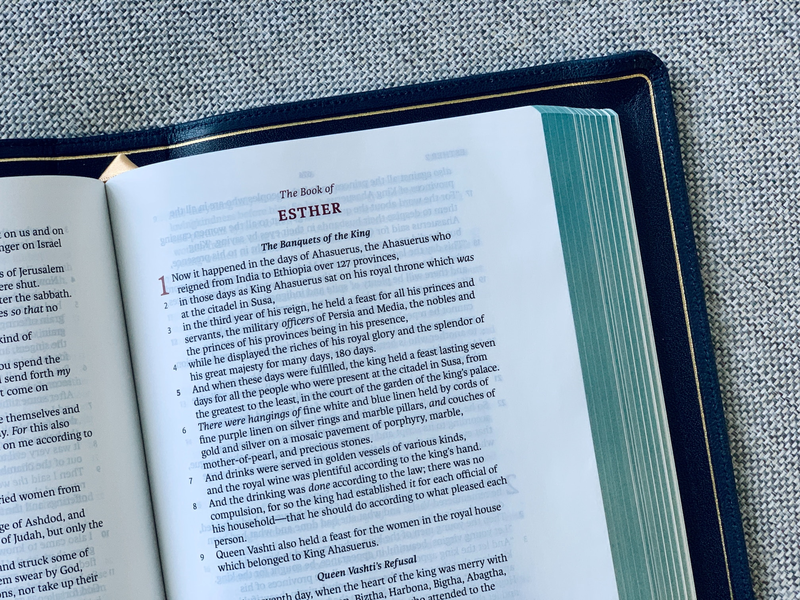
Esther

Esther: Historical & Chronological Comments (IV)

2. The Setting of the Book of Esther A. Xerxes (continued from previous issue) Ezra 6:14 says that the Jews finished building "according to the command of the God of Israel and the decree of Cyrus and Darius and Artaxerxes king of Persia." The problem with this verse is that…

by James B. JordanJune 28, 1996

ales-krivec-4mibe6zg5r0-unsplash
Acts

Jesus and Amalek

This essay goes with our previous study of the Amalek pattern back in Biblical Horizons No. 2. Since many do not have this essay, entitled "The Battle of Gog and Magog," let me cite the relevant paragraphs: Note in Genesis 12-15 that Abram moves into the land after escaping Pharaoh…

by James B. JordanJune 28, 1996

aaron-burden-1ebsmyrau-s-unsplash
Proverbs

The Strange Woman

Proverbs 7:6-23 is one of several passages early in the Proverbs in which Solomon warns his son about the wiles and dangers of the "strange woman." It is certainly quite proper to take these as straightforward warnings against sexual sins, and these are certainly warnings that need to be impressed…

by Peter LeithartJune 27, 1996
jan-kahanek-g3o5ztrk2e4-unsplash
Biblical Studies

Some Observations

1. In Luke 4:20 we read that after Jesus finished reading from Isaiah, "the eyes of all in the synagogue were fixed upon Him." This is usually taken in a psychological sense: They were amazed at Jesus somehow. I suggest that, as always, a merely psychological reading is a modern…

by James B. JordanMay 28, 1996
tim-wildsmith-j6jv-mkdzqs-unsplash
Esther

Esther: Historical & Chronological Comments (III)

2. The Setting of the Book of Esther Up to now we have assumed what we must prove, that the king in Esther is Darius the Great. While Biblical chronologists have usually taken this position, commentators on the book of Esther have often taken others as the king. One view,…

by James B. JordanMay 28, 1996

Showing page 265 of 309

See all

Showing page 7 of 43

See all
Eucharist

Apotheosis of Consumerism

Though the presence of Christ has been central to Eucharistic theology, Thomas O'Loughlin ( The Eucharist ) argues that in Tridentine Catholicism”the dominant thinking about the event of physical engagement with the Eucharist was imagined in terms of a sacred commodity. The priest ‘confected' the Eucharist, it was reserved for…

May 6, 2015

Victorian Forgiveness

Early in his Forgiveness in Victorian Literature , Richard Gibson quotes Sarah Beckwith's observation that “promising and forgiving [are] acts of making community” (27). Gibson draws on Hannah Arendt's analysis to fill out the picture. Promises reduce the unpredictability of the future, while “forgiveness confronts the crisis of the past.…

May 6, 2015
Jane Austen

Jane Austen's Names

Margaret Doody's Jane Austen's Names is a treasure chest. On the assumption that “an artist cannot do anything slovenly,” Doody explores the historical significance of the real place names that appear in Austen's novels, teases out the puns in the characters' names, suggests that Austen was sensitive to the ethnic…

May 6, 2015

Evangelizing Metaphysics

Key terms of ancient philosophy are rare or entirely absent in the New Testament. Aristotle considered the study of causes ( aitia ) and principles ( archai ) to be the subject matter of first philosophy ( Metaphysics A.1,981b28), and he defines metaphysics as the study “of the things which…

May 6, 2015

Nature and Equality

Norberto Bobbio ( Left and Right ) claims that left and right are different because of their different evaluations of equality. He starts from the uncontroversial fact that people are equal in certain respects, unequal in others, and claims that “We can then correctly define as egalitarians those who ,…

May 5, 2015

Difference Principle

John Rawls's notion of “difference principle” is an alternative to a meritocratic regime, but it is also different from equality of result. As Michael Sandell explains in Liberalism and the Limits of Justice , Rawls denies that the difference principle eliminates distinctions between persons. The difference principle aims at the…

May 5, 2015

Showing page 430 of 2212

Browse by Category

In Medias Res

Your weekly digest for all things Theopolis.

Donate

Theopolis is nearly 100% donor-supported. Consider joining us on our mission.