Theopolis Logo

Writing

Explore our collection of theological essays, biblical studies, and reflections on faith and culture.

See all
31-03-0213
Hermeneutics

Apocalyptic Eyes

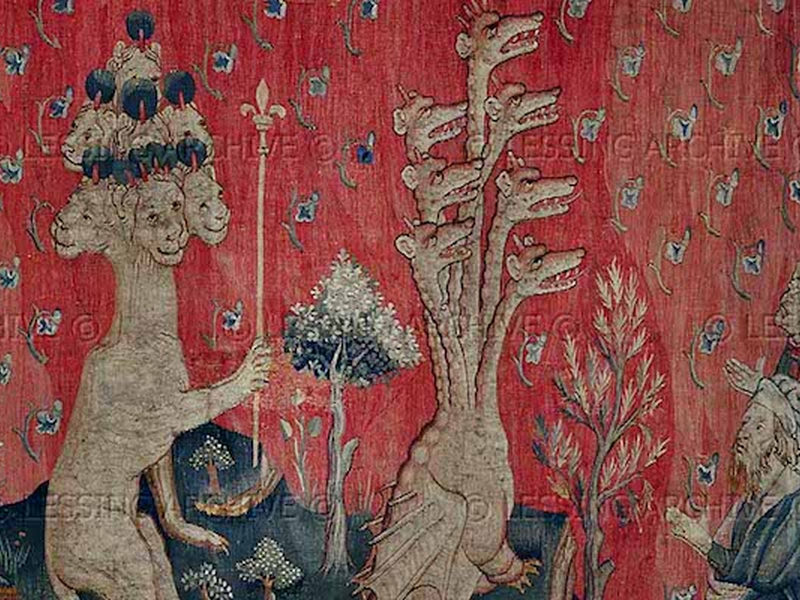
Flying scrolls. Red horses. Beasts coming out of the sea. Winged women. The list goes on. Apocalyptic literature in the Bible is like a cross between science fiction and Marvel comics. And the Bible has a fair bit of this sort of thing. Daniel sees visions in Babylon, Zechariah sees…

by Toby SumpterNovember 4, 2014

bhm-skyline-2
Theopolis News

New Name, New Look

Trinity House Institute has taken a new name, the Theopolis Institute. This striking new name expresses our unique vision and mission and captures the unified purpose behind all our specific programs and activities. We still have Bible, liturgy, and culture in our tagline. We still offer the same courses on…

by TheopolisNovember 4, 2014
istock_000012860926small
Atonement

Not Fearing the Devil

Adam Kotsko offers a socio-political variation on the Christus Victor atonement theory in his 2010 study, The Politics of Redemption: The Social Logic of Salvation . He does this by explaining "the devil" in terms of the Hegelian concept of "objective spirit," Geist . As Kotsko puts it, Geist "refers…

by Peter LeithartOctober 13, 2014
jez-timms-8muutamcwu4-unsplash
Leviticus

The Meaning of Sacrifice

Two factors keep Nahtali Meshel from discussing the meaning of sacrifice until late in his The "Grammar" of Sacrifice . The first has to do with the texts he draws from: "P says little about the meaning of its rituals" (174). The other has to do with the grammatical theory…

by Peter LeithartOctober 8, 2014
jez-timms-8muutamcwu4-unsplash
Leviticus

Praxemics

Chapter 5 of Naphtali Meshel's The "Grammar" of Sacrifice focuses on "praxemics," the physical actions of sacrificial ritual. Praxemes are constituted by six elements: an "atomact," an elementary physical act or gesture; an actor; an object that is acted up; a target for the action and often for the object…

by Peter LeithartOctober 6, 2014
markus-winkler-aid-xyrtlec-unsplash
Leviticus

Jugation and Hierarchy

Two chapters of Naphtali Meshel’s The “Grammar” of Sacrifice cover what he calls “jugation” and “hierarchies.” The first involves the addition of other materials to an animal offering. Jugates include wine, cereal, and oil that are added to the animals (zoemes) that are offered in sacrifice. Some jugates are coordinated…

by Peter LeithartOctober 1, 2014

Showing page 167 of 309

See all

Showing page 7 of 43

See all

Fated Adventure

According to Michael Nerlich ( Ideology of Adventure ), “all figures of the Greek and Latin novels of adventure are ‘involuntary’ adventurers.” Mikhail Bakhtin too ( Dialogic Imagination ) emphasizes that in earlier adventures “an individual can be nothing other than completely passive, completely unchanging” and function as “merely the…

May 1, 2015

Siegfried in Victory and Defeat

Winder McConnell ( Nibelungenleid , 98-99) sketches the changing uses of the epic in the mid-20 th century: “During the Weimar Republic, the themes and motifs of the Nibelungenlied had been employed by authors of antirepublican persuasion to express optimism for Germany’s future, but poets and dramatists sympathetic to the…

May 1, 2015

Wagner, Tristan, Love

In an essay in A Companion to Gottfried of Strassburg's Tristan , Ulrich Muller argues that “In Tristan und Isolde Wagner radically transformed the meaning and message of Gottfried’s romance, just as he had in Parsifal. As cast by Gottfried (and in all medieval versions), the lovers and their love…

May 1, 2015

Art of Divine Love

Andreas Capellanus literally wrote the book on the Art of Courtly Love , but the concluding Book 3 suggests that the book was a cautionary tale throughout. Capellanus closes the treatise with an exhortation to Walter, the man to whom the book is addressed to abstain from the desires of…

April 30, 2015

Liberal Arts in Middle Ages

Even today, when historians have abandoned the idea, many regard the Middle Ages as a time dark and ignorant, the huddled masses in shadows until the burst of light that came with the Renaissance and then the Enlightenment. For centuries, it is often thought, medieval thinkers knew little of the…

April 30, 2015

Allegorizing Homer

Allegorization was one of the techniques medieval used, adapted from ancient writers, to incorporate pagan writing in a biblical framework. As Ernst Curtius ( European Literature and the Latin Middle Ages ) writes, “the Middle Ages subjected profane writers to allegorical interpretation exactly as it did the Bible, and .…

April 30, 2015

Showing page 432 of 2212

Browse by Category

In Medias Res

Your weekly digest for all things Theopolis.

Donate

Theopolis is nearly 100% donor-supported. Consider joining us on our mission.