Theopolis Logo

Writing

Explore our collection of theological essays, biblical studies, and reflections on faith and culture.

See all
sixteen-miles-out-d40gdcd_-he-unsplash
Federal Vision

The Covenant of Works: The Mosaic Covenant & the Necessity of Obedience for Salvation in the Day of Judgment

When someone expounds the way of salvation found in the Westminster Confession and Catechisms and in the easily-accessible writings of the Reformed heritage, he often finds him embroiled in a debates about the covenant of works and the Mosaic Covenant. One is “proven” to be aberrant by allegations that one…

by Mark HorneMay 29, 2005

james-coleman-hoznesupplm-unsplash
Baptism

Rome Won't Have Me

The ultimate condemnation of a position in Reformed circles is to show that it “leads back to Rome.” Indeed, one gets the feeling that Rome is a worse destination for a Presbyterian than even hell itself. The accusation of Rome stings deeply, of course, because it means that all the…

by Rich LuskOctober 24, 2004
aaron-burden-qjdzyt_k8xg-unsplash
Federal Vision

Mixing “Law” & Gospel in the Abrahamic Promise: A Response to Michael Horton

One of the odd features of Michael Horton’s version of Covenant theology is his interpretation of the covenant God made with Abraham 1 in Genesis 15. According to Horton, The very way in which God made the covenant with Abraham (putting him to sleep; walking through the torn animals by…

by Mark HorneSeptember 22, 2004
jan-kahanek-g3o5ztrk2e4-unsplash
Mark

The Victory According to Mark

What was I trying to do, when I wrote my book on Mark’s Gospel ? Fundamentally, I wanted a book that would change readers by making them better readers of the Gospel of Mark. My ideal reader is not someone who goes to the book to use as a resource…

by Mark HorneSeptember 7, 2004
sixteen-miles-out-d40gdcd_-he-unsplash
Baptism

Sacramental Assurance & the Reformed Faith: The Biblical Perspective of the Westminster Standards

Why do we need sacraments? According to the Westminster Confession, sacraments were instituted by Christ “to confirm our interest in him” (27.1), “to strengthen and increase” the “faith” of those within the Covenant of Grace and “to distinguish them from those that are without” that covenant (Westminster Larger Catechism, #162).…

by Mark HorneSeptember 3, 2004
sinitta-leunen-dvibhmzsy8e-unsplash
Isaiah

“What More Could I Have Done?” | Some Thoughts on the Mystery of Divine Sovereignty and Covenant Responsibility

In Isaiah 5:1-7, we have a typical covenant lawsuit, in which the Lord accuses his people of rejecting his grace and mercy. It is not my intention here to exegete the entire passage, or to look at the way the vineyard image used here serves as a metaphor in other…

by Rich LuskJune 7, 2004

Showing page 222 of 309

See all

Showing page 7 of 43

See all

Battle of the Soul

Prudentius’s Psychomachia (5 th century AD) is one of the first and one of the most influential of medieval allegories. It is the source of the battle of Virtue and Vice that was one of the key themes of medieval allegory, which carries right into the Elizabethan allegory of Spenser's…

April 27, 2015
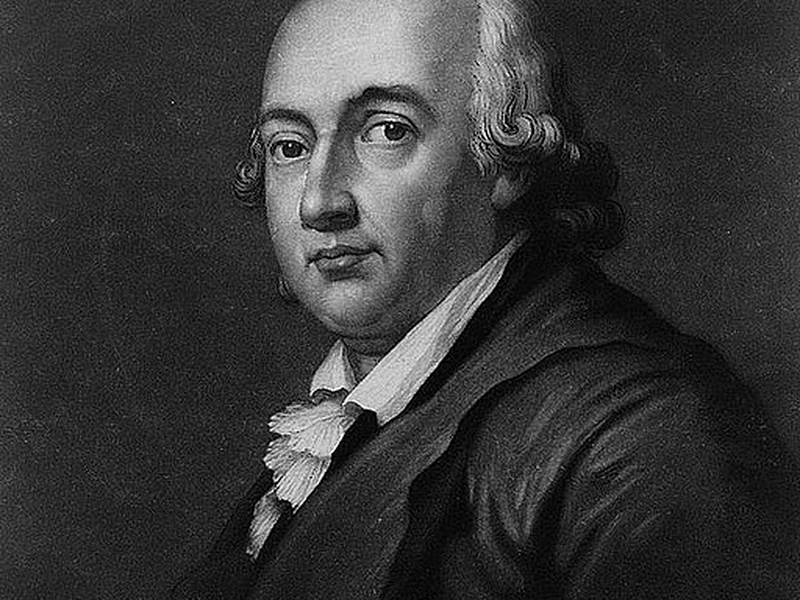
johann_gottfried_von_herder_by_john_sartain
Nationalism

Nations: Grown or Imagined?

R omantic thinkers like Johann Gottfried Herder, developed an organic conception of nationhood. For Herder, a nation is an extended family, and so a perfect nation, the most natural state, is “one nation, an extended family with one national character." (I rely on this essay by Richard White.) People have…

April 27, 2015

Imagining Finland

Nations are “imagined communities,” and one of the ways nations imagine themselves is to imagine themselves as very, very old. The Finnish epic, the Kalevala , serves as an illustration of the nexus between ancient literature and national identity. Anderson writes ( Imagined Communities , 74-5), “In the eighteenth century…

April 27, 2015

The Un-Dante

In a contribution to Petrarch: A Critical Guide to the Complete Works Teodolinda Barolini contrasts the love poetry of Petrarch's Rerum vulgarium fragmenta (also known as the Canzoniere ) with that of Dante. Petrarch continues the courtly paradigm. His interest is in the shifting psychology and drama of the male…

April 27, 2015

Deflating Humanism

In his E nglish Literature in the Sixteenth Century , CS Lewis makes two deflationary comments about the effects of Renaissance humanism. First, “The ‘barbarous’ books [of medieval Latin] have survived in the only sense that really matters: they are used as their authors meant them to be used. It…

April 24, 2015

Mystic Ark

Conrad Rudolph's The Mystic Ark is the product of impressive scholarship. Its focus is on the image of the mystic ark, a complex cosmic portrait showing “the Majesty” (looking like Jesus) enthroned, flanked by angels, holding a large disk, inscribed with a square turned sideways like a diamond. Inside the…

April 24, 2015

Showing page 435 of 2212

Browse by Category

In Medias Res

Your weekly digest for all things Theopolis.

Donate

Theopolis is nearly 100% donor-supported. Consider joining us on our mission.