Theopolis Logo

Writing

Explore our collection of theological essays, biblical studies, and reflections on faith and culture.

See all
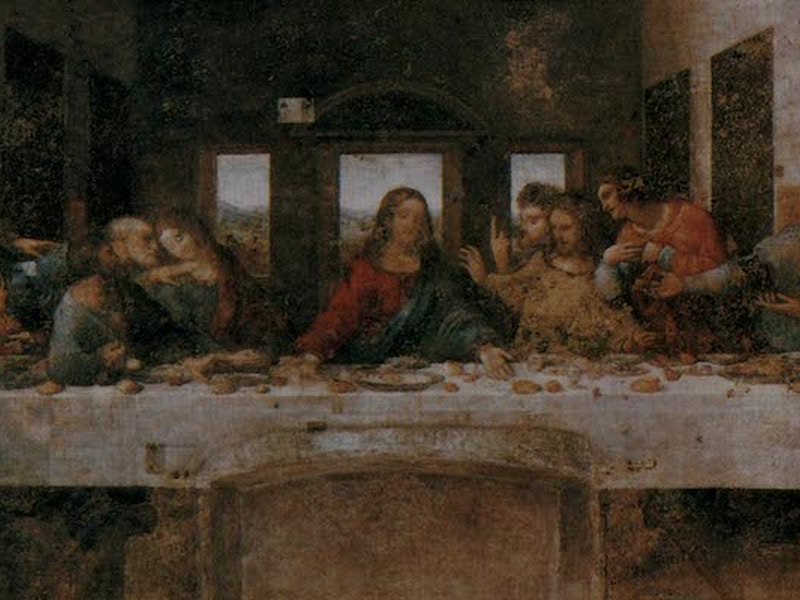
last-supper
Eucharist

The Epiclesis in Reformed Eucharistic Prayer, (Part 1)

What happens at the Table of the Lord? If Christ is really present, then how is this so? The witness of the Church throughout history has been that Christ is present in the Eucharist through the operation of the Holy Spirit, and in the practice of the Church, prayers at…

by Christopher KouOctober 11, 2016

sixteen-miles-out-al48tflf4e8-unsplash
Spiritual Warfare

Enemies and Victims

In the power of the Spirit, the gospel forms a society in which there is neither Jew nor Greek, slave nor free, a society that is characterized by unity, long-suffering, patience; love. The gospel forms a culture whose participants do not steal but labor and give, who are not angry…

by Peter LeithartOctober 6, 2016
sixteen-miles-out-d40gdcd_-he-unsplash
Mark

Sovereignty and Self-Gift

At the 1997 Biblical Horizons Summer Conference, the Rev. Jeffrey Meyers presented a series of remarkable lectures on the gospel of Mark. Among his many insightful comments, he suggested that the second gospel continues where the first gospel ends; Matthew ends with Jesus saying "Go" (Matthew 28:19), and Mark’s shows…

by Peter LeithartOctober 4, 2016
e99a2338
Art

Birmingham Life and Culture Series: Joseph Bottum

On October 25 at Avondale Brewery , Theopolis will be co-sponsoring the 2nd Annual Birmingham Life and Culture Series. This year's event will feature author Joseph Bottum. Joseph is known for his writings on literary criticism, religion, and his short stories. Essayist and reviewer Mary Eberstadt has said that "his…

by Brian MoatsSeptember 29, 2016
hebrew-manuscript
Biblical Studies

Are Not All These Galileans?

One of the curiosities of the New Testament revelation is its focus on Galilee. The region of Galilee was given to Asher, Zebulun, Naphtali, and Issachar, and the events of Judges 4-8 occurred there, so it had some importance in Israelite history. But when the tribe of Ephraim led the…

by James B. JordanSeptember 29, 2016
screen-shot-2016-03-31-at-9-32-11-am
Hermeneutics

Hero's Theme

In a recent post , Ian Paul discusses the practice of allegorical interpretation, reflecting in particular upon a conversation he had with someone concerning the reading of the story of Rahab. Paul’s interlocutor argued strongly for an allegorical reading of the Rahab story, writing: “Joshua is a type of Christ…

by Alastair RobertsSeptember 27, 2016

Showing page 124 of 309

See all

Showing page 7 of 43

See all

Why Now?

Jesus prayed that the church's unity would reflect the unity of the Father and Son. Paul urged the Ephesians to cultivate the virtues of peace that would express the sevenfold unity of the church (Ephesians 4). That demand is a perennial one. But we've been divided for a long time.…

March 12, 2015

Fragile Fruitfulness

Israel is a vine, transplanted from Egypt (Psalm 80; Isaiah 5). She exists to produce wine that gladdens the hearts of men. Israel is the Dionysian people. Ezekiel brings out another dimension of the vine image: “Son of man, how is the wood of the vine better than any wood…

March 12, 2015

Judgment to the Corners

The oracle of judgment in Ezekiel 14:12-23 is structured as a fourfold judgment: sword, famine, beasts, plague (v. 21). The descriptions of judgment are laid out in four paragraphs that use repetitive, stereotyped language. Throughout, Yahweh says that even the intercession of Noah, Daniel, and Job could not rescue Judah…

March 12, 2015
Fairy Tales

The Political Economy of Fairy Tales

In a TLS review of several recent books on fairy tales, Fracesca Wade points to the political context and economic setting of early folk and fairy tale collections. Inspired by Herder, the Grimms, she observes, intended to recover Germanitas by study of natural German poetry: “Although the brothers drew widely…

March 12, 2015

Remembering the Present

In his Deja Vu and the End of History , Italian philosopher Paolo Virno explores the phenomenology of memory, especially in its relation to philosophies of history. The deja vu of the title isn't a metaphor; following Henri Bergson, Virno argues that it represents “the untrammelled extension of memory's jurisdiction,…

March 11, 2015

Potential, Act, and Violence

Paolo Virno ( Deja Vu and the End of History ) observes that potential and act occur simultaneously. Take language: “The language faculty irrupts into becoming in concomitance with the phrase that I am speaking. It appears precisely now, as I speak, neither before nor afterwards: but, note, right now…

March 11, 2015

Showing page 453 of 2212

Browse by Category

In Medias Res

Your weekly digest for all things Theopolis.

Donate

Theopolis is nearly 100% donor-supported. Consider joining us on our mission.