
Theopolis Logo

Writing

Explore our collection of theological essays, biblical studies, and reflections on faith and culture.

See all
jacek-dylag-pmxt0xtq-a-unsplash
Culture

Consumerism, Oikos, and the Role of Women in the Church

Part 1 We do not understand the role of women in ministry because we do not understand the role of men in ministry. We do not understand the role of men in ministry because we do not understand the church. We do not understand the church because the consumer culture…

by John CarpenterJuly 11, 2023
adam-and-eve-in-the-garden-of-eden-wenzel-peter
Biblical Theology

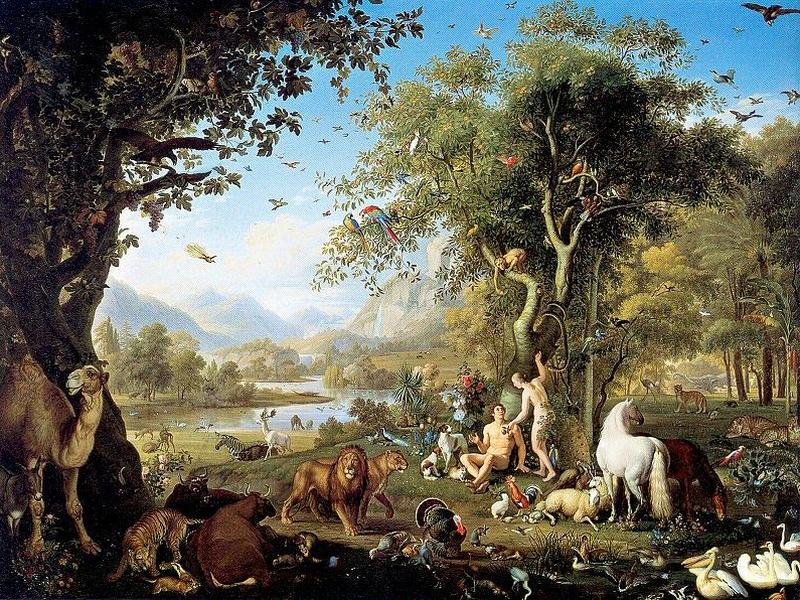
Genesis’ Beginning Story

1. One structure The Creation account (G1:1-2:4) conspicuously conveys meaning using the literary shape of the text. The narrative is told with formulaic patterns, repetitions, and parallelism. The Garden account is different. It is viewed as a separate text, with its own author, employing its own structure. This second account’s…

by Scott FairbanksJune 28, 2023
jelleke-vanooteghem-gnxb59lgu1m-unsplash
Baptism

Crystalline Baptism

I was reading James Jordan’s Creation in Six Days while also preparing for Trinity Sunday in which the gospel reading is John 3:1-15. As providence would have it Jordan dropped an easter egg for me along the lines of baptism. In chapter 5 he points out, “ On the second…

by Matthew CoreyJune 20, 2023
ryan-loughlin-a8cewc-qgq-unsplash
Baptism

Christians Should Baptize Their Children, but Not Because of Circumcision

It's true. There is no verse in the New Testament that commands or records an infant baptism. This poses a problem for some Christians. Those who only look for explicit commands, or those whose theology is limited to the New Testament, will conclude that infant baptism is not biblical and…

by Adam McIntoshJune 13, 2023
adam-and-eve-in-the-garden-of-eden-wenzel-peter
Biblical Studies

Polarities

1. Goal This paper’s goal is to identify and describe a literary strategy employed by scripture, namely using two episodes that cover similar territory or themes using details drawn from opposite ends of a number of spectrums. Once described the reader may recognize numerous other instances of this strategy in…

by Scott FairbanksJune 7, 2023
juli-kosolapova-us_dv71f1bc-unsplash
Deuteronomy

Kind Capital Punishment

Numbers 14 records the tragic story of Israel’s decision to rebel against Yahweh and Moses. Twelve spies had been sent into the land to bring back a report to Israel. All twelve spies agreed: “We went to the land where you sent us. It truly flows with milk and honey”…

by Ralph Allan SmithMay 31, 2023

Showing page 30 of 309

See all

Showing page 7 of 43

See all

Why Now?

Jesus prayed that the church's unity would reflect the unity of the Father and Son. Paul urged the Ephesians to cultivate the virtues of peace that would express the sevenfold unity of the church (Ephesians 4). That demand is a perennial one. But we've been divided for a long time.…

March 12, 2015

Fragile Fruitfulness

Israel is a vine, transplanted from Egypt (Psalm 80; Isaiah 5). She exists to produce wine that gladdens the hearts of men. Israel is the Dionysian people. Ezekiel brings out another dimension of the vine image: “Son of man, how is the wood of the vine better than any wood…

March 12, 2015

Judgment to the Corners

The oracle of judgment in Ezekiel 14:12-23 is structured as a fourfold judgment: sword, famine, beasts, plague (v. 21). The descriptions of judgment are laid out in four paragraphs that use repetitive, stereotyped language. Throughout, Yahweh says that even the intercession of Noah, Daniel, and Job could not rescue Judah…

March 12, 2015
Fairy Tales

The Political Economy of Fairy Tales

In a TLS review of several recent books on fairy tales, Fracesca Wade points to the political context and economic setting of early folk and fairy tale collections. Inspired by Herder, the Grimms, she observes, intended to recover Germanitas by study of natural German poetry: “Although the brothers drew widely…

March 12, 2015

Remembering the Present

In his Deja Vu and the End of History , Italian philosopher Paolo Virno explores the phenomenology of memory, especially in its relation to philosophies of history. The deja vu of the title isn't a metaphor; following Henri Bergson, Virno argues that it represents “the untrammelled extension of memory's jurisdiction,…

March 11, 2015

Potential, Act, and Violence

Paolo Virno ( Deja Vu and the End of History ) observes that potential and act occur simultaneously. Take language: “The language faculty irrupts into becoming in concomitance with the phrase that I am speaking. It appears precisely now, as I speak, neither before nor afterwards: but, note, right now…

March 11, 2015

Showing page 453 of 2212

Browse by Category

In Medias Res

Your weekly digest for all things Theopolis.

Donate

Theopolis is nearly 100% donor-supported. Consider joining us on our mission.