
Theopolis Logo

Writing

Explore our collection of theological essays, biblical studies, and reflections on faith and culture.

See all
sunrise-2
Creation

Maker of Heaven and Earth, (Part 4)

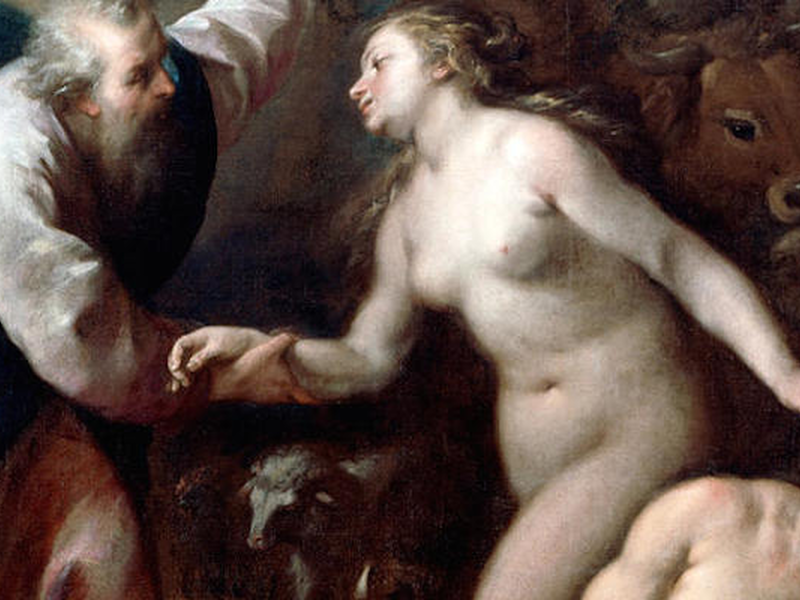
In my previous two posts, I looked at aspects of Psalms 93, 95, 96 and 98 that declare Yahweh, the divine King, to be the world’s own Creator. In my next post, I plan to argue that the creation theology of the sub-section constituted by Psalms 93-100 contributes to the…

by Stephen LongApril 23, 2015
creation-eve
Otherness

Sexual Difference, Liberal and Christian

Ethika Politika has published a fascinating interview within which the French Catholic philosopher Fabrice Hadjadj discusses his recent work on the subject of sexuality. While there are many points where our lines of reasoning as Protestants will sharply diverge from Hadjadj’s, there is also much that is deeply perceptive in…

by Alastair RobertsApril 21, 2015
giammarco-zeh-ljawhtg-unsplash
Literature

Macbeth and the Fall of Adam

For anyone in Shakespeare’s audience who knew the real story of Macbeth, his play must have been surprising. Shakespeare changed so many important details of the historical Macbeth’s life that had Raphael Holinshed, the main author of the most popular history of the British Isles in Shakespeare’s day — Holinshed…

by Ralph Allan SmithApril 16, 2015
medievalilluminatedmanuscript
Creation

Maker of Heaven and Earth, (Part 3)

I started looking at a sequence of psalms on divine Kingship (Psalms 93-100) in my last post, part of a series looking at the Old Testament’s witness to Yahweh’s exercise of absolute mastery over his cosmos. I am not trying to “prove” a doctrine of creation ex nihilo directly from…

by Stephen LongApril 14, 2015
pearls
Anxiety

(Un)Holy Fear

Most of the time I believe that dread is wise, anxiety righteous, fear a holy thing. It sounds ridiculous, but bear with me. There are days when fear seems to be not only a rational response to my circumstances, but a moral duty. After all, being a grown-up means responsibility.…

by Leta SundetApril 11, 2015
emmanuel-phaeton-1bwmfmvybi8-unsplash
Psalms

Psalm 36 Commentary

Get the Psalm 36 Translation here Psalm 36 begins with several translation problems. First, the first word in the actual psalm, as it is found in the English text, is the word "oracle." This word also begins the second verse in the medieval Massoretic Hebrew text, which is our basic…

by James B. JordanApril 10, 2015

Showing page 155 of 309

See all

Showing page 7 of 43

See all

Portion and Inheritance

Israel’s priests did not inherit land. Many lived in cities and they possessed the land immediately surrounding. But they did not get a separate plot when the land was divided. Yahweh said He was their inheritance (Numbers 18:19), and He said it chiastically: A. In the land you will not…

December 31, 2014
Theology

The Structure of Promising

Christoph Schwobel’s contribution to Justification in a Post-Christian Society is characteristically grand. Exploring what contribution Lutheranism can make to contemporary society, he focuses on central Lutheran concerns - promise and trust. His explanation of the grammar of promise is densely brilliant: “The central distinction between law and gospel only becomes…

December 31, 2014
Theology

God of Promise

Christoph Schwobel’s analysis of promising ( Justification in a Post-Christian Society ) opens out into a discussion of theology proper with a reference to Luther’s claim that God identifies Himself in Exodus 3:14 as the God who promises Himself, “so that this promise is God’s essence in relation to which…

December 31, 2014

We Have An Altar

“We have an altar, from which those who serve the tabernacle have no right to eat. For the bodies of those animals whose blood is brought into the holy place by the high priest as an offering for sin are burned outside the camp. Therefore Jesus also, that He might…

December 30, 2014
Reformation

Catholic in Reformed

In his study of Calvin’s Company of Pastors , Scott Manetsch estimates that “just under 5 percent of all excommunications” in Geneva were imposed because of “Catholic behavior” (203). By this phrase, he refers to “instances where people voluntarily aligned themselves with some dimension of Roman Catholic faith or practice,…

December 30, 2014
Economics

Invisible Hand

Adam Smith wrote, briefly in several places, of an invisible hand that guided economic life. The work of this invisible hand was to bend self-interested actions to socially beneficent ends. As Smith wrote in The Wealth of Nations : “By preferring the support of domestic to that of foreign industry,…

December 29, 2014

Showing page 481 of 2212

Browse by Category

In Medias Res

Your weekly digest for all things Theopolis.

Donate

Theopolis is nearly 100% donor-supported. Consider joining us on our mission.