Theopolis Logo

Writing

Explore our collection of theological essays, biblical studies, and reflections on faith and culture.

See all
kiwihug-l4gw27xzn1i-unsplash
Hermeneutics

Hermeneutical Polytheism

A couple of decades ago, when I was a young Reconstructionist (instead of a middle-aged post-Reconstructionist), I coined the phrase "political polytheism" to describe how modern evangelical Christians approach matters of social law and politics. Christians want the Bible for Church and family life, but turn to other gods for…

by James B. JordanJanuary 28, 1996

jan-kahanek-g3o5ztrk2e4-unsplash
Biblical Horizons

Concerning Contracts and Covenants

Gary North has from time to time taken note of some of the differences between contracts and covenants. For him, one of the most important is the oath-character of a covenant. Naturally, the English terms "contract" and "covenant" can be used with varying nuances by different writers, and their zone…

by James B. JordanJanuary 5, 1996
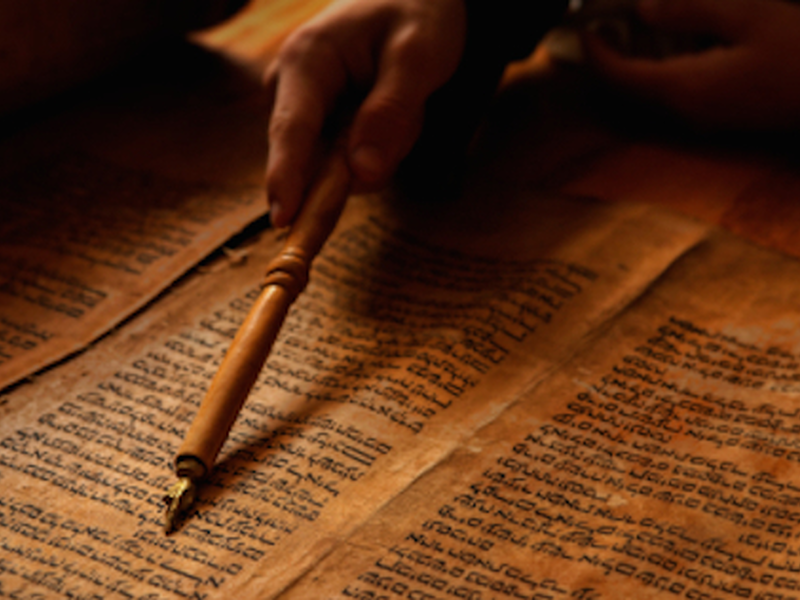
hebrew-manuscript-6
Biblical Studies

Rethinking the Order of the Old Testament

The Book of Chronicles is the last book in the Hebrew Canon of the Old Testament. The word "canon" means "authoritative list" when used in connection with the Bible. What we call the Hebrew Canon consists of 24 books arranged in three major divisions: the Law, the Prophets, and the…

by James B. JordanDecember 28, 1995
skyler-gerald-akljfvj5ym4-unsplash
Biblical Studies

At The Center of the Book of Kings

by: Peter Leithart and James Jordan The Book of Kings is structured chiastically, or concentrically. To see this clearly, we start in the middle and work our way outward. 2 Kings 3–7 record the central events of the ministry of Elisha. Elisha makes his first appearance in 1 Kings 19:19-21,…

by Peter LeithartNovember 5, 1995
lili-popper-lu15z1m_kfm-unsplash
Judges

Dynastic Aspirations in the Book of Judges

(The following is a supplement to my book, God’s War Against Humanism , a study of the book of Judges, available from Biblical Horizons for $20.00 – a photocopy of the original book, which is now out of print). The turning point in the book of Judges is 8:22-28. Here…

by James B. JordanNovember 5, 1995
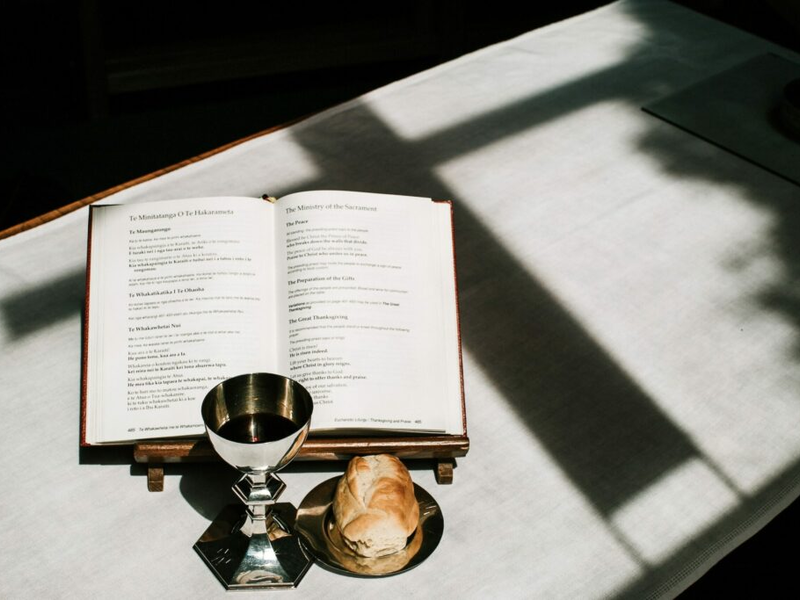
james-coleman-orks2dpueo0-unsplash
Biblical Horizons

Doing the Lord’s Supper

From time to time I am asked how I think the Lord’s Supper should be done. This essay is my response to that question. To start with, we should agree that the Lord’s Supper is the only ritual we are obligated to do in the New Covenant on a routine…

by James B. JordanNovember 5, 1995

Showing page 268 of 309

See all

Showing page 7 of 43

See all

Barth on Justification

Barth’s theology of justification has many virtues. Let me highlight only a couple of them. For starters, Barth’s is an utterly, manically theocentric account of justification. This comes through in large ways and small. One of the most striking indications of this is the way he deals with the question…

November 18, 2014

Impure God

Vladimir Jankelevitch ( Le Pur et l’Impur , 11) observes that we apply the concept of purity to wine and milk, defining the purity of beverages in opposition to admixture of other ingredients. In each case “purity” prohibits mixture, especially mixture of a thing with its supposed opposite. Pure poetry…

November 18, 2014

God of the Gospel

Barth in fully Barthian regalia ( Church Dogmatics, IV.1 , 186-7): “As God was in Christ, far from being against Himself, or at disunity with Himself, He has put into effect the freedom of His divine love, the love in which He is divinely free. He has therefore done and…

November 17, 2014

Role Reversal

Barth famously answers Anselm’s Cur Deus Homo? by talking about the “Judge judged in our place” ( Church Dogmatics, IV.1 ). In a passage summarizing the gospel account of Jesus’s life, he gives this remarkable summary of the “exchange of roles” that occurs in the gospel: “Those who are to…

November 17, 2014

It Takes A God

A great Cur Deus Homo moment from Barth ( Church Dogmatics, IV.1 , 553): “What we men must suffer - if it is to be suffered in accordance with the righteousness of God - can be suffered for us only by God Himself as man: if, that is to say,…

November 17, 2014

Demonstration of Righteousness

“Did God need to justify Himself?” Barth asks ( Church Dogmatics, IV.1 , 567). Does He need to demonstrate His justice to human beings in the world? Barth answers, as expected, No: “He does not need anything.” True enough in the abstract: God needs nothing outside Himself. But once God…

November 17, 2014

Showing page 498 of 2212

Browse by Category

In Medias Res

Your weekly digest for all things Theopolis.

Donate

Theopolis is nearly 100% donor-supported. Consider joining us on our mission.