Theopolis Logo

Writing

Explore our collection of theological essays, biblical studies, and reflections on faith and culture.

See all
eyasu-etsub-hn7scs05pju-unsplash
Leviticus

Priestly Animals

The first commandment given in the Levitical sacrificial legislation has to do with the animals appropriate to sacrifice: "When any man of you brings an offering to the Lord, you shall bring your offering of cattle ( behemah ), from the herd or the flock" (Lev. 1:2). Cattle alone were…

by Peter LeithartSeptember 3, 2024

james-coleman-hoznesupplm-unsplash
Baptism

Rome Won't Have Me

This post was originally posted in 2004 The ultimate condemnation of a position in Reformed circles is to show that it “leads back to Rome.” Indeed, one gets the feeling that Rome is a worse destination for a Presbyterian than even hell itself. The accusation of Rome stings deeply, of…

by Rich LuskAugust 27, 2024
alex-guillaume-2k4du3r1giy-unsplash-2
Biblical Theology

It's About Time

There are countless scholars who have helped me in my reading of various passages of Scripture. I have gleaned insights and keys from them that have unlocked texts that once perplexed me. However, no scholar has done so much to teach me how to read the Scripture more generally than…

by Alastair RobertsAugust 15, 2024
nicki-eliza-schinow-mg3nb1l2kdm-unsplash

The Dangers of Getting Ahead

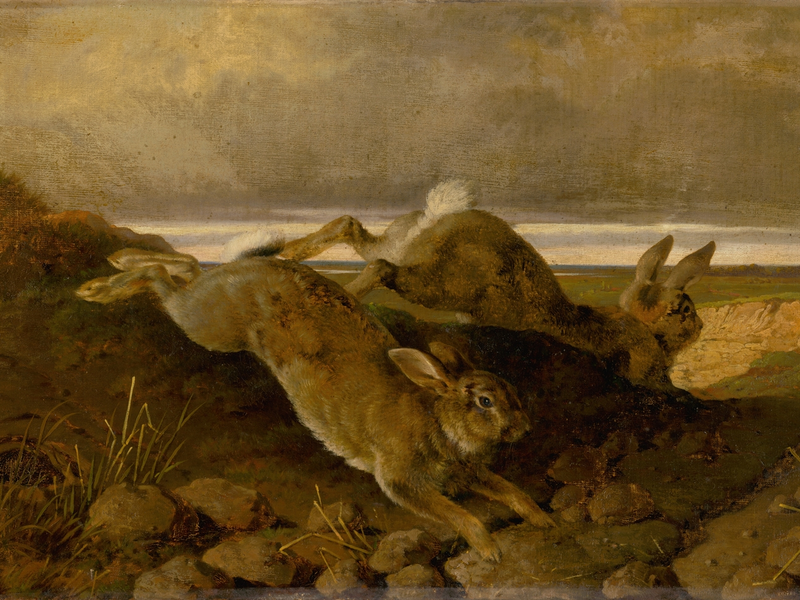
The Tortoise and the Hare is perhaps the most well-known of the Greek fables. Its story has been present in every era of human history. From the Indigenous retellings with hummingbirds and cranes to the Biblical account of David and Goliath, the basic furniture of an unlikely hero tale is…

by Garrett SoucyAugust 8, 2024
adam-and-eve-in-the-garden-of-eden-wenzel-peter
Genesis

Sinning Naked: Double the Exposure, Double the Shame

Sexual sins are perhaps the most shame-inducing sins experienced by Christians and non-Christians alike. All sins can bring shame, but sexual sins are deeply personal and affect us in profound ways. For example, adultery leaves its victim devastated by betrayal; porn addiction leaves men feeling gross, pathetic, and lazy; losing…

by Adam McIntoshAugust 6, 2024
714368ansdl
Books

Lessons from Watership Down: What Rabbits Can Teach the Church

If the mark of a good book is how many times a person can re-read it with pleasure, Richard Adams’ novel Watership Down is one of the best books of the 20 th century. I’ve taught this book in my middle school literature class for the past three years, and…

by Christian LeithartJuly 30, 2024

Showing page 18 of 309

See all

Showing page 7 of 43

See all
Uncategorized

Gone Fishin’

June 24, 2014

Impure Holiness

Isaiah 65 piles up charges of idolatry and impurity against Israel. They are supposed to offer continuous sacrifices, but their sacrifices are a continuous provocation (65:3). They build their altars from bricks rather than from stones, as the law requires (65:3). The sacrificial smoke doesn’t sooth Yahweh but is an…

June 23, 2014

Coding Trance

In an essay at Slate , David Auerbach tells a story about John Harris, a game-programmer: “While working on an 8-bit Atari port of Frogger in the early 1980s, Harris said, “’ glued my hands to the keyboard.’ One day he started programming midafternoon, losing himself in work. The next…

June 23, 2014

Smart Dumb

P oet Kenneth Goldsmith gives a taxonomy of smartness and dumbness. There are various permutations. He prefers dumb, but it has to be smart dumb: “There is dumb dumb and there is smart dumb. There is also smart smart. Dumb dumb is plain dumb and smart smart is plain smart.…

June 23, 2014

Kynics and Cynics

In a 1987 review of Peter Sloterdijk’s Critique of Cynical Reason , Neil Wilson observes that for Sloterdijk “cynicism is enlightenment turned sour: a sourness which results from the self-denial that self-survival in a society dominated by instrumental rationality requires” (55). It is not a new attitude, but an ancient…

June 23, 2014

Physiognamy’s revenge

Peter Sloterdijk distinguishes in his Critique of Cynical Reason (139-40) between the objectifying and distancing aims of Enlightenment thought and the inescapable “physiognomic sense” of life among fleshly humans: “Whereas the process of civilization, whose core is constituted by the sciences, teaches us to distance ourselves from people and things…

June 23, 2014

Showing page 581 of 2212

Browse by Category

In Medias Res

Your weekly digest for all things Theopolis.

Donate

Theopolis is nearly 100% donor-supported. Consider joining us on our mission.