Theopolis Logo

Writing

Explore our collection of theological essays, biblical studies, and reflections on faith and culture.

See all
blocks-t3mkjxfdims-unsplash-2
Advent

Advent and Christmas Music Recommendations

Inspired by our recent podcast on Christmas and Advent music recommendations, we offer here a list of excellent recordings that are sure to enrich your Advent and Christmas season. Praetorius: Mass for Christmas Morning Paul McCreesh with the Gabrieli Consort and Players Amazon | Spotify | Apple Music 2. Christmas…

by John Ahern and Paul BuckleyDecember 23, 2020

sasha-stories-c6g-26myd34-unsplash
Advent

Between the Altar and the City: Isaiah 65:17-25

In the year 1483 in the city of Nuremberg, the leaders of the renowned Saint Lawrence Church were seeking to redesign their altar, and above the table where the priests presided over the eucharist, they wanted new art installed above the prestigious Krell altar. What they decided on took everyone…

by Casey BedellDecember 22, 2020
adam-and-eve-in-the-garden-of-eden-wenzel-peter
Advent

Why We're the Real Seventh Day Adventists

The consequences of disobedience start with exile from the garden of God and the Tree of Yahweh, but they do not end there. They cascade down through the structure of the dynastic order. Everything which had previously been given in the Kingdom of Elohim is either taken back or curtailed…

by Jerry BowyerDecember 18, 2020
herrmann-stamm-19il-6uc5c4-unsplash
Biblical Studies

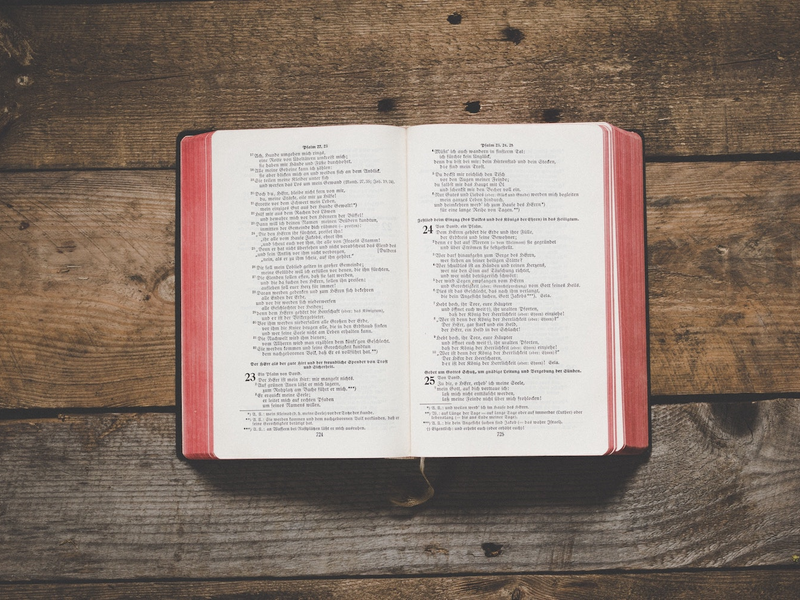
Psalm 23: A Lesson in Reading Biblical Poetry

Parallelism: A Course Correction If you have ever studied Hebrew poetry, you have probably heard its basic poetic feature described as “parallelism.” Hebrew poetry is not metered, it does not rhyme, it does not employ many of the common poetical tropes, but its distinctive (and almost universal) feature is commonly…

by Ryan HandermannDecember 15, 2020
screen-shot-2020-12-11-at-10-04-32-am
Deuteronomy

Deuteronomy 17 and the Separation of Powers

In The Crown and the Courts , David C. Flatto traces the development of the idea of judicial independence in Jewish commentaries on the Scriptures – particularly Deuteronomy 17 – from the Second Temple and early rabbinic periods. These periods roughly span 400 BC to 300 AD. Flatto does not…

by James R. RogersDecember 11, 2020
67201-zechariah-verses-1200w-tn
Advent

Zechariah and John: A Story in Names

A curious feature of the Infancy Narratives in the Gospel of Luke is the naming of John the Baptist. When the angel appears to Zechariah, he is instructed to give his promised son the name John (Luke 1:13). On the day of John’s circumcision, Luke tells us that “they [presumably…

by Rhys LavertyDecember 8, 2020

Showing page 60 of 309

See all

Showing page 7 of 43

See all
Uncategorized

Gone Fishin’

June 24, 2014

Impure Holiness

Isaiah 65 piles up charges of idolatry and impurity against Israel. They are supposed to offer continuous sacrifices, but their sacrifices are a continuous provocation (65:3). They build their altars from bricks rather than from stones, as the law requires (65:3). The sacrificial smoke doesn’t sooth Yahweh but is an…

June 23, 2014

Coding Trance

In an essay at Slate , David Auerbach tells a story about John Harris, a game-programmer: “While working on an 8-bit Atari port of Frogger in the early 1980s, Harris said, “’ glued my hands to the keyboard.’ One day he started programming midafternoon, losing himself in work. The next…

June 23, 2014

Smart Dumb

P oet Kenneth Goldsmith gives a taxonomy of smartness and dumbness. There are various permutations. He prefers dumb, but it has to be smart dumb: “There is dumb dumb and there is smart dumb. There is also smart smart. Dumb dumb is plain dumb and smart smart is plain smart.…

June 23, 2014

Kynics and Cynics

In a 1987 review of Peter Sloterdijk’s Critique of Cynical Reason , Neil Wilson observes that for Sloterdijk “cynicism is enlightenment turned sour: a sourness which results from the self-denial that self-survival in a society dominated by instrumental rationality requires” (55). It is not a new attitude, but an ancient…

June 23, 2014

Physiognamy’s revenge

Peter Sloterdijk distinguishes in his Critique of Cynical Reason (139-40) between the objectifying and distancing aims of Enlightenment thought and the inescapable “physiognomic sense” of life among fleshly humans: “Whereas the process of civilization, whose core is constituted by the sciences, teaches us to distance ourselves from people and things…

June 23, 2014

Showing page 581 of 2212

Browse by Category

In Medias Res

Your weekly digest for all things Theopolis.

Donate

Theopolis is nearly 100% donor-supported. Consider joining us on our mission.