Theopolis Logo

Writing

Explore our collection of theological essays, biblical studies, and reflections on faith and culture.

See all
ryan-loughlin-a8cewc-qgq-unsplash
Baptism

Jesus' Baptism: The Fount of Life

A Study in Biblical and Practical Theology Sunday School Notes / Epiphany 2004 Introductory Note: January 6 is Epiphany in the traditional church calendar. Though Epiphany is often treated as a single day, with the Sundays following counted as “Sundays after Epiphany,” we will treat Epiphany as an extended season.…

by Rich LuskJune 1, 2004

aaron-burden-1ebsmyrau-s-unsplash
Baptism

Baptism, Symbols, and Faith

Imagine someone from another world trying to learn to live in our society according to our customs. What if someone gave him a check for a hundred dollars for his birthday–the first check he had ever seen in his life? Would he immediately understand how a check was used? Perhaps…

by Mark HorneMay 29, 2004
ryan-loughlin-a8cewc-qgq-unsplash
Baptism

Admission into the Church: Biblical Theology & Baptism

According to Presbyterian doctrine, as articulated in the Westminster Confession of Faith, baptism is a baptized person’s “admission… into the visible church.” By referring to the “visible church,” the document makes clear it is referring to the present institutional Church with all her imperfections, as opposed to the future Church…

by Mark HorneMay 29, 2004
aaron-burden-nbjsrii4x6u-unsplash-2
Covenant

Some thoughts on NT Wright, Righteousness & Covenant Status

N. T. Wright claims that in the Apostle Paul’s writings “righteousness,” as it predicated of humans, denotes “covenant membership.” When he wrote this in the New Bible Dictionary edited by Sinclair Ferguson, J. I. Packer, and David Wright, no one thought this was too big a deal. However, when he…

by Mark HorneMay 29, 2004
ales-krivec-4mibe6zg5r0-unsplash
Theologia

The God of Grace

It seems almost human nature to think that we can find something to do for God that will make Him do us favors. If we live more virtuously, or cut down on a vice or two, then God will have to reward us. But the problem with this notion is…

by Mark HorneMay 24, 2004
aaron-burden-1ebsmyrau-s-unsplash
Justification

The Moral Law Commands Faith in Christ Alone

The First Commandment teaches us to trust in Christ alone for justification, sanctification, and eternal life. The First Commandment reads (I’m using NASB throughout): “You shall have no other gods before Me.” Obviously, trusting in someone or something else (even one’s own good works) for justification, sanctification, and eternal life”…

by Mark HorneMay 22, 2004

Showing page 226 of 309

See all

Showing page 7 of 43

See all
Pentecost

Pentecost and Public Life

What has Pentecost to do with public life? As Paul would say, much in every way. The Bible does not permit us to confine the work of the Spirit to the inner man or to private experience. Through Isaiah (44:3), the Lord promised to pour out water on the land…

May 15, 2018
Pentecost

Pentecostal Enlightenment

It’s the season of the Spirit, a time to muse on the politics of Pentecost. When Israel’s prophets predict the future coming of the Spirit, their next thought is almost always about the renewal of creation. According to Joel, the Spirit’s coming will turn Israel into Big Rock Candy Mountain”wine…

May 14, 2018

Anarchy and the Second Word

In Discourses on Livy , Machiavelli exposes the ruse of Roman law. Numa, the true founder of Rome, "mistrusted his own authority, lest it should prove insufficient to enable him to introduce new and unaccustomed ordinances in Rome." And so he claimed that the law came from the gods. All…

May 11, 2018
rembrandt-main

How To Pray

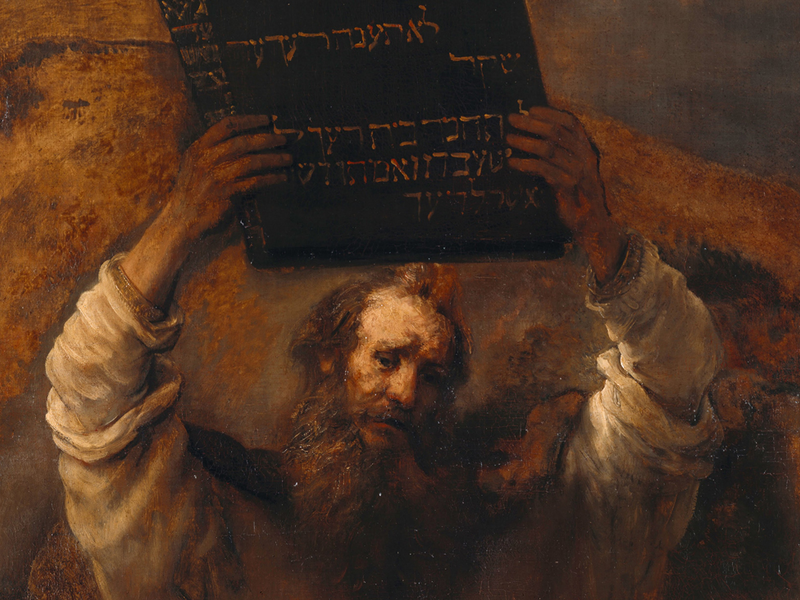
Pamela Tamarkin Reis ("Seeing Moses Plain," VT 55 [2005] 207-31) thinks that Moses' response to Yahweh in Numbers 11 is a model prayer. First, Moses refers to Israel as "this people," which is "a disdainful, arms-length usage employed frequently in the Bible to distance oneself from and to denigrate the…

May 11, 2018

Moses' Missing Repentance

Benjamin Sommer ("Reflecting on Moses," JBL 18 [1999] 601-624) thinks that Numbers 11 weaves together two sources, with very different descriptions of Moses. In narrative A, Moses is petulant, angry, despises his role as leader of Israel, wishes for death. According to B, he is an exemplary prophet, concerned for…

May 11, 2018

Image and Icon

Israel’s sanctuaries were dramatically different from those of other nations. There was no image of Yahweh. The priests maintained Yahweh’s house, but His presence was either invisible or so intense that it was unapproachable. The aniconic worship of Israel was a standing reminder that their God is a different sort…

May 10, 2018

Showing page 70 of 2212

Browse by Category

In Medias Res

Your weekly digest for all things Theopolis.

Donate

Theopolis is nearly 100% donor-supported. Consider joining us on our mission.