Theopolis Logo

Writing

Explore our collection of theological essays, biblical studies, and reflections on faith and culture.

See all
rembrandt-main
Art

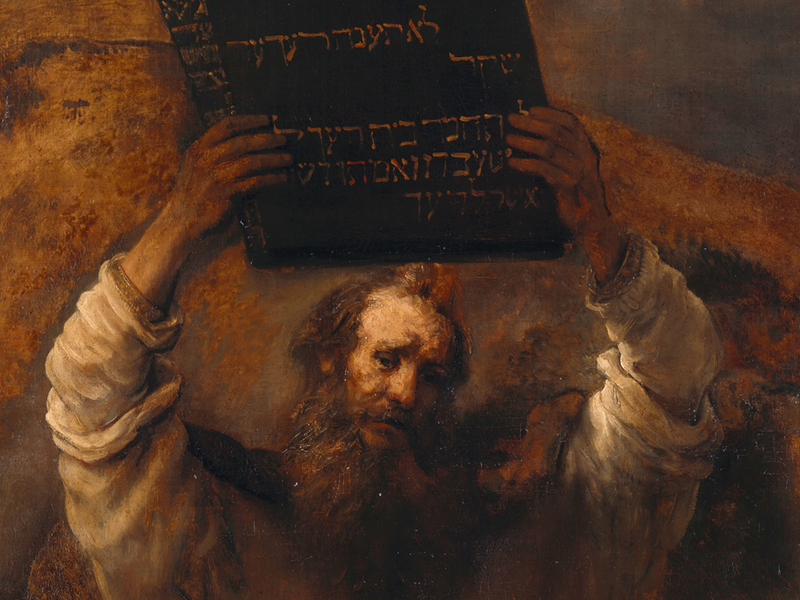
The Second Word V: On Images and Art, Part 3

The Failure of the Church Yet a third factor played an important role in this historical development, in addition to the imperial adoption of icons and the rise of the icons of the holy man. Brown writes: "The great Christian basilicas of the previous centuries tended to stand empty, except…

by James B. JordanSeptember 4, 1998

screenshot-2023-09-11-at-11-34-45-am
Biblical Horizons

Patriarchal Dominion

The three large patriarchal narratives of Genesis concern the three aspects of the cosmos: matter, space, and time. Over these three is man given dominion. Lucifer was originally appointed to train man in this dominion, but he chose to lead man into rebellion instead. Thus, the Angel of Yahweh replaced…

by James B. JordanAugust 4, 1998
trnava-university-beeyeib-am8-unsplash
Biblical Horizons

The Case Against Western Civilization, Part 6

Part 6: Living in a Dying World (continued) The "Trivium" (continued) The five stages of education are simply the five stages of the covenant as God administers it in human life and history, and in the liturgy of covenant renewal: First, God announces Himself. "I am Yahweh Your God." He…

by James B. JordanAugust 4, 1998
screen-shot-2022-05-12-at-12-07-23-pm
Biblical Studies

Re-creation in the Ascension Offering

The following essay is tentative and exploratory, offered for your consideration. It seems to me that the ritual of the Ascension Offering (incorrectly translated as Burnt Offering) of Leviticus 1 is a symbolic recapitulation of Genesis 1, which thereby portrays the sacrificial ritual as way of moving from a fallen…

by James B. JordanJuly 4, 1998
Biblical Horizons

The Framework Hypothesis: A Gnostic Heresy

Just as the vast majority of evangelical Christians in America today are Arminian and Baptist, so the vast majority do not believe in a creation around 4000 BC. I don’t expect any of these three situations to change anytime soon. Powerful presuppositions are at work in all three instances, along…

by James B. JordanJuly 4, 1998
picture-mosaic-cathedral-jesus-christ-cefalu-italy-copy
Art

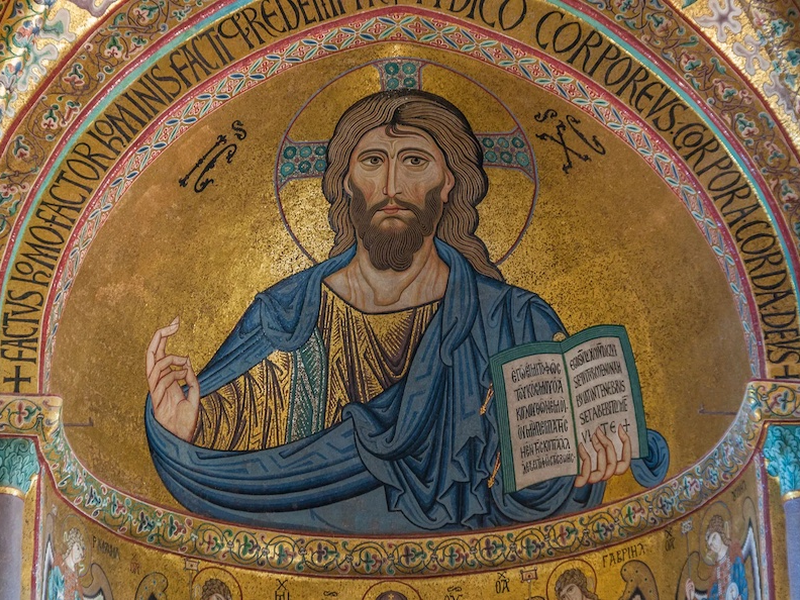
The Second Word V: On Images and Art, Part 2

The Iconoclastic Controversy Continuing Pagan Influence How did images creep in? To begin with, there was in the post-Constantinian Church a concerted effort on the part of the semi-pagans to interpret Christianity in essentially pantheistic terms. The heretics put God and man on a continuum of "being," so that God…

by James B. JordanJuly 4, 1998

Showing page 248 of 309

See all

Showing page 7 of 43

See all
Science

God or the Multiverse

Sheldrake ( The Science Delusion , 10-12) explains why physicalism - the hope that physics will finally vindicate materialism - is doomed. One reason is the “Cosmological Anthropic Principle,” which claims that “if the laws and constants of nature had been slightly different at the moment of the Big Bang,…

April 4, 2013
Science

Die to Live

During his PhD research, Rupert Sheldrake ( The Science Delusion , 1-2) made an original discovery about plant cells: “dying cells play a major part in the regulation of plant growth, releasing the plant hormone auxin as they break down in the process of ‘programmed cell death.’ Inside the growing…

April 4, 2013
History

Constantine and Constantinianism

Constantine permitted transfer of legal cases from civil to ecclesiastical courts, and also permitted ministers to manumit slaves. Both, Potter says ( Constantine the Emperor , 181 ), were steps that effectively turned clergy into civic authorities. On the first decision, Potter notes that “The main problem with Constantine’s decision,…

April 3, 2013
History

Turning point

TD Barnes has vigorously contested popular ideas of the Edict of Milan: It was not issued in Milan and didn’t affect Italy; it didn’t legalize Christianity, which was already legal; it was not an edict. This can leave the impression that the declaration of Licinius on June 13, 313 was…

April 3, 2013
History

What Did Constantine Do?

Potter ( Constantine the Emperor , 95) asks what Constantine was doing during the great persecution. His answers are speculative; we don’t and can’t know for sure, since Constantine’s feelings and thoughts were never recorded. But it is a worthwhile speculation: “He was a visible member of the court; many…

April 3, 2013
History

Burkhardt redux

David Potter’s Constantine the Emperor has many virtues. Potter is hugely well-informed about Roman history, and is able to place Constantine in his context like few others. His discussion of Diocletian’s “interventionist” policy (his Price Edict and his edicts regarding Christianity) is superb, as is his sense of the limits…

April 3, 2013

Showing page 760 of 2212

Browse by Category

In Medias Res

Your weekly digest for all things Theopolis.

Donate

Theopolis is nearly 100% donor-supported. Consider joining us on our mission.