Theopolis Logo

Writing

Explore our collection of theological essays, biblical studies, and reflections on faith and culture.

See all
screen-shot-2022-08-04-at-9-36-57-am
Matthew

Paul Doesn't Care About Universal Individual Sinfulness or General Revelation

One reason readers assume Paul is trying to prove that all human beings are sinful is that they understand him to be arguing that no one can keep the law. That means, they think, his opponents must believe that human nature is potentially sinless. Taking Paul’s statement that, if you…

by Mark HorneJune 17, 2013

karsten-wurth-imegmbunara-unsplash
Mission

Dreams and Visions

[Note: This post was written prior to our name changing to Theopolis Institute.] What is Trinity House for? Three things: We aim to advance the reformation of the church and, through the church, to promote the renewal of culture; in furthering reformation, we aspire to be a site of fraternal,…

by Peter LeithartJune 12, 2013
sixteen-miles-out-al48tflf4e8-unsplash
Deuteronomy

Sons to Yahweh your God!

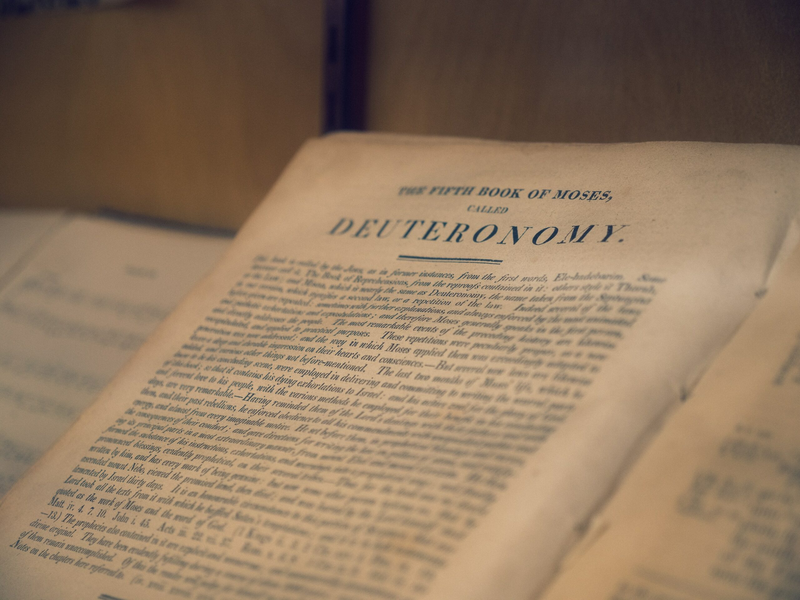
This is the third in a series of studies of the Third Word, and especially of Deuteronomy 14. In 1979 Stephen Kaufman penned a groundbreaking essay on Deuteronomy, arguing that it was a meticulously structured and carefully composed book. In his view, chapters 12 to 26 in particular follow the…

by Ralph Allan SmithJune 10, 2013
kelly-sikkema-gpoh17dxqdm-unsplash
Romans

How is Wrath Revealed?

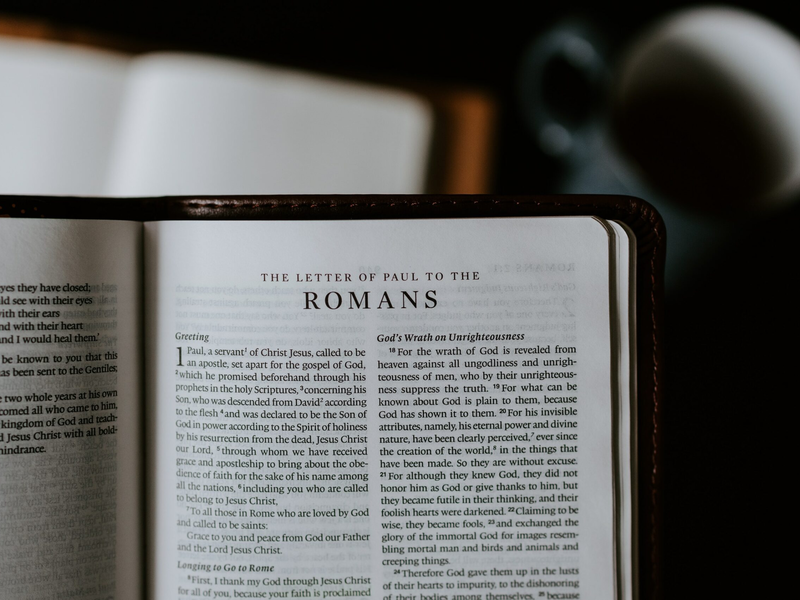
A large mistake is made in understanding Romans if one assumes that Paul is concerned with proving the fact that no one can ever live without sin—or that all attempts at obeying God’s commands are at least tainted with human sinfulness. The first problem with such an assumption is that…

by Mark HorneJune 5, 2013
chris-bair-ndczc5739ck-unsplash
Deuteronomy

The Third Word

This is the second in a series of studies on the Third Word, and especially on the food laws of Deuteronomy 14. In the second part of this series, I argue that Moses’ reworking of the Ten Words in Deuteronomy 5 includes adding nuance to the Third Word. This prepares…

by Ralph Allan SmithJune 3, 2013
yannis-papanastasopoulos-if_29sed7ta-unsplash
Culture

Turning Babel into a Beast

Recent months have brought a lively discussion of Christian participation in the culture war. On the one hand, the pro-life movement appears to be making some slow progress on the abortion issue. The trial of abortionist and serial murderer Kermit Gosnell has the potential to awaken those who are nominally…

by Joe RigneyMay 29, 2013

Showing page 193 of 309

See all

Showing page 8 of 43

See all
Christendom

For and Against Christendom

Someone asked me recently about my views on church and state. I replied that I advocate a "Christendom model" of church-state relations. Then I proceeded to qualify. When I was done qualifying, I suddenly wondered whether what I call "Christendom" corresponds to what other people understand by the word. It…

January 30, 2018

Nation of Kings

Ezra begins where 2 Chronicles ends, with the decree of Cyrus. Some scholars have argued that the repetition indicates that the books were once united. It's said that the doubling is an ancient literary device to knot together two sections of a text. Whether that is the case or not,…

January 29, 2018

Simplifying Space?

James Simpson briefly reviews the career of the 17th-century iconoclast William Dowsing in his history of iconoclasm, Under the Hammer . What motivated Dowsing, he argues, wasn't an effort to prioritize the word over the image, but a quest for "jurisdictional clarity." With the triumph of Parliament, the complex jurisdictional…

January 26, 2018

Freudianism Without Freud

The key question regarding Freud, says Rosenstock-Huessy ( In the Cross of Reality , 266), is "Whom did Freud obey when he began to develop his theory?" The question arises because "in Freud's relational system there is no place for Sigmund Freud's own experience." He shares this distinction of an…

January 26, 2018

Improving to Death

Alexandra Schwartz's New Yorker essay on self-improvement movements ( "Improving Ourselves to Death" ) starts out breezily enough, but it turns grim pretty fast. The "death" in her title isn't metaphorical. She summarizes the experiment of Carl Cederström and André Spicer, who tried to improve one area of their lives…

January 26, 2018

Dostoevsky's Doodles

In a TLS review of Kontantin Barsht's Drawings and Calligraphy of Fyodor Dostoevsky , Robert Bird reminds us that Dostoevsky was a "trained draughtsman" who "thought in images no less than in words: "He wrote frequently about painting, and many of his key terms suggest visual, rather than verbal communication,…

January 26, 2018

Showing page 100 of 2212

Browse by Category

In Medias Res

Your weekly digest for all things Theopolis.

Donate

Theopolis is nearly 100% donor-supported. Consider joining us on our mission.