Theopolis Logo

Writing

Explore our collection of theological essays, biblical studies, and reflections on faith and culture.

See all
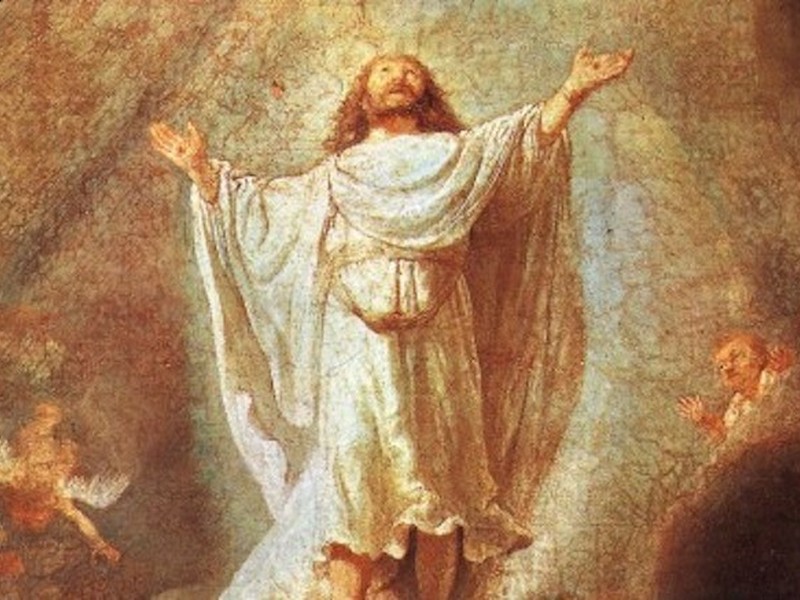
ascension-rembrandt
Ascension

On the Ascension of the Lord

Leo the Great's second sermon on the Ascension, Sermon 74 . I. The mystery of our salvation, dearly-beloved, which the Creator of the universe valued at the price of His blood, has now been carried out under conditions of humiliation from the day of His bodily birth to the end…

by TheopolisMay 25, 2017

cross-grunwald
Ecclesiology

Church on the Cross

Life, Eugen Rosenstock-Huessy says, is suffering, battle, pain, shock, failure, elation. Human beings are always torn, always riven. Much of human life, individually and col­lectively, is an effort to deal with suffering and death. By being the first Man, Jesus establishes the possibility of a different stance toward suffering and…

by Peter LeithartMay 23, 2017
e99a2313
Baptism

Baptism Impasse: Baptists vs. Presbyterians (Part 1)

Is Christian baptism given to believers only or to believers and their children? That’s the question that must be answered—but only if you’re Baptist or Presbyterian. That’s how the question is framed between these two denominations in this dispute, and it’s along these lines the debate unfolds as each side…

by Mani MarprelateMay 18, 2017
screen-shot-2017-05-01-at-1-09-10-pm
Political Theology

Philanthropic God

Again and again the liturgy of St Chrysostom calls God a lover of mankind. He is Philanthropolos Theos (man-loving God), Kurios Philanthropolos (man-loving Lord), Philopsychos (lover of the soul). Philanthropy wasn’t a Christian invention. Roman benefactors gave benefits to subordinates. What was new was the shape of philanthropy, for the…

by Peter LeithartMay 16, 2017
katharina_von_bora_900x600_213
Marriage

Marriage and Betrayal

Perhaps the most fearful of all possibilities in the world is the possibility of betrayal on the part of someone who is in a “position of trust.” This, unfortunately, is the first block in what ought to be the foundation of every marriage in the world. Every woman has a…

by Richard BledsoeMay 11, 2017
kevin-young-icmodywxuq-unsplash
City

Church in the Metropolis

It seems that denominationalism has had its day. A 2009 Barna survey found that denominational commitments have gone squishy in mainline Protestant churches, and Evangelicals don’t fare much better than the rest. After a similar survey, Ron Sellers of Ellison Research said that Protestants are as “loyal to their denominations…

by Peter LeithartMay 9, 2017

Showing page 112 of 309

See all

Showing page 8 of 43

See all

Tale of Two Women

In Numbers 12, Miriam and Aaron object to Moses’ Cushite wife. Miriam becomes leprous, is excluded from the camp, and restored on the eighth day. That is to say: The Messiah’s Jewish sister objects to the Gentile bride, and is cast out of the camp, but then she is cleansed…

November 9, 2007

Sacrificial sequence

Hicks again: He organizes his discussion of the New Covenant fulfillment of the sacrificial system in the phrases “life surrendered,” “life transformed,” and “life shared.” Reconciliation is made on the basis of life surrendered, blood shed, but that’s not the end point of the reconciling sacrifice. This enables him to…

November 8, 2007

Burning flesh

FCN Hicks writes in his 1946 book on sacrifice that the burning of an animal on the altar was not destructive but transforming: “The offering is not destroyed but transformed, sublimated, etherealised, so that it can ascend in smoke to the heaven above, to the dwelling-place of God.” He cites…

November 8, 2007
Philosophy

Signs and domination

Only God, Augustine argues in his treatise on music, acts on rational souls directly, “per seipsum.” Human beings operate on one another’s souls through intervening bodies, that is, through the words and other signs. God has arranged the world this way, he says, as a check on human ambition and…

November 8, 2007

Signa data

Many translators and interpreters of Augustine’s de doctrina Christiana translate “signa data” as “conventional signs.” But there’s something to be said for taking the phrase literally (as some commentators do). The difference between naturalia and data, Augustine says, is that the latter occur by the will of a sign-user while…

November 7, 2007
History

Sixteenth-century exchanges

Shakespeare recognized that something new was in the offing, but the actual situation of England and Europe in the sixteenth and seventeenth centuries was far more complicated that Timon of Athens suggests. The gift-society to which Timon is attached was not being completely replaced, nor was the market the main…

November 7, 2007

Showing page 1609 of 2212

Browse by Category

In Medias Res

Your weekly digest for all things Theopolis.

Donate

Theopolis is nearly 100% donor-supported. Consider joining us on our mission.