Theopolis Logo

Writing

Explore our collection of theological essays, biblical studies, and reflections on faith and culture.

See all
jefferson-santos-fcejgbzakru-unsplash
Interview

The Way My Story Goes: Interview with Singer-Songwriter Jamie Soles

Jamie Soles is the reason I know my way around a guitar. When my guitar teacher put the sheet music for Eine Kleine Nachtmusick in my fourteen-year-old hands, I balked. He gave me “Foggy Mountain Breakdown.” I learned half of it. At home, I ignored my teacher’s instructions and tugged…

by Christian LeithartMarch 12, 2019
screenshot-2023-10-27-at-1-23-26-pm
Epistemology

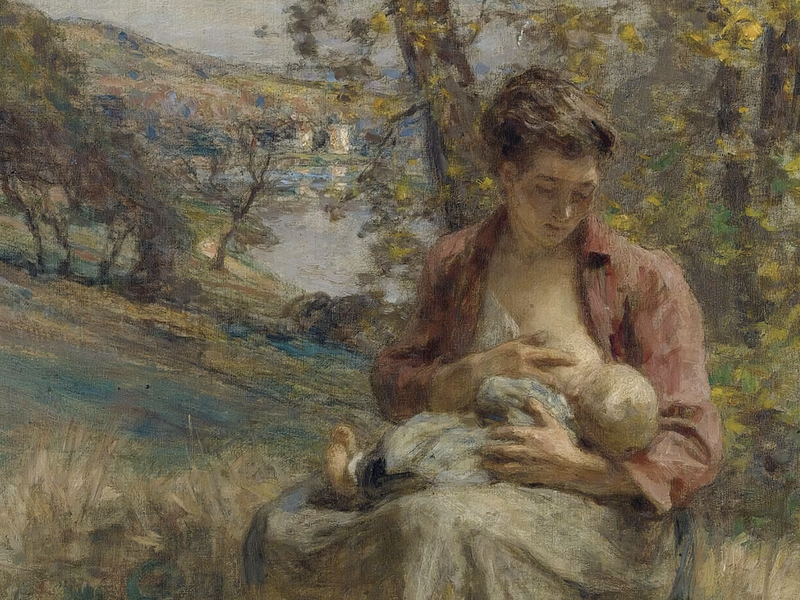
The Mother’s Smile: Integrative Beauty

This is a tough era for mothers. Regard for mothers, while it is always booming in some circles, is decidedly lacking in the prevailing winds of the milieu. In high demand by contrast is contribution to the work force, being a consumer, and basic economic survival, often as a solitary…

by Esther Lightcap MeekMarch 5, 2019
img_1456
Epistemology

Seeking Integration in a Fragmented World: D.C. Schindler: Are You Open to the Heart of Things?

After the dark quiet of the year’s beginning, I return now to pick up the threads of my reflection on integration. This is my own personal inquiry, and for me it is no academic exercise but rather the forefront of my personal quest for the real. My hope is that…

by Esther Lightcap MeekFebruary 26, 2019
tolkien
Chiasm

The Chiastic Structure of Lord of the Rings

The chiastic structure of The Hobbit we considered in the previous essay is highly suggestive of what might lie in store for The Lord of the Rings saga. It is undoubtedly the case that J. R. R. Tolkien was a literary craftsman. It may even be the case he is…

by Kelly KerrFebruary 19, 2019
tolkien
Chiasm

The Chiastic Structure of the Hobbit

Structure plays an important part of any literary work, whether poetry or prose. It adds to the beauty and depth of the work and allows insight to be gained about what the author is trying to communicate. The question that concerns us here is whether or not there exists an…

by Kelly KerrFebruary 5, 2019
a-giant-alien-spaceship-that-has-landed-in-montana-in-arrival-denis-villeneuves-film-adaptation-of-a-story-by-ted-chiang
Movies

Learning the Language of Arrival

Can we learn to communicate from an outside intelligence? Spoiler Alert! If you have not yet seen the movie, this article may provide you with a great deal more information than you wished to know at this point. Since the 1999 film The Matrix received careful scrutiny on many fronts…

by Eric RobinsonJanuary 29, 2019

Showing page 81 of 309

See all

Showing page 8 of 43

See all

Tale of Two Women

In Numbers 12, Miriam and Aaron object to Moses’ Cushite wife. Miriam becomes leprous, is excluded from the camp, and restored on the eighth day. That is to say: The Messiah’s Jewish sister objects to the Gentile bride, and is cast out of the camp, but then she is cleansed…

November 9, 2007

Sacrificial sequence

Hicks again: He organizes his discussion of the New Covenant fulfillment of the sacrificial system in the phrases “life surrendered,” “life transformed,” and “life shared.” Reconciliation is made on the basis of life surrendered, blood shed, but that’s not the end point of the reconciling sacrifice. This enables him to…

November 8, 2007

Burning flesh

FCN Hicks writes in his 1946 book on sacrifice that the burning of an animal on the altar was not destructive but transforming: “The offering is not destroyed but transformed, sublimated, etherealised, so that it can ascend in smoke to the heaven above, to the dwelling-place of God.” He cites…

November 8, 2007
Philosophy

Signs and domination

Only God, Augustine argues in his treatise on music, acts on rational souls directly, “per seipsum.” Human beings operate on one another’s souls through intervening bodies, that is, through the words and other signs. God has arranged the world this way, he says, as a check on human ambition and…

November 8, 2007

Signa data

Many translators and interpreters of Augustine’s de doctrina Christiana translate “signa data” as “conventional signs.” But there’s something to be said for taking the phrase literally (as some commentators do). The difference between naturalia and data, Augustine says, is that the latter occur by the will of a sign-user while…

November 7, 2007
History

Sixteenth-century exchanges

Shakespeare recognized that something new was in the offing, but the actual situation of England and Europe in the sixteenth and seventeenth centuries was far more complicated that Timon of Athens suggests. The gift-society to which Timon is attached was not being completely replaced, nor was the market the main…

November 7, 2007

Showing page 1609 of 2212

Browse by Category

In Medias Res

Your weekly digest for all things Theopolis.

Donate

Theopolis is nearly 100% donor-supported. Consider joining us on our mission.