Theopolis Logo

Writing

Explore our collection of theological essays, biblical studies, and reflections on faith and culture.

See all
screen-shot-2021-06-03-at-8-49-15-am
Ezra

Ezra: The Aaronic Rest-Giver

If you’re a preacher looking for good commentaries on Ezra, you’ll struggle. Certainly to find ones that wrestle in good detail with the text. And certainly ones that don’t cost you an arm and a leg. There’s a good bit more for Nehemiah, which is odd, as the two are…

by Rhys LavertyJune 8, 2021

christian-lue-k1e6994p3t8-unsplash
1 John

1 John in Community

Quick thought experiment: try to pretend you’ve never read 1 John before. Read 1:1-6. Go ahead; I’ll wait. Now, on to v. 7: “But if we walk in the light as He is in the light, we have fellowship with ______….” What word would you expect in that blank, based…

by Tim NicholsJune 1, 2021
noahs-ark-genesis
Hermeneutics

Spending Time with Noah: Reflections on Prepositions in the Flood Narrative

In my work as a Bible translator, I was recently checking our translation team’s draft of Genesis 8:8, which says of Noah (translating the Hebrew quite literally): And he sent out the dove from with him to see: had the waters lessened from upon the face of the ground? Part…

by Josh JensenMay 25, 2021
86758
Philosophy

Steven Weinberg Destroyed My Faith

Just in case a reader may not know Weinberg, he is a theoretical physicist and the winner of the Nobel prize in physics in 1979, as well as countless other prizes for his research. He is also a prolific, lucid, and captivating writer. If you want to read something on…

by Ralph Allan SmithMay 18, 2021
screen-shot-2020-09-17-at-9-11-45-am
Colossians

Reconciliation in Colossians 1:20

Colossians 1:15-20 is a famous passage in Paul’s epistles because it is a succinct and powerful poem. It appears even to have been a hymn. Given the uniquely Pauline language — “reconciliation” is a term used only by Paul — it should not seem odd to attribute the poem/hymn to…

by Ralph Allan SmithMay 11, 2021
stalker_still
Movies

Terror of Knowing Myself

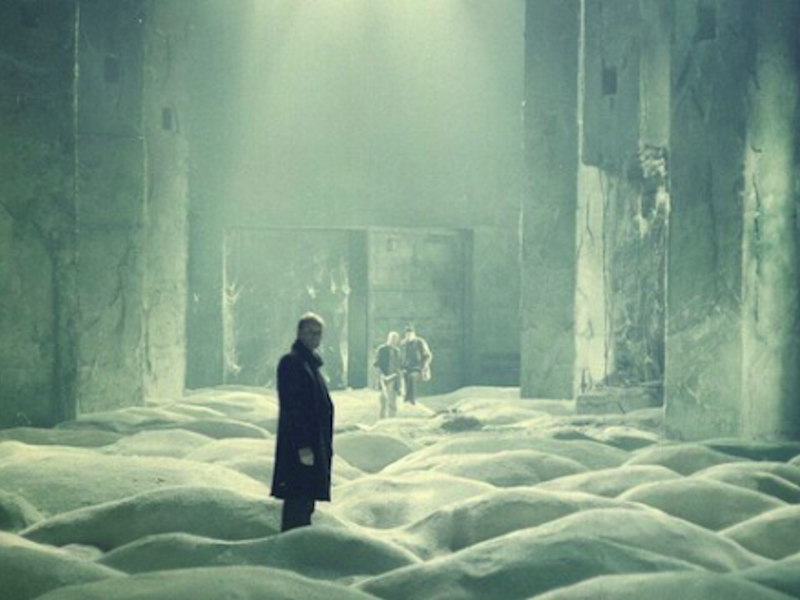
Stalker (1979) is a film by Andrei Tarkovsky based on Roadside Picnic by the Strugatsky brothers. It shows a day from the life of a stalker, a man who enters the so-called "Zone", an Alien landing site, where he leads people to a room that grants people’s innermost desires, which…

by Bogumil JarmulakMay 4, 2021

Showing page 55 of 309

See all

Showing page 8 of 43

See all
History

Chinese and Hebraic thought

In his fascinating Faith of Our Fathers , Chan Kei Thong points to many biblical images embedded in Chinese characters. His argument could be made even stronger by looking at Hebrew terminology. For instance, he says of the character “zui,” which means sin, that “The top part is . .…

May 11, 2007
History

Chinese Creation

At the beginning of the Great Sacrifice performed by the Chinese emperor for centuries, singers sang the song of creation, addressed to the “Sovereign Lord” known as “Shang Di”: “Of old in the beginning, there was the great chaos, without form and dark. The five planets had not begun to…

May 11, 2007

Perichoretic imagination

One of the differences between those associated with “Federal Vision” theology and those opposed to it is a difference of theological imagination. The opponents operate with a theological imagination that distinguishes and clarifies; ontology is distinguished from relationality, nature from supernature, ecclesiology from soteriology. On the other side are theologians…

May 11, 2007
History

Bos and Bobos

According to Adolf Loos, a turn of the 20th-century Viennese architect and critic, modern style combines beauty and practicality. Both are necessary: “By beautiful, what we mean is that something has achieved fullness, completion. But no useless, impractical object can really be described as ‘full’ or ‘complete.’” One can imagine…

May 8, 2007

Kiuchi on Leviticus

Some initial observations on Nobuyoshi Kiuchi’s recent commentary on Leviticus in the Apollos series from IVP. 1) Kiuchi intriguingly translates hata and hatta’t , traditionally rendered in terms of “sin” or “purification” in terms of “hiding”: ” hata and hatta’t mean ‘to hide oneself’ and the condition of ‘hiding oneself,’…

May 8, 2007

The Spoken Son

A student points out that Hebrews 1-2:4 contains seven quotations from the Old Testament. Through these seven words, God speaks His Son as the new creation.

May 7, 2007

Showing page 1682 of 2212

Browse by Category

In Medias Res

Your weekly digest for all things Theopolis.

Donate

Theopolis is nearly 100% donor-supported. Consider joining us on our mission.