Theopolis Logo

Writing

Explore our collection of theological essays, biblical studies, and reflections on faith and culture.

See all
screen-shot-2020-03-05-at-9-00-10-am
Motherhood

Raising Children in a Gender Confused World

Raising children in a world that is increasingly rebellious against God-given gender is quite a challenge. I believe that every generation has their own unique challenges to face, and LGBTQ is ours. It is the movement that steals our terminology (love, kindness, community) and our symbol of promise (the rainbow)…

by Lindsey TollefsonJune 29, 2021
herode-tissot-crop
2 Thessalonians

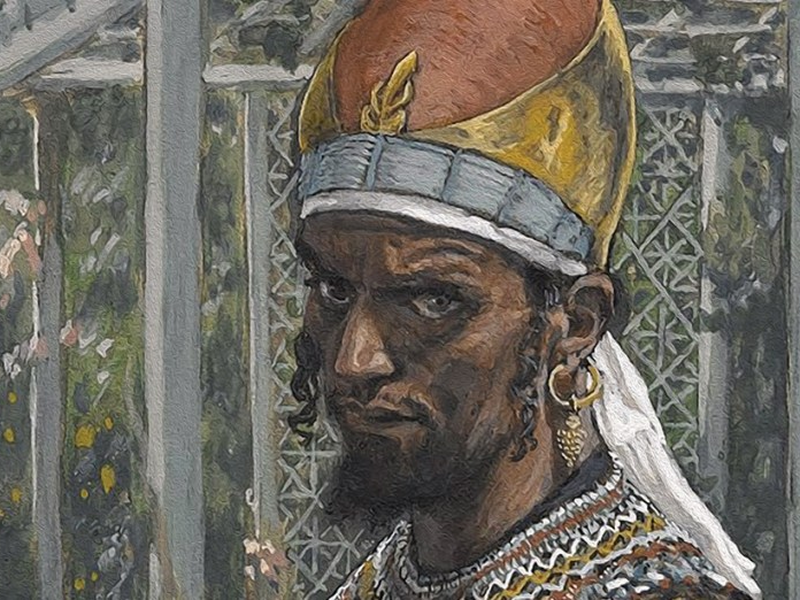
The Lawless Man: When Christ Exposed a Conspiracy

While there are many tricky verses in the Bible, it’s clear that some of them were never intended to give us so much trouble. Paul’s mysterious mention of the “restrainer” in 2 Thessalonians 2 is a perfect example, but perhaps we have been looking at it the wrong way. Reading…

by Mike BullJune 22, 2021
mark-rabe-p0gsveiycqu-unsplash
Christian Nationalism

Catholicity, the Church, and Christian Nationalism?

A common assumption of those most critical of “Christian nationalism” is that such a conception is inherently racist and opposed to the universal nature of the Christian faith. Many argue that Christian nationalism undermines a catholic sensibility by tethering Christianity to the particularities of the nation, and usually to a…

by James WoodJune 17, 2021
paul-the-apostle-epistle-prison-ephesians
Galatians

Ahab in Galatia

In his letter to the Galatians, Paul speaks of those who “trouble” their congregations: “[T]here are some who trouble you and want to distort the gospel of Christ” (1:7). 1 The word “trouble” caught my attention here, because in 1 Kings 18:17, King Ahab refers to Elijah the prophet as…

by Daniel HoffmanJune 15, 2021
margaux-bellott-r5tmusupjwa-unsplash
American Culture

What To Do When Your Boss Encourages You To Support The Moral Revolution

Many Christians find themselves working for businesses or corporations that encourage compliance with the moral revolution. Perhaps their company wants them to participate in gay pride month. Perhaps they require employees to use the preferred gender pronouns of their co-workers. Or maybe they require them to sign a statement affirming…

by Jason CherryJune 11, 2021
tim-marshall-k2u71wv2ei4-unsplash-1
Matthew

Masculinity in Jesus and John

“For John came neither eating nor drinking, and they say, He hath a devil. The Son of man came eating and drinking, and they say, Behold a man gluttonous, and a winebibber, a friend of publicans and sinners. But wisdom is justified of her children.” – Matthew 11:18-19 When conservative…

by Matthew CarpenterJune 10, 2021

Showing page 54 of 309

See all

Showing page 8 of 43

See all
History

Converted Jerusalem

In his fascinating Rise of Christianity , Rodney Stark cites estimates that there were between 10,000 and 20,000 inhabitants of Jerusalem in the first century. Stark uses this to falsify Luke’s claims that there were 5000 Christians in Jerusalem (Acts 4:4) and “many thousands” of Jews (Acts 21:20): “Had there…

March 30, 2007

Hebraic hermeneutics

One Rhonda Wauhkonen discusses Nicholas of Lyra’s “Hebraic” semiotics and hermeneutics in a 1992 article on Chaucer. She begins by contrasting Augustine’s signum/res distinction to Lyra’s Hebraic viewpoint: “In the Hebrew system as evidenced in Scripture and as adapted by Nicholas, such stratification of signification did not exist, for the…

March 29, 2007

Last and first

Nicholas of Lyra is known for his notion of a “double literal” sense to Scripture. For him, interpretation ad litteram includes both the historical and the doctrinal/christological senses, and he suggests that the ancient Hebrews could well have seen the Messianic sense as the literal sense. He also suggests that…

March 29, 2007

Nicholas of Lyra’s afterlife

In Book 3 of Gargantua and Pantagruel, Rabelais attributes an odd opinion to the 14th-century exegete, Nicholas of Lyra: “Pantagruel, having wholly subdued the land of Dipsody, transported thereunto a colony of Utopians, to the number of 9,876,543,210 men, besides the women and little children, artificers of all trades, and…

March 29, 2007

Nicholas of Lyra’s afterlife

In Book 3 of Gargantua and Pantagruel, Rabelais attributes an odd opinion to the 14th-century exegete, Nicholas of Lyra: “Pantagruel, having wholly subdued the land of Dipsody, transported thereunto a colony of Utopians, to the number of 9,876,543,210 men, besides the women and little children, artificers of all trades, and…

March 29, 2007

Thomas on the Parable of the Workers

Steinmetz summarizes Thomas’s remarkably “NTWrightian” commentary on Matthew 20:1-16. While acknowledging an Origenist tradition that sees the hours as moments of an individual life, Thomas is more interested in the Irenaean tradition that interprets the parable in terms of redemptive history: “The hours mentioned in the parable are not stages…

March 29, 2007

Showing page 1699 of 2212

Browse by Category

In Medias Res

Your weekly digest for all things Theopolis.

Donate

Theopolis is nearly 100% donor-supported. Consider joining us on our mission.